Spin Flip! When Bouncing Particles Change Direction Unexpectedly

Definition of Particle Directional Changes in Collisions In classical mechanics, particles typically follow predictable paths when they collide with surfaces or other particles, reflecting at angles equal to their incidence. However, certain particles exhibit unexpected shifts in their direction during these interactions, a phenomenon often described as a “spin flip.” This term refers to abrupt […]

Read More →

How does quantum AI differ from traditional AI approaches?

Understanding Artificial Intelligence: Traditional vs Quantum Artificial Intelligence (AI) has revolutionized numerous fields by enhancing computational efficiency and problem-solving capabilities. Conventional AI is grounded in classical computing principles, utilizing algorithms based on deterministic logic and statistical methods. In contrast, Quantum AI introduces a groundbreaking shift by harnessing the unique properties of quantum mechanics. This article […]

Read More →

What is the future of computational chemistry?

Definition of Computational Chemistry Computational chemistry is a scientific discipline that employs computer simulations and mathematical models to understand and predict the behavior of molecules and chemical reactions. By integrating principles from chemistry, physics, and mathematics, it provides a virtual platform to explore molecular structures, interactions, and properties without the need for physical experiments. Core […]

Read More →

Is quantum computing going to be successful?

Understanding Quantum Computing Quantum computing represents a groundbreaking shift in computational technology, poised to revolutionize how we process information. Unlike traditional computers that use bits as the smallest unit of data, quantum computers operate with quantum bits, or qubits. These qubits can exist simultaneously in multiple states-0, 1, or any quantum superposition of these-enabling the […]

Read More →

Quantum Computing: The Most Powerful Tech You’ve Never Used

Understanding Quantum Computing Quantum computing represents a groundbreaking leap in computational technology, leveraging the unique principles of quantum mechanics to solve problems beyond the reach of classical computers. Unlike traditional systems that rely on binary bits, quantum computers utilize quantum bits, or qubits, which can exist in multiple states simultaneously. This capability opens the door […]

Read More →

A New Spin on Magnets: Unlocking Quantum Magnetic Mysteries

Understanding Quantum Magnetism Quantum magnetism delves into the magnetic properties that emerge from the quantum mechanical behavior of subatomic particles, distinguishing itself from the classical magnetism observed in everyday life. While traditional magnets rely on the alignment of magnetic domains to produce forces of attraction or repulsion, quantum magnets arise from more intricate phenomena such […]

Read More →

Is quantum cryptography unbreakable?

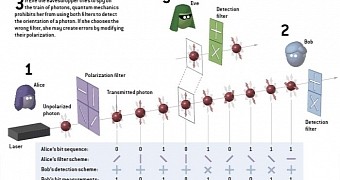
Understanding Quantum Cryptography Quantum cryptography represents a cutting-edge approach to securing communication by harnessing the unique properties of quantum mechanics. Unlike traditional encryption methods, it aims to create communication channels that are fundamentally resistant to interception and tampering. The most prominent technique within this field is Quantum Key Distribution (QKD), which uses pairs of quantum […]

Read More →

Would AI run on a quantum computer be any improvement?

Understanding Quantum Artificial Intelligence The convergence of artificial intelligence (AI) and quantum computing represents a groundbreaking frontier in technology and science. This fusion prompts a critical question: can AI systems operating on quantum computers achieve significant improvements in performance and efficiency? This article explores the foundational concepts, potential benefits, and challenges of integrating quantum computing […]

Read More →

How is a new kind of chip for quantum technology?

Definition of Quantum Chips Quantum chips represent a cutting-edge class of devices designed to harness the principles of quantum mechanics for processing information. Unlike classical computer chips that use bits as the smallest unit of data, quantum chips operate with quantum bits, or qubits, which can exist in multiple states simultaneously due to quantum phenomena […]

Read More →

How does one think about creating new quantum algorithms?

Understanding Quantum Algorithms Developing new quantum algorithms requires a profound grasp of both quantum mechanics and computational theory, extending far beyond traditional programming techniques. This field invites us to reconsider conventional approaches to algorithm design by leveraging the unique principles of quantum computation, which offer unprecedented computational capabilities. Fundamental Concepts in Quantum Computing The Qubit: […]

Read More →