What is chromatic dispersion in fiber optics?

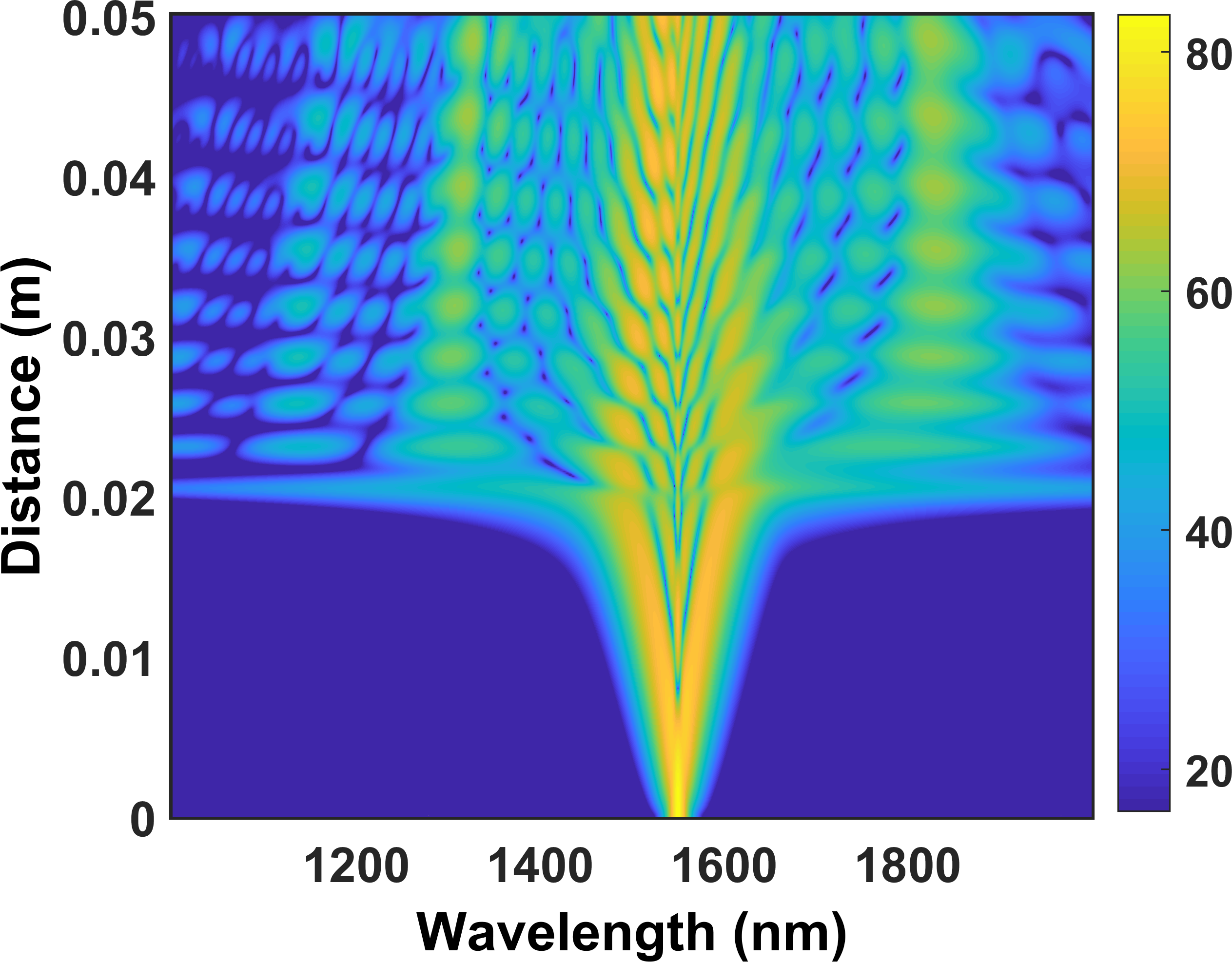
Definition of Chromatic Dispersion Chromatic dispersion is a fundamental optical phenomenon observed in fiber optic communication, where different wavelengths of light propagate through a medium at distinct velocities. This variation in speed causes the spreading of light pulses over time, which can affect the clarity and efficiency of data transmission. In fiber optics, where multiple […]


Read More →

What is the scope after an MS in photonics from IIT Madras?

Understanding Photonics and Its Academic Pursuit Photonics is the scientific study and technological application of light particles, known as photons, particularly within the visible and near-infrared spectra. This field encompasses the generation, control, and detection of light, playing a crucial role in a variety of modern industries. Pursuing a Master of Science (MS) in Photonics […]

Read More →

How do fiber optics transmit data using light?

Definition of Fiber Optics Fiber optics refers to a cutting-edge technology used primarily in telecommunications that transmits data by guiding light through thin strands of glass or plastic. This method enables the transfer of information across vast distances with minimal signal degradation. The technology relies on the principles of light propagation, total internal reflection, and […]

Read More →

From which channel should I learn physical optics?

Definition of Physical Optics Physical optics is a branch of optics that examines light as a wave phenomenon. It focuses on understanding the complex behaviors of light, including interference, diffraction, polarization, and the fundamental characteristics of light beams as they interact with various materials. This field provides a deeper insight into the wave nature of […]

Read More →

Is fiber optic the fastest internet solution currently?

Definition of Fiber Optic Internet Fiber optic internet refers to a high-speed data transmission technology that uses thin strands of glass or plastic fibers to carry information as pulses of light. This method enables the transfer of large volumes of data with exceptional speed and minimal signal loss, distinguishing it from traditional copper-based internet connections. […]

Read More →

What is the upcoming global silicon photonics market?

Definition of Silicon Photonics Silicon photonics is a cutting-edge technology that merges photonic components with silicon-based microelectronics to transmit data using light rather than electrical signals. This integration leverages silicon as a platform for optical communication, enabling faster and more efficient data transfer compared to traditional electronic methods. By harnessing the properties of light, silicon […]

Read More →

Is Italian Physics Better? A Look at La Dolce Laser

Definition of Laser Physics and Italian Contributions Laser physics is the scientific study of the generation and manipulation of coherent light through the process known as stimulated emission. The term LASER stands for “Light Amplification by Stimulated Emission of Radiation,” describing a mechanism where photons are emitted in a synchronized manner from excited atoms or […]

Read More →

How difficult is nonlinear optics?

Definition of Nonlinear Optics Nonlinear optics is a specialized branch of optics that investigates how light interacts with materials when the response of the medium deviates from a simple proportional relationship with the light’s electric field. Unlike linear optics, where the medium’s properties remain constant regardless of light intensity, nonlinear optics explores phenomena that arise […]

Read More →

Artificial Atom Laser: Firing Light One Quantum at a Time

Definition of Artificial Atom Lasers An artificial atom laser is an advanced device engineered to emit light at the quantum scale, fundamentally transforming our grasp of quantum mechanics and photonics. Unlike conventional lasers, it enables the controlled release of photons one quantum at a time, allowing for unprecedented precision in manipulating light. This technology hinges […]

Read More →

What are the pros and cons of using laser communication?

Definition of Laser Communication Laser communication, also known as free-space optical communication, is an advanced method of transmitting data through the atmosphere using highly concentrated beams of light. This technology leverages the properties of laser light to send information over distances without the need for physical cables, offering a promising alternative to traditional radio frequency […]

Read More →