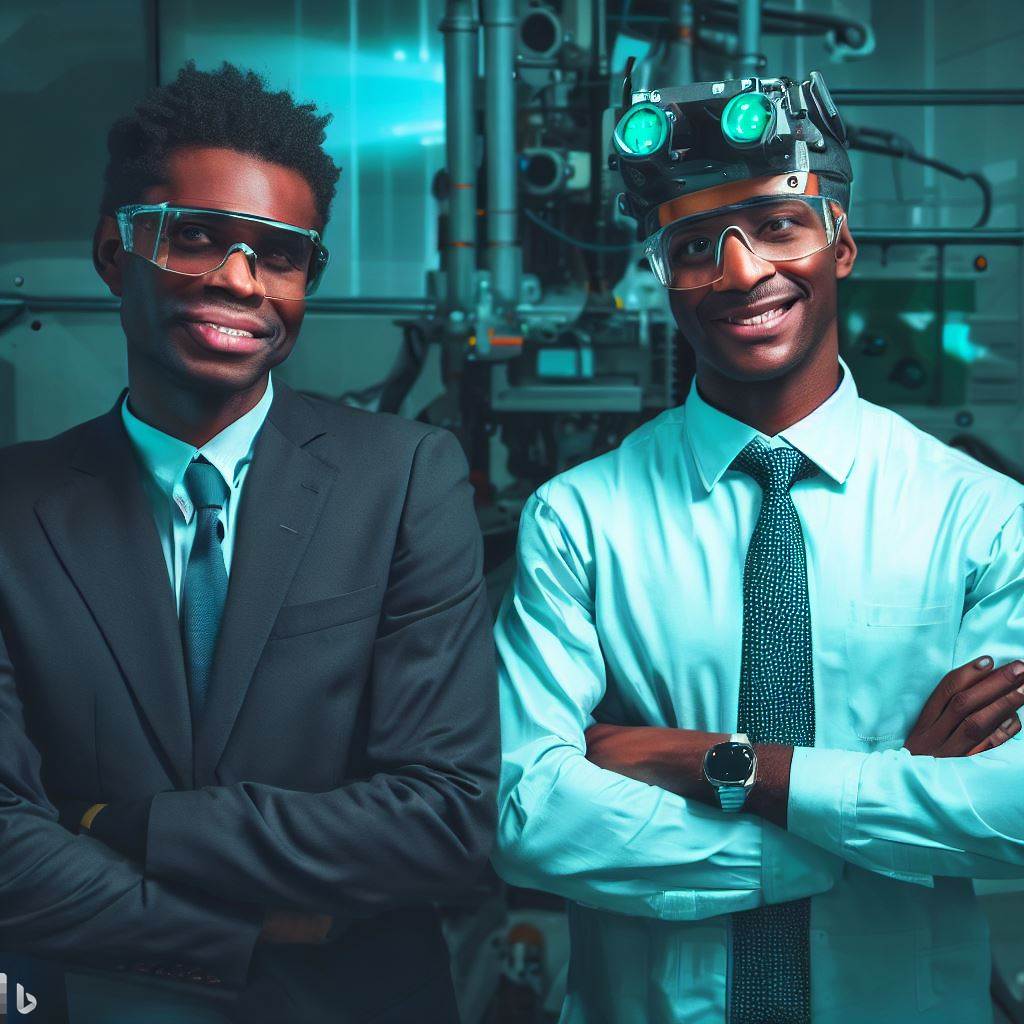
Blue Lasers Look Up: Lighting a Path Through the Atmosphere

Definition of Blue Laser Light Blue laser light refers to a specific type of laser emission characterized by wavelengths near 450 nanometers. This shorter wavelength corresponds to higher photon energy compared to other visible light sources, enabling unique interactions with atmospheric particles. The distinct properties of blue lasers have positioned them as critical tools in […]

Read More →

Which is the best topic for MEMS research for a Ph.D?

Overview of MEMS and Its Research Significance Microelectromechanical systems (MEMS) have revolutionized numerous industries, including telecommunications, automotive engineering, healthcare, and environmental monitoring. For doctoral candidates aiming to delve into this dynamic field, selecting a focused and impactful research topic is crucial. This article outlines key research domains within MEMS technology, highlighting promising areas for scholarly […]

Read More →

Achieving Optical Super-Resolution: Beyond the Limits of Light

Definition of Optical Super-Resolution Optical super-resolution refers to a collection of advanced imaging techniques designed to surpass the traditional diffraction limit of light microscopy. This limit, which restricts resolution to roughly half the wavelength of the illuminating light, has historically constrained the ability to observe fine details within microscopic specimens. Super-resolution methods break through this […]

Read More →

Is a light microscope 2D or 3D?

Understanding Dimensionality in Light Microscopy When observing a specimen through the eyepiece of a light microscope, a common question arises: does the instrument reveal a two-dimensional (2D) image, or does it provide a rich three-dimensional (3D) visualization? This question is fundamental to grasping the capabilities and constraints of optical microscopy, as well as the nature […]

Read More →

Is wave/optics easier than E&M?

Overview of Wave Optics and Electromagnetism In physics education, students frequently encounter challenges when studying wave optics and electromagnetism (E&M). Both fields encompass complex theories and mathematical frameworks that can be demanding to master. A common question arises: Is wave optics inherently simpler to learn than electromagnetism? This inquiry is nuanced, as each discipline has […]

Read More →

Chemical Lasers: What Are They Good For (And Why the Military Loves Them)

Definition of Chemical Lasers Chemical lasers are a specialized category of laser devices that harness the energy released from exothermic chemical reactions to generate coherent light. Unlike solid-state or semiconductor lasers, these systems rely on chemical fuel and oxidizer combinations to excite molecules, producing intense laser beams. This method enables chemical lasers to achieve exceptionally […]

Read More →