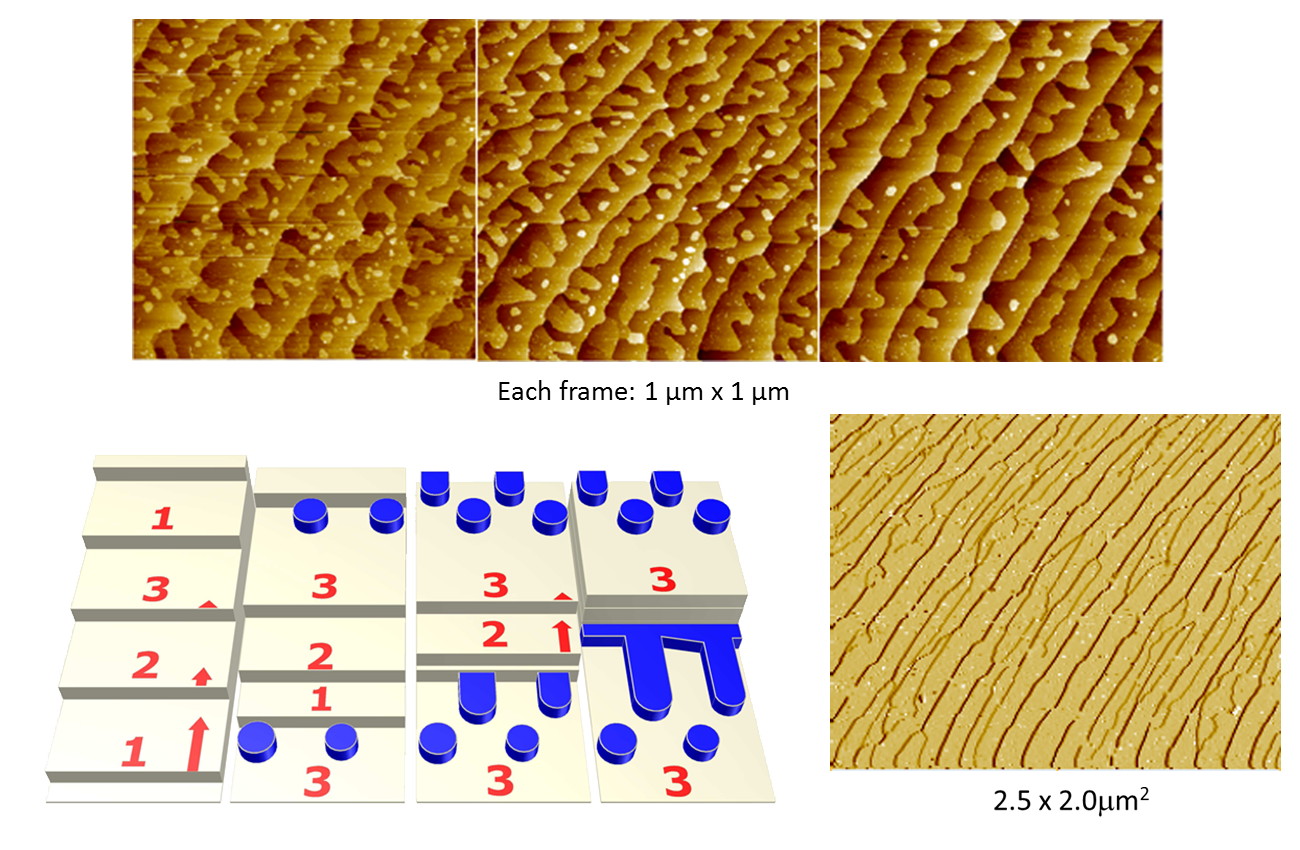
What observations fall under condensed matter physics?

Definition of Condensed Matter Physics Condensed matter physics is a comprehensive branch of physics dedicated to studying the complex behaviors and properties of solids and liquids. This field investigates phenomena that arise from interactions at scales ranging from individual atoms to large, macroscopic systems. It encompasses a wide array of material states and transitions, providing […]

Read More →

A Sticky Theory: Adhering to New Physics in Unlikely Places

Understanding Adhesion: A Comprehensive Overview Adhesion refers to the phenomenon where different materials stick together due to a combination of physical and chemical interactions. This process is fundamental in both natural and engineered systems, revealing complex principles through everyday objects that exhibit stickiness. By exploring the science behind adhesion, we gain insight into its mechanisms, […]


Read More →

What is the cost of a 3D printing machine?

Definition of 3D Printing Machines and Their Cost Factors 3D printing machines, also known as additive manufacturing devices, have revolutionized production methods by enabling the creation of complex objects layer by layer. Understanding the cost of these machines involves more than just the purchase price; it requires a comprehensive evaluation of various factors including printer […]

Read More →

What is the price of a meter of graphene?

Definition of Graphene Graphene is a single layer of carbon atoms arranged in a two-dimensional honeycomb lattice. It represents a unique allotrope of carbon with exceptional properties that have transformed the fields of materials science and nanotechnology. Due to its extraordinary mechanical strength, electrical conductivity, and thermal performance, graphene has attracted significant attention from both […]

Read More →

Is there any real 1D or 2D object in our universe?

Understanding Dimensions: A Clear Definition Dimensions refer to the measurable extents in which objects or spaces exist, defining their degrees of freedom. In simple terms: One-dimensional (1D) objects: Entities characterized solely by length, lacking any breadth or height. Two-dimensional (2D) objects: Forms that possess length and width but have no depth, existing entirely on a […]

Read More →

Why is graphene not used despite its incredible properties?

Definition of Graphene Graphene is a revolutionary material composed of a single layer of carbon atoms arranged in a two-dimensional honeycomb lattice. It is renowned for its exceptional mechanical strength, superior electrical conductivity, and outstanding thermal properties, all achieved at an atomic-scale thickness of just one atom. These unique characteristics have positioned graphene as a […]

Read More →

Should I do a Ph.D. in Graphene?

Definition of Graphene and Its Research Significance Graphene is a groundbreaking two-dimensional material consisting of a single atomic layer of carbon atoms arranged in a hexagonal lattice. Since its discovery in 2004, graphene has captivated scientists due to its extraordinary physical and chemical properties. These include exceptional electrical and thermal conductivity, outstanding mechanical strength, and […]

Read More →

Buckyballs Score a Goal: Superconductivity at Higher Temps

Understanding Superconductivity Superconductivity is a remarkable physical phenomenon where certain materials exhibit absolutely zero electrical resistance and expel magnetic fields when cooled below a specific critical temperature. This state allows electric current to flow without energy loss, a property with vast technological implications. Traditionally, achieving superconductivity has required extremely low temperatures, often close to absolute […]

Read More →

Do you make graphene out of carbon or from carbon atoms?

Definition of Graphene Graphene is a single layer of carbon atoms arranged in a two-dimensional honeycomb lattice. It represents a unique allotrope of carbon distinguished by its atomic-scale thickness and extraordinary physical characteristics. This material has attracted significant interest in both scientific research and industrial applications due to its exceptional mechanical strength, electrical conductivity, and […]

Read More →

Carbon Nanotubes Capture Cancer Cells: Precision in a Tube

Definition of Carbon Nanotubes Carbon nanotubes (CNTs) are cylindrical nanostructures composed entirely of carbon atoms arranged in a hexagonal lattice. These nanoscale tubes exhibit extraordinary mechanical, electrical, and chemical properties, making them highly valuable across multiple scientific fields, especially in biomedicine. Their unique characteristics include exceptional tensile strength, excellent electrical conductivity, and a large surface […]

Read More →