What happen at an atomic scale when light is reflected?

Definition of Light Reflection at the Atomic Scale Light reflection occurs when electromagnetic radiation encounters a surface and is redirected rather than absorbed or transmitted. At the atomic level, this process involves complex interactions between photons and the electrons within a material’s atomic structure. These interactions are governed by the electronic configuration and physical properties […]

Read More →

How can we determine the central atom in a molecule?

Understanding the Central Atom in Molecular Structures In molecular chemistry, pinpointing the central atom within a molecule is a crucial yet sometimes challenging endeavor. The central atom plays a pivotal role in defining the molecule’s shape and its interactions with other atoms or functional groups. Identifying this atom requires a nuanced approach, considering various chemical […]

Read More →

What role do quantum effects play in molecular bonding?

Definition of Quantum Effects in Molecular Bonding Quantum effects in molecular bonding refer to the influence of quantum mechanical principles on the interactions and connections between atoms within molecules. These effects govern how electrons behave and interact, ultimately determining the nature, strength, and geometry of chemical bonds. Understanding these quantum phenomena is essential for comprehending […]

Read More →

What Do Physicists Research Today? From Dark Matter to Designer Materials

Understanding Modern Physics Research Contemporary physics is a dynamic field dedicated to exploring the fundamental principles that govern the universe. Scientists are pushing the boundaries of knowledge by investigating phenomena ranging from the invisible components of the cosmos to the creation of advanced materials. This article presents an overview of key research areas in modern […]

Read More →

What is the physical meaning of linearity and non?

Definition of Linearity and Non-Linearity Linearity and non-linearity are essential concepts that describe how systems respond to inputs across disciplines such as physics, mathematics, and engineering. These principles explain the relationship between an input stimulus and the resulting output, serving as foundational ideas for analyzing system behavior. Linearity: A system is linear if its output […]

Read More →

Is Cl2 an element molecule or both?

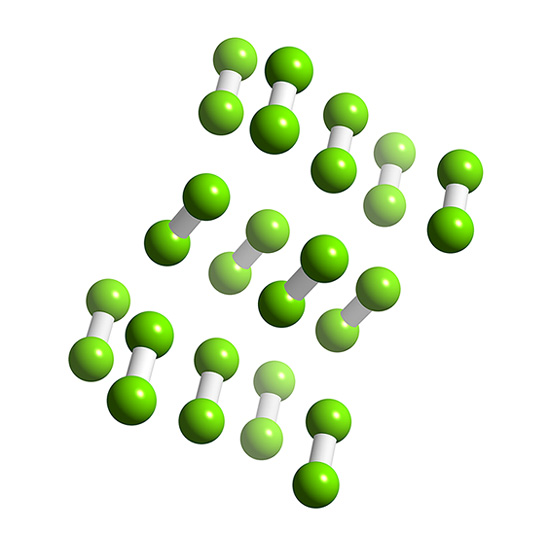
Definition of Chlorine and Its Molecular Form Chlorine, symbolized as Cl, is a chemical element that naturally exists as a diatomic molecule, Cl2, under standard temperature and pressure conditions. This raises an important question: should Cl2 be regarded solely as an element, a molecule, or does it embody characteristics of both? To address this, it […]


Read More →

Is carbon an atom or a molecule?

Understanding Carbon: Atom or Molecule? When exploring the fundamental nature of matter, carbon emerges as a central element that bridges the gap between atomic and molecular chemistry. The question of whether carbon is an atom or a molecule opens the door to a comprehensive examination of chemical structures, elemental characteristics, and the foundation of life […]

Read More →

Is H2 a compound or an element and why?

Definition of Elements and Compounds In chemistry, understanding the difference between elements and compounds is fundamental. An element is a pure substance that cannot be decomposed into simpler substances by chemical means. It consists entirely of atoms that share the same number of protons in their nuclei, giving each element a unique identity. In contrast, […]

Read More →

Is a photon part of an atom?

Definition of Photons and Atoms Photons are elementary particles that represent the smallest units, or quanta, of light and other forms of electromagnetic radiation. Unlike the particles that make up matter, photons are massless and carry no electric charge. Atoms, on the other hand, are the fundamental building blocks of matter, composed of a dense […]

Read More →

How to scatter a photon on a hydrogen atom?

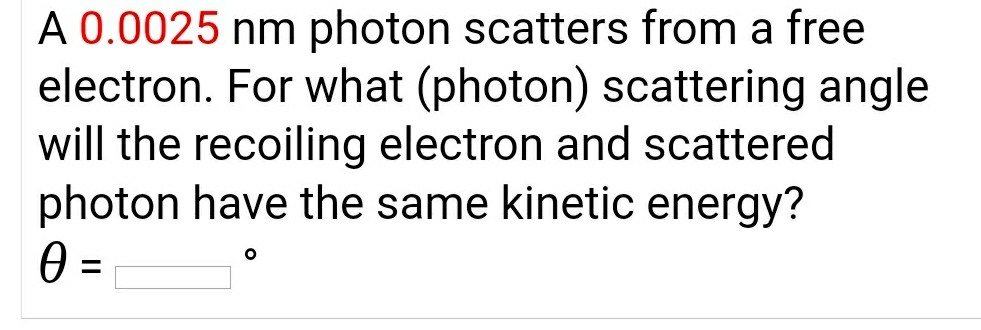
Definition Photon scattering by a hydrogen atom is a fundamental quantum mechanical process where a photon-an elementary particle of light-interacts with the simplest atomic system, hydrogen. This interaction involves the photon colliding with the atom’s electron, resulting in either the photon being deflected (scattered) or absorbed, thereby revealing essential principles of light-matter interaction at the […]

Read More →