
Short Answer
Definition of a Red Giant
A red giant is a late evolutionary stage of a star characterized by a massive expansion and a distinct reddish appearance. This phase occurs after a star has exhausted the hydrogen fuel in its core, leading to significant structural and energetic changes. Red giants are among the most visually impressive objects in the night sky, representing a star’s transition from stable hydrogen fusion to more complex nuclear processes.
Stellar Life Cycle Leading to the Red Giant Phase
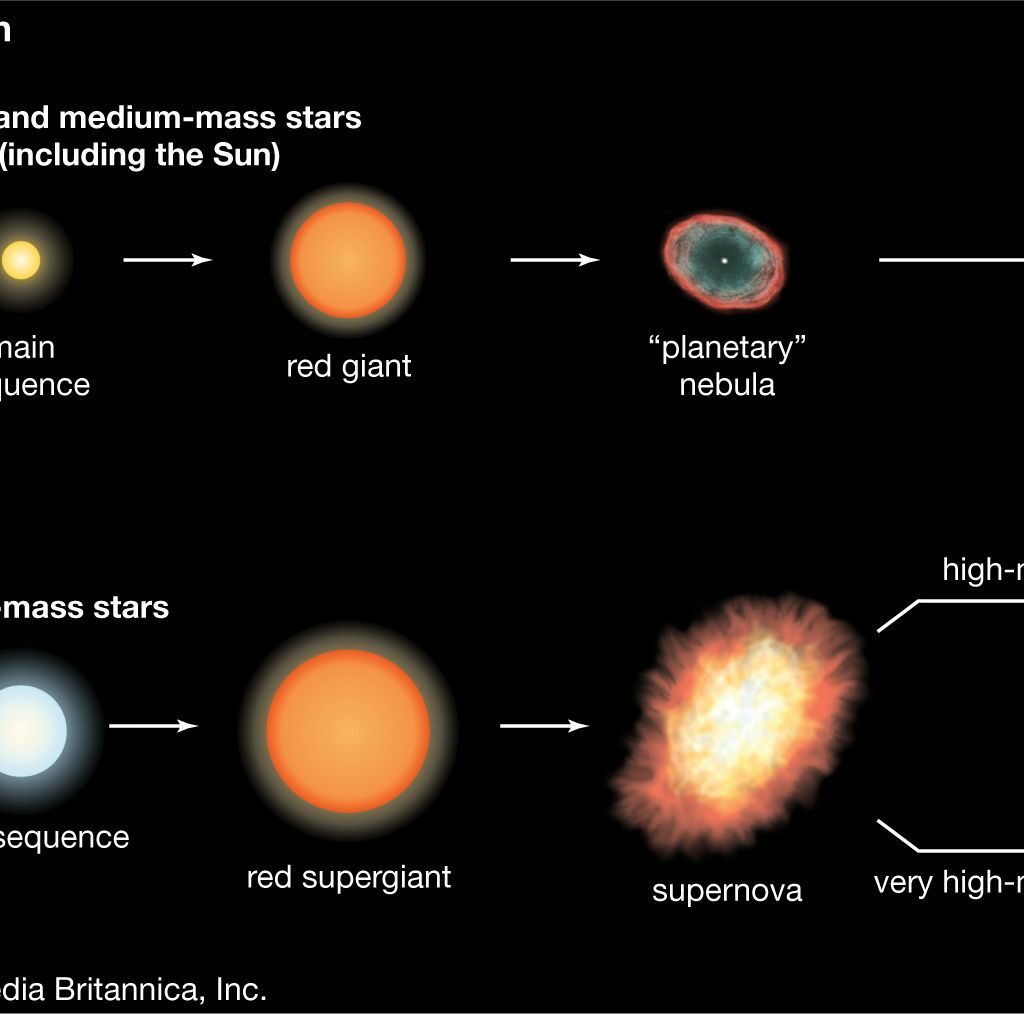
Stars spend the majority of their existence on the main sequence, where they maintain equilibrium by fusing hydrogen into helium in their cores. This fusion generates the outward pressure necessary to counterbalance the inward pull of gravity, stabilizing the star’s size and brightness. However, as hydrogen becomes depleted, this balance is disrupted, initiating the star’s transformation into a red giant.
Core Hydrogen Depletion and Core Contraction
Once the hydrogen fuel in the core is exhausted, nuclear fusion in this region ceases, causing the outward radiation pressure to diminish. Gravity then causes the core to contract, which increases its temperature due to gravitational compression. This heating ignites hydrogen fusion in a shell surrounding the inert helium core, marking a critical turning point in the star’s evolution.
Structural Changes During the Red Giant Phase
The onset of hydrogen shell burning produces additional energy that forces the star’s outer layers to expand dramatically. This expansion cools the star’s surface, giving it a characteristic red color. The star’s radius can swell to hundreds of times its original size, increasing its luminosity despite the cooler surface temperature.
Internal Layering and Luminosity Increase
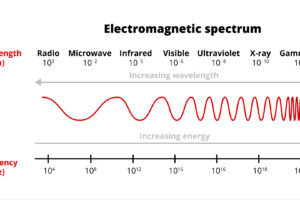
Inside a red giant, the dense helium core remains inert initially, while the hydrogen-burning shell deposits helium “ash” onto the core, increasing its mass. As the core contracts and shell fusion continues, the star’s brightness can surge to thousands of times its main sequence luminosity. This phase also alters the star’s spectral characteristics, shifting its emission toward the red and infrared wavelengths.
Variations in Red Giant Evolution Based on Stellar Mass
The path a star takes through the red giant phase depends heavily on its initial mass and composition:
- Low to Medium Mass Stars:
Stars like the Sun expand into red giants and eventually experience a helium flash, a sudden onset of helium fusion in the core that leads to further evolutionary stages. - High Mass Stars:
More massive stars evolve into red supergiants, undergoing more extreme expansion and complex fusion processes in multiple shells.
Dynamic Phenomena in Red Giants
Far from being a static phase, the red giant stage involves pulsations and significant mass loss. Instabilities in the star’s extended atmosphere cause rhythmic expansions and contractions, while powerful stellar winds eject outer layers into space. This mass loss enriches the interstellar medium with heavier elements, playing a vital role in the cosmic cycle of matter.
Observational Insights and Scientific Modeling
Observations of red giants provide valuable data on stellar structure and evolution. Visual comparisons highlight the dramatic size increase from main sequence stars, while spectroscopy reveals surface composition and temperature variations. Time-lapse studies capture pulsation patterns and stellar wind activity, deepening our understanding of these stars.
Theoretical models integrate principles from nuclear physics, thermodynamics, and fluid dynamics to simulate the internal processes driving red giant formation. These simulations help clarify complex stellar behaviors and illustrate how stars of different masses and metallicities follow diverse evolutionary paths, as depicted on the Hertzsprung-Russell diagram.
Significance of the Red Giant Phase
The red giant stage is a crucial chapter in stellar evolution, marking the transition from stable hydrogen fusion to advanced nuclear burning and eventual stellar death. It exemplifies the interplay between gravitational forces and nuclear reactions, producing some of the most spectacular phenomena in the cosmos. Additionally, red giants contribute to galactic chemical enrichment by dispersing elements forged in their interiors, thus influencing the formation of new stars and planetary systems.
Summary
The transformation of a star into a red giant is driven by the exhaustion of core hydrogen, subsequent core contraction, ignition of hydrogen shell fusion, and extensive expansion of the star’s outer layers. This phase not only signals the approaching end of a star’s life but also plays a pivotal role in the ongoing cycle of matter in the universe. Observing and modeling red giants enhances our comprehension of stellar lifecycles and the fundamental forces shaping the cosmos.

Leave a Reply