
Short Answer
Understanding the Size Limits of Planets and Stars
When we look up at the night sky, the vast range of celestial bodies-from tiny rocky planets smaller than Mercury to enormous stars many times the mass of our Sun-raises a fascinating question: what determines the maximum size a planet or star can reach? The universe is filled with extremes, but the growth of these astronomical objects is governed by fundamental physical laws and environmental factors that impose natural boundaries on their expansion.
Fundamental Forces Shaping Celestial Growth
The formation and growth of planets and stars are controlled by a complex interplay of forces and processes. Gravity, pressure, nuclear fusion, and feedback mechanisms within their surroundings all contribute to how large these bodies can become.
- Gravity:
The primary force pulling matter together, initiating the collapse of gas and dust clouds that form stars and planets. - Pressure:
Thermal and radiation pressures counterbalance gravity, preventing unchecked collapse or expansion. - Nuclear Fusion:
In stars, fusion reactions generate energy that creates outward pressure, stabilizing the star’s size. - Environmental Feedback:
Stellar winds, magnetic fields, and radiation influence the accretion of material and mass loss.
How Stars Reach Their Maximum Size
Stars begin as clouds of gas and dust that collapse under gravity. As the core temperature and pressure rise, hydrogen nuclei fuse into helium, releasing energy that produces an outward radiation pressure. This pressure balances the inward pull of gravity, establishing hydrostatic equilibrium.
A critical factor limiting stellar size is the Eddington luminosity, the point where radiation pressure equals gravitational force. If a star’s brightness exceeds this threshold, the intense radiation drives away its outer layers, preventing further mass accumulation. This natural limit explains why stars cannot grow indefinitely.
Hypergiants and Their Instability
Some stars, known as hypergiants, can reach masses of 150 to 200 times that of the Sun, glowing near their Eddington limits. However, these giants are unstable and lose mass through strong stellar winds and eruptions, making their enormous sizes temporary and self-limiting.
Constraints on Planetary Growth
Planets form within circumstellar disks of gas and dust surrounding young stars. Small particles collide and stick together, gradually building larger bodies called planetesimals and protoplanets. However, planets do not grow endlessly due to several limiting factors:
- Material Availability:
Protoplanetary disks have finite mass, and as planets accrete material, they deplete their local feeding zones. - Gravitational Effects:
Growing planets can create gaps in the disk, disrupting further accumulation of gas and dust.
The Size Plateau of Gas Giants
Gas giants like Jupiter illustrate an intriguing phenomenon: beyond a certain mass-approximately 13 times Jupiter’s mass-objects begin fusing deuterium, a process characteristic of brown dwarfs rather than planets. This threshold blurs the line between massive planets and failed stars, marking a cosmic boundary in classification.
Moreover, as gas giants increase in mass, their interiors compress under gravity, causing their volume to decrease despite added mass. This counterintuitive effect results from electron degeneracy pressure, which resists further compression at extremely high densities.
External Influences on Celestial Body Growth
Beyond internal physics, external cosmic forces also regulate the size of planets and stars:
- Radiation Effects:
Intense radiation from nearby stars can strip atmospheres from young planets and limit mass accretion onto stars through photodissociation and photoevaporation. - Stellar Winds and Magnetic Fields:
These phenomena can erode material from forming bodies and shape their growth environments.
Challenging Conventional Limits: Recent Discoveries
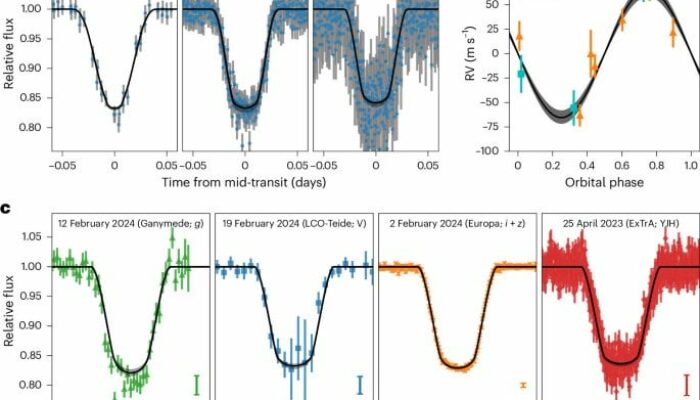
The detection of a giant planet orbiting a very small star challenges existing theories about size limits and stability. Such findings suggest that cosmic formation pathways are more diverse than previously thought, prompting astrophysicists to reconsider foundational models and explore new mechanisms that allow these exceptions.
Underlying Physical Principles and Environmental Factors
The ultimate size of planets and stars is dictated by universal constants and fundamental laws of physics, including gravity, quantum mechanics, nuclear physics, and thermodynamics. These principles govern the internal structure, stability, and evolution of celestial bodies.
Environmental conditions also play a significant role:
- Metallicity:
The abundance of elements heavier than helium affects cooling rates and disk chemistry, influencing formation processes. - Companion Stars:
Binary or multiple star systems can truncate disks and alter mass accretion dynamics, impacting growth limits.
Significance of Understanding Size Limits
Studying the maximum sizes of planets and stars is crucial for advancing our knowledge of stellar evolution, planetary system formation, and the potential for life beyond Earth. These insights help refine models of galaxy evolution and guide the search for exoplanets, especially in systems that defy traditional expectations.
Conclusion: The Cosmic Dance of Limits and Possibilities
In the grand cosmic theater, the size of planets and stars is governed by a delicate balance of forces and constraints, punctuated by remarkable exceptions. As observational technology progresses, uncovering new phenomena continues to challenge and enrich our understanding of these limits. The quest to comprehend what confines celestial giants not only deepens our grasp of the universe but also expands the horizons of human curiosity and discovery.


Leave a Reply