
Short Answer
Definition of Black Holes
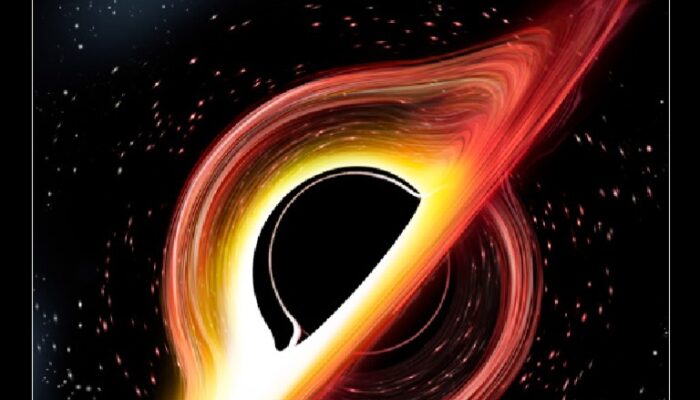
A black hole is a region in space where gravity is so intense that nothing, not even light, can escape its pull. Unlike a simple hole or pit, a black hole acts more like a powerful cosmic whirlpool, drawing in stars, planets, dust, and radiation. Because no light can emerge from it, the black hole appears completely dark, which is how it earned its name.
Formation of Black Holes
Black holes originate from the remnants of massive stars. Stars are enormous spheres of hot gas that shine by burning fuel in their cores. Throughout their lives, a delicate balance exists between the inward pull of gravity and the outward pressure from nuclear fusion. When a star exhausts its fuel, this balance collapses, and gravity takes over, causing the star to implode.
This collapse compresses the star’s core into an extremely dense point known as a singularity. The singularity’s mass is so concentrated that it distorts the fabric of space and time around it, creating the black hole. Surrounding this singularity is the event horizon, an invisible boundary marking the point of no return-once crossed, escape is impossible.
Structure and Key Features
- Singularity:
The infinitely dense core where all the star’s mass is concentrated. - Event Horizon:
The boundary around the singularity beyond which nothing can escape, not even light. - Accretion Disk:
A swirling disk of gas and dust heated to extreme temperatures as it spirals into the black hole.
How Black Holes Affect Space and Time
According to Einstein’s theory of general relativity, gravity is the warping of space-time caused by mass. Black holes create such extreme curvature that time itself slows down near them. To an outside observer, an object falling into a black hole appears to slow and freeze at the event horizon, while from the falling object’s perspective, it crosses the horizon normally.
Types of Black Holes
- Stellar Black Holes:
Formed from the collapse of massive stars, these black holes typically have masses several times that of our Sun. - Supermassive Black Holes:
Found at the centers of galaxies, these giants can be millions or billions of times more massive than the Sun, influencing the orbits of stars and planets around them.
Detecting Black Holes
Since black holes emit no light, astronomers identify them by observing their effects on nearby matter. When gas or stellar material is pulled toward a black hole, it heats up and emits bright radiation before crossing the event horizon. Additionally, stars orbiting an invisible point in space suggest the presence of a black hole exerting gravitational influence.
Scientific Mysteries and Questions
Black holes pose profound questions about the nature of the universe. What occurs inside a black hole remains unknown, and theories speculate about connections to other universes or the ultimate fate of matter swallowed by them. Their enigmatic properties continue to challenge and inspire physicists and astronomers.
Black Holes in Popular Culture
In science fiction, black holes often serve as portals to other dimensions or as cosmic traps. While these portrayals stretch scientific accuracy, they reflect humanity’s fascination with the unknown and the limits of our understanding of space and time.
Importance of Black Holes in Astronomy and Cosmology
Black holes play a crucial role in shaping galaxies and influencing cosmic evolution. Their immense gravitational forces affect star formation and galactic dynamics. Studying black holes helps scientists test theories of gravity, quantum mechanics, and the fundamental laws governing the universe.
Summary: The Cosmic Significance of Black Holes
Black holes are extraordinary cosmic phenomena-powerful, invisible, and mysterious. They warp space and time, challenge our understanding of physics, and captivate both scientists and the public alike. As silent architects of the cosmos, black holes invite us to explore the deepest mysteries of the universe and inspire endless curiosity about the nature of reality.
FAQ
What is a black hole?
A black hole is a region in space where gravity is so strong that nothing can escape from it, including light.
How do black holes form?
Black holes form from the remnants of massive stars that collapse under their own gravity after exhausting their nuclear fuel.
What are the types of black holes?
There are two main types of black holes: stellar black holes, formed from collapsing stars, and supermassive black holes, found at the centers of galaxies.
Can we see black holes?
Black holes cannot be seen directly, but astronomers detect them by observing the effects they have on surrounding matter.
What is the event horizon?
The event horizon is the boundary around a black hole beyond which nothing can escape, marking the point of no return.



Leave a Reply