

Short Answer
Definition of Gravity and Its Fundamental Role
Gravity is a universal force that attracts matter toward one another, fundamentally shaping the structure and behavior of the cosmos. It governs the motion of planets, the formation of stars, and the cohesion of matter on all scales. Without gravity, the familiar interactions that maintain order in the universe would cease to exist, leading to a radically different reality.
- Universal Attraction:
Gravity pulls objects with mass toward each other, creating the force that holds planets, stars, and galaxies together. - Cosmic Architect:
It shapes the large-scale structure of the universe, enabling celestial bodies to form stable orbits and clusters. - Biological Influence:
Gravity influences the development and function of living organisms, affecting everything from cellular processes to whole ecosystems.
Consequences of a Gravity-Free Universe
Envisioning a universe devoid of gravity reveals profound disruptions across physical, biological, and societal domains. The absence of this force would dismantle the cohesive fabric of matter and life as we know it.
Disintegration of Planetary and Cosmic Structures
Without gravity’s binding force, planets like Earth would lose their spherical integrity. Atoms and molecules would no longer be drawn toward a central core, causing matter to disperse into an unstructured cloud. Mountains, oceans, and the planet’s crust would dissolve, unable to maintain their form.
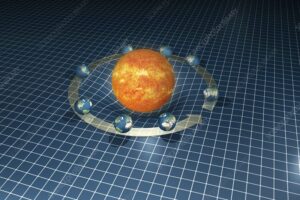
On a larger scale, the Sun’s gravitational pull would fail to keep planets in orbit, resulting in celestial bodies drifting aimlessly through space. Star clusters, galaxies, and constellations depend on gravity’s steady influence to maintain their shape and coherence; without it, the universe would become a chaotic expanse of unconnected matter.
Impact on Spacetime and Temporal Dynamics
According to Einstein’s General Relativity, gravity warps spacetime, influencing how time flows and how objects move. Eliminating gravity would flatten this curvature, potentially causing irregularities in time perception and disrupting the fundamental relationship between mass and energy. Such changes could create temporal anomalies, complicating the experience of time for any form of life.
Biological Implications of Gravity’s Absence
Life on Earth has evolved under the constant influence of gravity, which shapes biological structures and functions. Removing gravity would profoundly alter these processes.
- Plant Growth and Orientation:
Plants rely on gravity to direct root growth and nutrient transport. Without it, they would lose their ability to orient themselves and sustain growth. - Animal Physiology:
The skeletal and muscular systems of animals develop in response to gravitational forces. Without these stresses, structural integrity and function would deteriorate. - Human Health Challenges:
In microgravity environments, astronauts experience muscle atrophy, bone density loss, and fluid shifts. On a gravity-free Earth, these effects would be magnified, leading to severe physiological decline and necessitating new methods of movement and stability.
Societal and Structural Transformations
Human civilization is built around gravity’s predictable influence. Buildings, transportation, and infrastructure depend on gravity for stability and function. Without it, traditional architecture would collapse, as structures rely on their own weight and gravitational forces to maintain integrity. Engineering would require a complete overhaul to address safety and usability in a gravity-free environment.
Redefining Spatial Orientation
The concepts of “up” and “down” are grounded in gravity’s directional pull. Without this reference, human perception and navigation would be fundamentally altered, demanding new sensory adaptations or technological aids to interpret and move through space.
Everyday Phenomena in a Gravity-Free World
Daily life would be transformed in surreal ways. Fluids would lose their shape and cohesion, floating freely rather than settling in containers. Fire behavior would change dramatically, as convection currents driven by gravity would no longer operate, causing flames to flicker unpredictably. Even air distribution would be affected, potentially altering respiratory processes.
Potential New Physical Phenomena
While the absence of gravity would dismantle existing order, it might also reveal novel physical interactions. Without the constraint of weight, atoms and molecules could explore spatial relationships in unprecedented ways, possibly uncovering hidden aspects of matter and energy previously masked by gravitational dominance.
Philosophical and Scientific Reflections
Contemplating a universe without gravity challenges our fundamental understanding of existence. It invites us to rethink the nature of order, chaos, and stability beyond the framework of this essential force. The dissolution of familiar structures and perceptions underscores the delicate balance gravity maintains, while the uncertainty of a gravity-free cosmos opens the door to new realms of discovery and imagination.
Why Understanding Gravity’s Role Is Crucial
Gravity is not only a cornerstone of physics but also a vital influence on life and civilization. Recognizing its pervasive impact helps us appreciate the interconnectedness of natural laws and the delicate conditions that sustain our world. This understanding informs fields ranging from astrophysics to biology and engineering, highlighting gravity’s indispensable role in shaping reality.




Leave a Reply