
Short Answer
Understanding the Cohesion of Stars Within Galaxies
Across the immense expanse of the cosmos, stars twinkle in complex arrangements that form vast galaxies. To an untrained eye, this celestial display appears almost poetic-a delicate equilibrium maintained over unfathomable distances. Yet, beneath this luminous spectacle lies a profound question that has intrigued astronomers and philosophers for centuries: what force or mechanism keeps these radiant spheres bound together across the enormous stretches of galactic space? This seemingly straightforward inquiry delves into the core of astrophysics and challenges our comprehension of the universe’s fundamental structure.
Definition: What Holds Stars Together in Galaxies?
Stars within galaxies are not randomly scattered points of light but components of massive, gravitationally bound systems. Galaxies themselves are colossal assemblies containing billions of stars, interstellar gas, dust, and a mysterious substance known as dark matter, which outweighs visible matter significantly. The cohesion of stars in these galactic systems arises from a combination of forces and phenomena that work in concert to maintain the galaxy’s integrity.
- Gravitational Attraction:
The primary force that binds stars within galaxies, pulling them toward the galaxy’s center of mass and balancing their orbital motion. - Dark Matter:
An invisible form of matter that exerts additional gravitational pull, forming halos around galaxies and preventing stars from escaping. - Supermassive Black Holes:
Massive gravitational centers located at galactic cores that influence the dynamics of nearby stars and gas. - Electromagnetic Forces:
Operating at atomic scales within stars, these forces enable nuclear fusion, powering stars and contributing indirectly to galactic cohesion.
The Role of Gravity in Galactic Structure
Gravity is the fundamental force orchestrating the motion and arrangement of stars within galaxies. It acts over vast distances, drawing stars inward toward the galaxy’s center of mass. This inward pull is counterbalanced by the stars’ orbital velocities, creating a dynamic equilibrium that prevents stars from either collapsing into the galactic core or drifting into intergalactic space. This balance is essential for the long-term stability of galaxies.
Dark Matter: The Invisible Glue
While gravity from visible matter explains much of the galactic structure, it falls short in accounting for the observed motions of stars, especially those at the outer edges of galaxies. These stars move at speeds that cannot be justified by the gravitational pull of visible matter alone. This discrepancy led to the hypothesis of dark matter-an unseen substance that neither emits nor absorbs light but exerts gravitational influence. Dark matter forms extensive halos enveloping galaxies, providing the extra gravitational force necessary to keep fast-moving stars bound within their galactic homes.
Hierarchical Organization Within Galaxies
Galaxies exhibit a layered structure where stars cluster into groups, which then assemble into larger formations such as galactic disks and bulges. Interstellar clouds of gas and dust, governed by gravity, swirl within these structures, serving as stellar nurseries where new stars are born. This ongoing cycle of star formation highlights gravity’s dual role as both a retaining force and a catalyst for creation, sustaining the galaxy’s evolution over billions of years.
Microscopic Forces Powering Stars
Beyond gravitational interactions, electromagnetic forces at the atomic level maintain the internal stability of stars. These forces facilitate nuclear fusion-the process by which stars generate energy and emit light. Although these interactions occur on a microscopic scale, their cumulative effect is monumental, fueling the brilliance of stars and linking the microcosmic processes within stars to the grand cosmic dance of galaxies.
Influence of Supermassive Black Holes
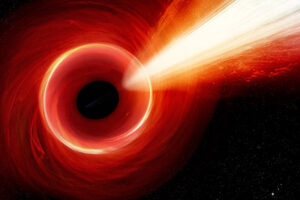
At the centers of most galaxies reside supermassive black holes, whose immense gravitational pull extends far beyond their immediate surroundings. These black holes act as anchors, stabilizing the galactic core and affecting the orbits of nearby stars and gas clouds. Their presence shapes the overall dynamics of galaxies, contributing to the long-term maintenance of galactic structure and influencing star formation rates.
Scientific Mysteries and Theories
Despite significant progress in astrophysics, many aspects of what holds stars together remain enigmatic. The true nature of dark matter is still unknown, with various hypotheses ranging from exotic particles to alternative theories of gravity. Each new discovery deepens our understanding but also raises further questions, fueling ongoing research and debate within the scientific community.
Common Misconceptions About Galactic Cohesion
Gravity from visible matter alone holds galaxies together.
Dark matter’s gravitational influence is essential to explain the observed stellar motions, especially in galactic outskirts.
Stars in galaxies are isolated and independent.
Stars are part of a complex, interconnected system bound by gravity and influenced by galactic structures and dark matter halos.
Why Understanding Galactic Cohesion Is Important
Comprehending the forces that bind stars within galaxies is crucial for unraveling the universe’s large-scale structure and evolution. This knowledge informs models of galaxy formation, star lifecycle, and cosmic dynamics. Moreover, it enhances our grasp of fundamental physics, including gravity and the elusive nature of dark matter, which has implications for both theoretical research and practical applications in astrophysics and cosmology.
Conclusion: The Cosmic Dance of Stars
The unity of stars across galaxies results from a sophisticated interplay dominated by gravity-emanating from both visible matter and the pervasive dark matter that remains undetectable by direct observation. This gravitational symphony is complemented by the internal nuclear processes within stars and the stabilizing presence of supermassive black holes. Together, these elements choreograph a magnificent cosmic ballet that preserves galactic structures over billions of years. The mystery and majesty of what holds stars together continue to inspire awe and curiosity, reminding us that the universe’s deepest secrets often reside in the invisible forces that bind it all.
FAQ
What is the primary force that holds stars together in galaxies?
Gravity is the primary force that binds stars within galaxies.
What role does dark matter play in galactic cohesion?
Dark matter provides additional gravitational pull necessary to keep stars bound within their galaxies.
How do supermassive black holes influence galaxies?
Supermassive black holes stabilize the galactic core and affect the orbits of nearby stars and gas clouds.


Leave a Reply