
Short Answer
Definition of Galactic Cohesion
Galactic cohesion refers to the forces and components that maintain the structural integrity of galaxies, preventing them from dispersing into the vastness of space. A galaxy is a massive system composed of stars, planets, gas, dust, and dark matter, all bound together in a complex cosmic arrangement. The primary agents responsible for holding these celestial assemblies intact are gravity and dark matter, supplemented by baryonic matter such as gas and dust, and the gravitational influence of supermassive black holes.
The Role of Gravity in Galaxies
Gravity is the fundamental force that governs the attraction between masses, acting as the invisible glue that binds stars and other matter within galaxies. It orchestrates the orbital motions of stars around galactic centers, often dominated by supermassive black holes. Without gravity, the universe would be a chaotic expanse of unconnected particles drifting aimlessly.
- Gravitational Binding:
Stars and interstellar matter orbit the galactic core due to gravitational attraction, maintaining the galaxy’s shape and preventing matter from escaping. - Limitations of Visible Matter:
The gravitational pull from observable stars, gas, and dust alone cannot fully explain the high rotational speeds of stars, especially those located in the outer regions of galaxies.
Dark Matter: The Invisible Framework
Dark matter is a mysterious, non-luminous substance that envelops galaxies in extensive halos, exerting additional gravitational force without interacting with electromagnetic radiation. It constitutes approximately 85% of the universe’s total mass and is essential for explaining the observed dynamics of galaxies.

- Invisible Mass:
Dark matter neither emits nor absorbs light, making it undetectable by conventional telescopes. - Gravitational Influence:
Its presence is inferred from the rotational velocities of stars and the gravitational lensing effects observed in galactic clusters. - Structural Support:
Dark matter halos provide the gravitational scaffolding that stabilizes galaxies, preventing them from disintegrating.
Contribution of Gas and Dust
While gravity and dark matter form the backbone of galactic cohesion, interstellar gas and dust play vital roles in the ongoing evolution and structure of galaxies.
- Star Formation:
Clouds of hydrogen and helium gas serve as the raw material for new stars, compressed by gravitational forces within the galactic plane. - Thermal and Chemical Regulation:
Dust particles absorb and scatter starlight, influencing the temperature and chemical processes in the interstellar medium. - Dynamic Environment:
Together, gas and dust create a nurturing environment for stellar birth and contribute to the morphological features of galaxies.
Supermassive Black Holes and Galactic Centers
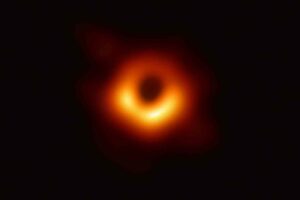
At the core of most galaxies lies a supermassive black hole, whose mass ranges from millions to billions of times that of the Sun. These cosmic giants exert a powerful gravitational pull that anchors the central regions of galaxies.
- Gravitational Anchor:
The black hole’s gravity stabilizes the innermost stars and gas clouds, influencing the dynamics of the galactic nucleus. - Regulation of Star Formation:
Feedback mechanisms from black holes can regulate the rate of star formation and impact the overall evolution of the host galaxy. - Indirect Influence:
Although their direct gravitational reach is limited to central areas, their effects propagate throughout the galactic ecosystem.
How Galactic Forces Interact
The stability and evolution of galaxies result from the interplay between gravity, dark matter, baryonic matter, and supermassive black holes. Each component contributes uniquely to the cosmic balance:
- Gravity: Binds stars and matter into coherent orbits.
- Dark Matter: Provides the unseen mass necessary for structural integrity.
- Gas and Dust: Fuel star formation and influence galactic morphology.
- Black Holes: Anchor central regions and regulate galactic processes.
Galaxies as Dynamic Systems
Galaxies are not static entities; they are dynamic systems continuously shaped by internal mechanisms and external interactions such as mergers and tidal forces. The delicate equilibrium maintained by gravitational forces and dark matter allows galaxies to evolve over billions of years without losing their coherence.
Real-World Examples of Galactic Cohesion
Observations of spiral galaxies like the Milky Way and Andromeda reveal stars orbiting at speeds that defy explanation by visible matter alone, highlighting the role of dark matter halos. Additionally, gravitational lensing observed in galaxy clusters provides evidence of dark matter’s pervasive influence. Supermassive black holes, such as Sagittarius A* at the center of the Milky Way, demonstrate the anchoring effect on galactic cores.
Common Misconceptions About Galactic Structure
Gravity from visible matter alone holds galaxies together.
Dark matter’s gravitational pull is essential to explain the observed rotational speeds and stability of galaxies.
Dark matter interacts with light.
Dark matter does not emit, absorb, or reflect electromagnetic radiation, making it invisible to direct observation.
Supermassive black holes dominate the entire galaxy’s gravity.
Their direct gravitational influence is limited to central regions, though their indirect effects are significant.
Significance of Galactic Cohesion
Understanding the forces that hold galaxies together is crucial for comprehending the large-scale structure and evolution of the universe. Gravity and dark matter not only maintain galactic integrity but also influence cosmic phenomena such as galaxy formation, clustering, and the distribution of matter. This knowledge deepens our insight into the universe’s past, present, and future, highlighting the elegant complexity underlying cosmic order.




Leave a Reply