

Short Answer
Definition of Planetary Gravitational Pull
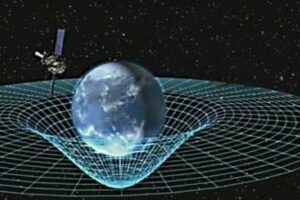
Planetary gravitational pull refers to the force of attraction that a planet exerts on objects near its surface or within its gravitational influence. This force is responsible for holding moons in orbit, guiding spacecraft trajectories, and maintaining planetary atmospheres. It is an invisible yet fundamental force that shapes the dynamics of celestial bodies within a solar system.
Fundamental Principles of Gravity
Gravity is the mutual attraction between masses. According to Newton’s law of universal gravitation, the force between two masses is directly proportional to the product of their masses and inversely proportional to the square of the distance separating their centers. In the context of planets, this means that the gravitational pull depends primarily on the planet’s mass and the distance from its center to the object experiencing the force.
- Mass:
The greater the mass of a planet, the stronger its gravitational pull. - Distance:
Gravitational force decreases with the square of the distance from the planet’s center.
Influence of Planetary Radius on Gravity
The radius of a planet plays a crucial role in determining the gravitational acceleration at its surface. Even if a planet has a massive amount of matter, a larger radius means that the surface is farther from the center of mass, which reduces the gravitational acceleration experienced there. This inverse square relationship between radius and gravity explains why some large planets do not have proportionally stronger surface gravity.
Density and Internal Structure
Density, defined as mass per unit volume, integrates the effects of both mass and radius, providing insight into how compact a planet is. Planets with higher densities, such as Earth and Mercury, concentrate more mass into smaller volumes, resulting in stronger surface gravity. Conversely, gas giants like Jupiter and Saturn have lower densities due to their composition of light gases, which moderates their surface gravitational acceleration despite their large masses.
Moreover, the internal distribution of mass within a planet affects gravity. Variations in core size, mantle composition, and crust thickness create differences in gravitational strength across the planet’s surface. A dense metallic core, for example, can enhance surface gravity compared to a planet of similar size but less dense interior.
Effect of Planetary Rotation and Shape
Rapid rotation causes planets to bulge at the equator due to centrifugal forces, making them oblate rather than perfect spheres. This equatorial bulge increases the radius at the equator relative to the poles, leading to slight variations in gravitational acceleration depending on latitude. For instance, Earth’s gravity is marginally stronger at the poles than at the equator. Jupiter, with its fast rotation period of about 10 hours, exhibits a more pronounced equatorial bulge, which subtly alters gravity across its surface.
Local Gravitational Variations
On a smaller scale, gravitational anomalies occur due to regional differences in density beneath a planet’s surface. Geological features such as mountain ranges or dense mineral deposits can cause minor fluctuations in gravity, detectable by sensitive gravimetric instruments. While these variations do not significantly affect overall surface gravity, they highlight the complexity of gravitational forces influenced by geological structures.
Atmospheric Influence on Perceived Gravity
Although a planet’s atmosphere has negligible mass compared to the planet itself and thus does not directly affect gravitational pull, it can influence the effective weight experienced by objects. Atmospheric pressure and drag can modify how gravity is felt, but the fundamental gravitational acceleration remains determined by the planet’s mass and radius.
Gravitational Characteristics of Solar System Planets
Jupiter, the largest planet in our solar system, has a mass over 300 times that of Earth, resulting in a strong gravitational pull that governs many moons and objects in the outer solar system. However, its surface gravity is about 24.79 m/s², only around 2.5 times Earth’s gravity, due to its vast radius. Earth, with a smaller radius of approximately 6,371 kilometers, has a higher surface gravity relative to its size because its mass is concentrated in a more compact volume.
Exoplanets and Gravitational Diversity
Planets beyond our solar system, known as exoplanets, display a wide range of masses, radii, and compositions, leading to diverse gravitational environments. Some super-Earths pack significant mass into relatively small radii, resulting in intense surface gravity. In contrast, gaseous mini-Neptunes may have substantial mass but lower surface gravity due to their extended, less dense atmospheres. This variety challenges simple assumptions about gravity and enriches our understanding of planetary physics.
Mathematical Explanation of Gravitational Force
The gravitational force (F) between two masses is given by Newton’s law of universal gravitation:
F = G * (m₁ * m₂) / r²
- F: Gravitational force between the two masses
- G: Gravitational constant (6.67430 × 10⁻¹¹ N·m²/kg²)
- m₁: Mass of the first object (e.g., planet)
- m₂: Mass of the second object (e.g., satellite or person)
- r: Distance between the centers of the two masses
Surface gravitational acceleration (g) on a planet can be derived as:
g = G * M / R²
- g: Acceleration due to gravity at the planet’s surface
- M: Mass of the planet
- R: Radius of the planet
Common Misconceptions About Planetary Gravity
Larger planets always have stronger surface gravity.
Surface gravity depends on both mass and radius; a large radius can reduce surface gravity despite high mass.
Atmospheres significantly increase a planet’s gravitational pull.
Atmospheric mass is negligible compared to the planet’s mass and does not affect gravitational acceleration.
Gravity is uniform across a planet’s surface.
Gravity varies with latitude due to rotation-induced shape changes and local geological features.
Significance of Understanding Planetary Gravity
Grasping the factors that determine a planet’s gravitational pull is essential for multiple scientific and practical reasons. It informs space mission planning, satellite deployment, and understanding planetary atmospheres and geology. Moreover, studying gravity across different planets enhances our knowledge of planetary formation, structure, and the dynamic processes shaping celestial bodies. This understanding also deepens our appreciation of the forces governing the universe and our place within it.
FAQ
What is planetary gravitational pull?
It is the attraction force that a planet exerts on objects within its gravitational influence.
How does a planet's rotation affect its gravity?
Rapid rotation can cause a planet to bulge at the equator, leading to variations in gravitational acceleration.



Leave a Reply