
Short Answer
Understanding Gravity in Orbit
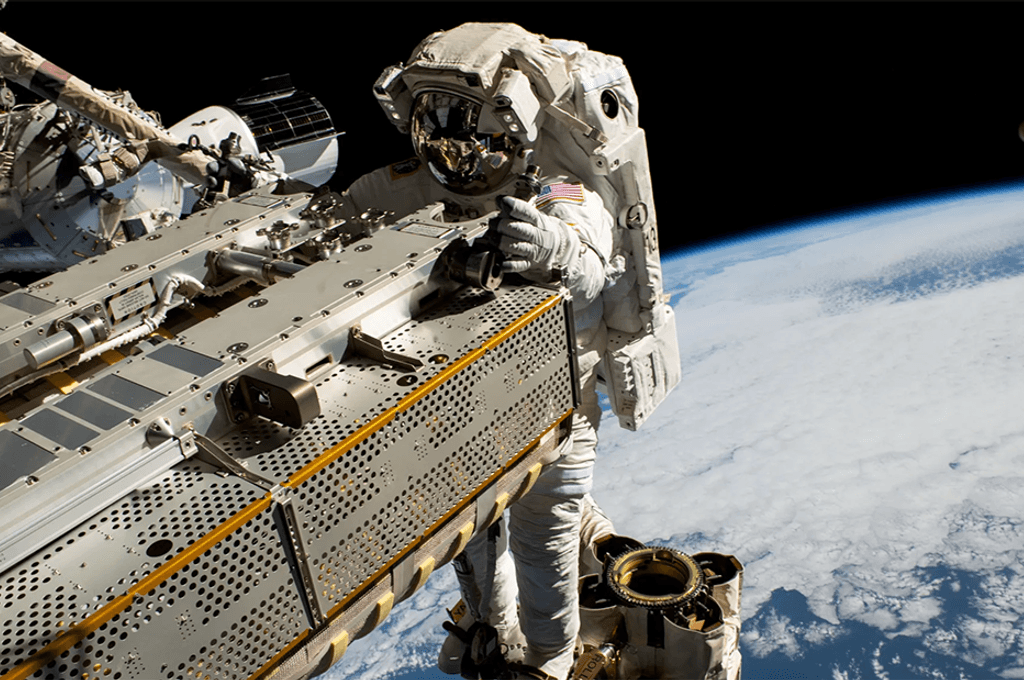
When picturing astronauts aboard the International Space Station (ISS), many imagine them floating freely in a state often called “zero gravity.” However, this term is somewhat misleading. The ISS does not exist in a true zero gravity environment but rather in a condition known as microgravity. This subtle distinction invites a deeper examination of the physics behind orbital motion and the human experience in space.
Definition of Microgravity
Microgravity refers to an environment where gravitational forces are significantly reduced but not entirely absent. It is a state experienced by objects and astronauts aboard the ISS, where gravity’s influence is diminished enough to create the sensation of weightlessness.
- Gravity at the ISS:
Despite orbiting about 420 kilometers above Earth, the station experiences roughly 90% of the gravitational pull found at the planet’s surface. - Weightlessness Explained:
The sensation of floating arises because the ISS and its occupants are in continuous free-fall around Earth, creating a near-weightless environment.
How Microgravity Occurs on the ISS
The ISS travels at an extraordinary speed of approximately 28,000 kilometers per hour. This velocity causes the station to perpetually fall toward Earth, but due to the planet’s curvature, it continuously misses the surface, effectively orbiting the planet. This constant free-fall results in the microgravity environment experienced onboard.
Physical Effects of Microgravity
Microgravity produces unique physical phenomena that differ markedly from conditions on Earth:
- Fluid Behavior:
Without gravity’s directional pull, fluids form spheres and layers, enabling researchers to study fluid dynamics without terrestrial interference. - Biological Impact:
Prolonged exposure leads to muscle atrophy, bone density loss, and altered cellular processes, highlighting challenges for long-term human spaceflight.
Scientific and Technological Implications
The microgravity environment aboard the ISS has broad applications across various scientific disciplines:
- Materials Science:
Experiments benefit from the absence of gravity-driven convection, allowing for the study of fundamental physical properties. - Pharmaceutical Research:
Protein crystallization in microgravity can lead to breakthroughs in drug development. - Combustion Studies:
The elimination of buoyancy effects provides clearer insights into flame behavior and pollution control. - Astronomy and Earth Observation:
The station’s stable orbit and minimal gravitational interference enable high-precision data collection.
Artificial Gravity: Concepts and Challenges
To counteract the adverse health effects of microgravity, scientists have explored the idea of artificial gravity. This concept involves generating a force similar to Earth’s gravity, often through centrifugal acceleration by rotating habitats.
- Rotational Gravity:
Spinning a space station or habitat creates outward force that mimics gravity. - Engineering Constraints:
Implementing such systems on the current ISS is impractical due to structural, energy, and safety limitations. - Future Prospects:
Upcoming missions may incorporate rotating modules or other artificial gravity technologies to support long-duration space travel.
Human Adaptation to Microgravity
Life aboard the ISS requires astronauts to adjust to the unique conditions of microgravity. This adaptation involves:
- Motor Skills:
Developing new ways to move and stabilize oneself using harnesses and footholds. - Daily Activities:
Rethinking routine tasks such as eating, sleeping, and hygiene to accommodate weightlessness. - Health Management:
Engaging in specialized exercise and medical protocols to mitigate muscle and bone loss.
Clarifying Common Misconceptions
The ISS is in zero gravity.
The station experiences microgravity, where gravity is present but the effects of free-fall create weightlessness.
Gravity disappears completely in space.
Gravity extends far beyond Earth’s surface and remains strong enough to keep the ISS in orbit.
Significance of Microgravity in Space Exploration
Understanding microgravity is essential for advancing human spaceflight and scientific research. It enables unique experiments impossible on Earth, informs the design of future spacecraft, and highlights the physiological challenges astronauts face. The ISS exemplifies human ingenuity in harnessing and adapting to this delicate balance of forces, paving the way for deeper exploration of the cosmos.
Summary
The International Space Station operates within a microgravity environment, characterized by near-weightlessness resulting from orbital free-fall rather than the absence of gravity. This nuanced gravitational state fosters groundbreaking scientific research and demands significant human adaptation. As space exploration progresses, innovations such as artificial gravity may become vital for sustaining life beyond low Earth orbit, underscoring the ongoing interplay between gravity, motion, and human endurance in space.
FAQ
Is the ISS in zero gravity?
No, the ISS is in a microgravity environment, which means that while gravity is present, the effects of free-fall create the sensation of weightlessness.
What scientific research occurs in microgravity?
The microgravity environment allows for unique studies in materials science, pharmaceutical research, and fluid dynamics.


Leave a Reply