

Short Answer
Definition of Darkness in Space
When considering the vast expanse of the universe, a compelling question arises: does an area exist in space that is completely devoid of light? Light, in its many forms, fills the cosmos-from the brilliant radiance of stars to the faint cosmic microwave background radiation. The idea of absolute darkness, a region entirely free from photons, invites a closer examination of both astrophysical phenomena and the fundamental nature of light.
The Ubiquity of Light Across the Universe
Light is an omnipresent feature of the cosmos. Stars, galaxies, and nebulae emit vast quantities of electromagnetic radiation, including visible light and other wavelengths beyond human perception. Additionally, cosmic dust scatters and reflects light, contributing to a diffuse glow throughout space. Even the seemingly empty voids between celestial bodies are permeated by the cosmic microwave background (CMB), a faint relic radiation from the Big Bang that saturates all observable space, establishing a baseline electromagnetic presence.
Regions of Near-Total Darkness
Despite the pervasive illumination, certain cosmic structures absorb or block light to create pockets of profound darkness. Dense molecular clouds and dark nebulae are prime examples-massive accumulations of gas and dust that prevent stellar light from passing through. These nebulae appear as dark silhouettes against the bright backdrop of the Milky Way, as light from background stars is either absorbed by tiny particles or scattered away, making these areas nearly impenetrable to optical observation.
Black Holes: The Ultimate Light Traps
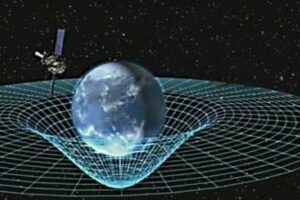
Black holes represent the epitome of lightless regions in space. Their event horizons mark boundaries beyond which no light or information can escape due to intense gravitational forces. Inside this boundary, electromagnetic radiation is confined, rendering the interior completely dark to outside observers. While black holes are not physical “places” in the traditional sense but rather regions of extreme spacetime curvature, they stand as the universe’s most profound examples of darkness.
Cosmic Voids: Expanses of Sparse Illumination
Cosmic voids are enormous regions, often spanning tens to hundreds of millions of light-years, characterized by a scarcity of galaxies and luminous matter. Although not entirely devoid of light, these voids contain far fewer photons compared to denser galactic clusters. The light passing through them is significantly diminished due to the lack of sources, making cosmic voids some of the closest analogs to near-absolute darkness on a cosmological scale.
The Nature of Light and Its Implications for Darkness
Light is an electromagnetic wave that travels through the vacuum of space but requires sources to generate and sustain its presence. In the absence of emitting or reflecting bodies, a region would appear dark to detection instruments. However, a perfect vacuum devoid of even cosmic microwave background photons is practically unattainable, as this thermal relic radiation permeates the entire observable universe. Consequently, while darkness can approach an extremely low photon density, total absence of light is constrained by fundamental cosmological conditions.
Detection of Light in the Darkest Regions
Modern observational tools, sensitive across the electromagnetic spectrum-from radio waves to gamma rays-reveal that even the emptiest regions of space emit subtle signals. These include faint emissions from interstellar dust warmed by distant stars, synchrotron radiation produced by charged particles spiraling in magnetic fields, and the omnipresent cosmic microwave background. Advances in telescope technology continually enhance our ability to detect these faint glows, uncovering layers of light previously invisible to the human eye.
Scientific and Philosophical Perspectives on Cosmic Darkness
The study of cosmic darkness extends beyond astrophysics into philosophical and poetic realms. Dark matter and dark energy, while unrelated to visible light, contribute to the universe’s structure and evolution, illustrating that darkness can signify profound, unseen forces rather than mere absence of illumination. Culturally, darkness often symbolizes mystery, introspection, and the unknown, enriching scientific discourse with humanistic insights.
Educational Importance
Exploring darkness in space integrates concepts from physics, astronomy, cosmology, and philosophy, appealing to a broad audience including students, enthusiasts, and researchers. Educational resources range from detailed explanations of light-matter interactions to documentaries and academic lectures, fostering a comprehensive understanding of the interplay between light and darkness in the universe.
Summary: The Reality of Darkness in the Cosmos
In conclusion, while the universe does not contain regions completely devoid of light in the strictest sense, it hosts numerous areas where light is exceedingly scarce or effectively blocked. Dark nebulae, cosmic voids, and the interiors of black holes exemplify such environments of profound darkness. These phenomena challenge our comprehension of light’s omnipresence and inspire ongoing exploration into the depths of cosmic obscurity. The dynamic relationship between light and darkness in space is not only a fundamental natural condition but also a catalyst for scientific discovery and philosophical reflection.



Leave a Reply