
Short Answer
Definition of Space
Space is commonly defined as the three-dimensional continuum in which all physical objects and energy exist and interact. It serves as the fundamental arena where matter moves, forces operate, and cosmic events unfold. Far from being a simple emptiness, space provides the essential framework that allows for the positioning and relationship of all entities within the universe.
- Physical Space:
The measurable volume in which objects have location and distance relative to one another. - Conceptual Space:
The mental and theoretical construct humans use to understand and navigate their environment.
Historical Perspectives on the Nature of Space
The understanding of space has evolved significantly throughout history, shaped by advances in physics and philosophy.
Newtonian Absolute Space
In classical mechanics, space was regarded as an absolute, immutable container that exists independently of the objects within it. Isaac Newton envisioned space as a fixed, infinite stage where physical phenomena occur, unaffected by the presence or absence of matter. This view treats space as a real, tangible entity that can be measured and navigated.
Einstein’s Relativity and the Dynamic Fabric of Space-Time
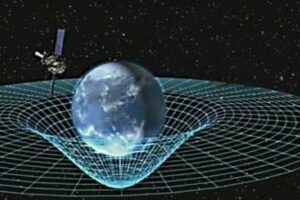
Albert Einstein’s theory of relativity transformed the concept of space from a static backdrop to a dynamic, flexible fabric intertwined with time-known as space-time. According to this framework, space is not independent but is influenced by mass and energy, causing it to curve and warp. This curvature explains gravitational effects and has been empirically confirmed through observations such as the bending of light around massive objects and the behavior of black holes.
Quantum Insights into Space
Quantum mechanics further complicates the classical notion of empty space. At microscopic scales, what appears as a vacuum is actually a seething field of fluctuating energy and transient virtual particles. This quantum vacuum challenges the idea of space as mere emptiness, instead presenting it as a dynamic substrate filled with potentiality that underpins all matter and forces.
Philosophical Interpretations of Space
The reality of space is also a profound philosophical question, engaging debates about whether space is an external entity or a mental framework.
Kantian View: Space as a Cognitive Framework
Immanuel Kant proposed that space is an a priori intuition-a fundamental way the human mind organizes sensory input. In this perspective, space does not exist independently but is a necessary condition for perceiving and relating objects.
Realist and Phenomenological Perspectives
Contrasting Kant, many philosophers argue that the consistent and predictable behavior of spatial relationships across different observers indicates that space has an objective existence beyond human perception. This view is supported by empirical evidence demonstrating that spatial measurements remain reliable regardless of subjective experience.
Modern Theoretical Developments
Contemporary physics, including string theory and attempts at a Grand Unified Theory, suggest that space might be an emergent phenomenon arising from more fundamental pre-spatial entities. These theories propose that the familiar three-dimensional space could be a macroscopic manifestation of deeper, abstract informational or quantum structures, challenging traditional ontologies.
Space in Culture and Art
Beyond scientific inquiry, space holds significant cultural and artistic meaning. In literature, visual arts, and digital media, space is often manipulated to evoke emotions, explore metaphysical ideas, or represent human consciousness. These interpretations highlight the dual nature of space as both a physical reality and a symbolic construct shaped by human creativity.
Practical Implications and Everyday Experience
On a practical level, human spatial awareness and navigation reinforce the reality of space. Our ability to perceive distances, directions, and volumes is consistent and reliable. Technologies such as GPS, astronomical observations, and space exploration missions depend on the objective and stable nature of spatial dimensions, confirming space as a real and operative framework within which events occur.
Common Misconceptions About Space
Space is completely empty.
Quantum physics reveals that space is filled with fluctuating energy fields and virtual particles, making it a dynamic quantum vacuum rather than a void.
Space exists independently of time.
According to relativity, space and time are interwoven into a single continuum called space-time, which is influenced by mass and energy.
Space is only a mental construct.
While space is a cognitive framework, empirical evidence supports its objective existence as a measurable and consistent dimension.
Why Understanding Space Is Important
Grasping the nature of space is crucial for multiple fields including physics, cosmology, philosophy, and technology. It shapes our comprehension of the universe’s structure, governs the laws of gravity and motion, and underpins technologies like satellite navigation and space exploration. Moreover, exploring the paradoxical qualities of space enriches philosophical discourse and inspires cultural creativity, deepening our understanding of reality and our place within it.
Summary
Space is a multifaceted concept that transcends simple definitions. It is simultaneously a measurable dimension intertwined with time, a quantum field teeming with activity, a mental framework for organizing experience, and a cultural symbol. The ongoing scientific and philosophical exploration of space continues to reveal its complex and paradoxical nature, affirming its central role in shaping both the cosmos and human understanding.
FAQ
What is space?
Space is defined as the three-dimensional continuum where all matter and energy exist and interact.
Is space empty?
No, quantum physics shows that space is filled with fluctuating energy fields and virtual particles.
Does space exist independently of time?
According to relativity, space and time are interwoven into a single continuum called space-time.



Leave a Reply