
Short Answer
Understanding the Nature of Space
When we gaze into the night sky, the vastness above appears as an immense void, a seemingly endless emptiness stretching between stars and galaxies. But is this expanse truly empty? Could the fabric of space itself be composed of matter, energy, or perhaps something far more mysterious? This question invites a deep investigation into the fundamental essence of the universe’s structure.
Definition of Space and Its Components
Space is often perceived as a boundless vacuum where celestial bodies drift under the influence of gravity and other forces. However, modern physics reveals that space is far from a simple void. Instead, it is a dynamic arena where matter, energy, and fields interact in complex ways.
- Matter:
Consists of particles such as protons, neutrons, and electrons that possess mass and form everything from atoms to massive cosmic structures. - Energy:
The capacity to perform work, manifesting in various forms including light, heat, and kinetic energy. - Space:
Traditionally viewed as a passive backdrop, but now understood as an active participant in physical phenomena.
Quantum Insights: The Active Vacuum
Quantum field theory revolutionized our understanding by showing that what appears as empty space is actually alive with transient activity. Virtual particles spontaneously emerge and vanish within infinitesimal timeframes, a process known as quantum fluctuations. This reveals that space is a restless sea of ephemeral energies rather than a static emptiness.
This phenomenon implies that space itself harbors a form of intrinsic energy, often referred to as vacuum energy or zero-point energy, highlighting the subtle and intricate nature of the cosmic fabric.
Dark Energy and the Expanding Universe
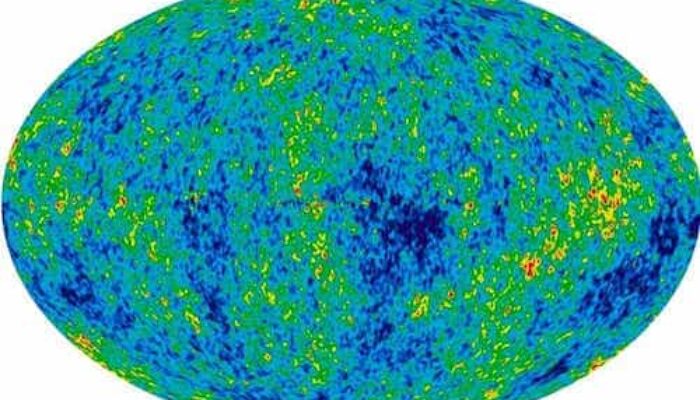
Adding to the complexity is dark energy, a mysterious force constituting approximately 68% of the universe’s total energy. Dark energy permeates all of space and drives the accelerated expansion of the cosmos. Its exact origin remains elusive, sparking ongoing debates about whether it arises from an inherent property of space or an undiscovered physical principle.
If dark energy is indeed a fundamental characteristic of space, it suggests that the vacuum is imbued with an energy form that transcends traditional matter-energy classifications.
The Presence of Matter in Space
Despite the vast emptiness, matter is undeniably present throughout space. From tiny dust particles to enormous galaxies, matter aggregates under gravity to form the visible structure of the universe. Even the seemingly empty interstellar and intergalactic regions contain sparse gases and cosmic rays, representing ordinary matter at extremely low densities. Thus, space resembles a faint mist rather than an absolute void.
Fields and Theoretical Constructs in Space
Advanced physics introduces the concept of fields permeating space, which influence the properties of particles and the universe itself. For example, the Higgs field imparts mass to particles through their interaction with it, suggesting that space is a complex matrix of such fields.
Moreover, speculative theories like string theory propose that spacetime is composed of tiny, vibrating strings, revealing a granular structure that challenges classical views of continuous space.
Spacetime: The Unified Fabric
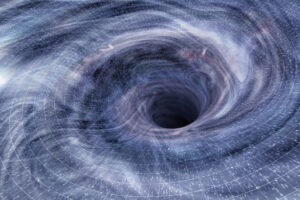
Einstein’s theory of general relativity merges space and time into a single, flexible continuum known as spacetime. This fabric is not inert; it bends and warps in response to matter and energy. The detection of gravitational waves-ripples in spacetime caused by massive cosmic events-confirms that spacetime behaves like a physical entity capable of dynamic changes.
While spacetime is neither matter nor energy in the traditional sense, it acts as a responsive stage that blurs the lines between these categories.
Quantum Phenomena in the Vacuum
Phenomena such as vacuum polarization and the Casimir effect demonstrate that empty space exhibits measurable physical effects arising from its quantum nature. These experiments show that the vacuum influences forces and fields, making it an active participant in the laws governing the universe rather than a mere backdrop.
The Enigma of the Unknown in Space
Could space be composed of an unknown form of matter or energy? This question remains open as current scientific frameworks continue to evolve. Dark matter, which accounts for about 27% of the universe’s mass-energy content, interacts gravitationally but not electromagnetically, eluding direct observation and understanding. It may hold crucial clues to the true nature of space.
Why Exploring the Nature of Space is Crucial
Investigating whether space consists of matter, energy, or something entirely unknown pushes the boundaries of physics and deepens our comprehension of reality. Understanding space in its entirety offers insights into the fundamental blueprint of existence, influencing fields from cosmology to quantum mechanics.
As scientific tools and theories advance, what was once considered empty may reveal itself as a vibrant, multifaceted entity. The mystery of space challenges us to explore further, inspiring awe and expanding our knowledge of the universe’s infinite complexity.
FAQ
What is space made of?
Space is thought to be composed of a combination of matter, energy, and possibly unknown elements, with concepts like dark energy and quantum fluctuations playing significant roles.
What is dark energy?
Dark energy is a mysterious force that makes up about 68% of the universe’s energy content, driving its accelerated expansion.
How does quantum physics relate to space?
Quantum physics reveals that what seems like empty space is actually filled with transient particles and fluctuations, indicating that space itself has dynamic properties.
Leave a Reply