
Short Answer
Definition of Gravity
Gravity is a fundamental interaction that governs the attraction between objects with mass, influencing the motion of planets, stars, galaxies, and even light. It is commonly perceived as the invisible force that keeps us anchored to the Earth, holding oceans, atmospheres, and everything else in place. However, gravity is far more complex than this everyday experience suggests, varying significantly across different environments in the universe.
Newtonian Gravity: The Classical Perspective
In the 17th century, Isaac Newton formulated the law of universal gravitation, describing gravity as a force pulling any two masses toward each other. According to Newton’s law, the gravitational force between two objects is directly proportional to the product of their masses and inversely proportional to the square of the distance separating their centers. This relationship can be expressed mathematically as:
Formula for Newton’s Law of Universal Gravitation
F = G * (m₁ * m₂) / r²
- F: Gravitational force between two masses
- G: Gravitational constant (6.67430 × 10⁻¹¹ N·m²/kg²)
- m₁, m₂: Masses of the two objects
- r: Distance between the centers of the two masses
This formula highlights that gravity is not a fixed value but varies depending on the masses involved and their separation distance.
Variability of Gravity Across the Solar System
Gravity’s strength differs markedly throughout our solar system. For example, the Sun’s enormous mass exerts a dominant gravitational influence, orchestrating the orbits of planets. The Moon’s gravitational pull is about one-sixth that of Earth’s due to its smaller mass and radius, which is why astronauts experience a sensation of weightlessness there. Mars, with roughly 38% of Earth’s gravity, presents unique challenges for future human exploration and adaptation.
Gravity in Extreme Cosmic Environments
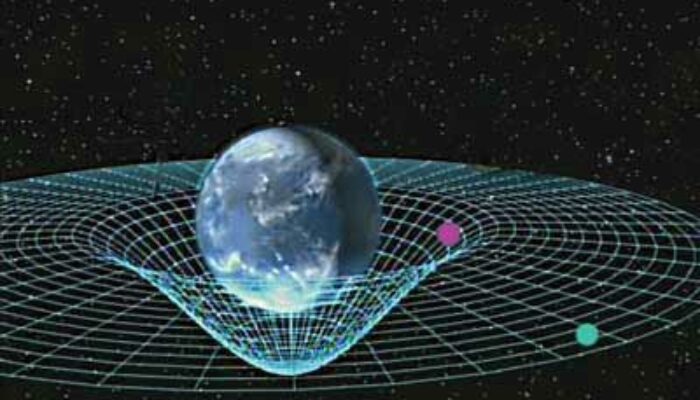
Beyond planets and moons, gravity exhibits even more dramatic variations near massive celestial objects like neutron stars and black holes. In these regions, gravity is so intense that it warps the fabric of spacetime itself, a concept introduced by Albert Einstein’s theory of general relativity. Instead of viewing gravity as a force transmitted through space, general relativity describes it as the curvature of spacetime caused by mass and energy.
Gravitational Time Dilation and Event Horizons
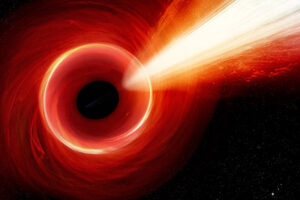
Near extremely massive bodies, gravity can slow down time-a phenomenon known as gravitational time dilation. At the event horizon of a black hole, gravity becomes so strong that not even light can escape, illustrating the vast range of gravitational intensities in the universe.
Gravity in the Cosmic Void and the Role of Dark Energy
In the vast expanses between galaxies, where matter is sparse, gravitational forces are exceedingly weak. These near-empty regions allow the universe to expand at an accelerating rate, driven by a mysterious force called dark energy. This interplay between gravity and dark energy shapes the large-scale structure of the cosmos, including galaxy clusters, cosmic filaments, and immense voids.
Local Variations of Gravity on Earth
Even on our home planet, gravity is not perfectly uniform. Variations arise due to differences in altitude, the density of Earth’s crust, and geological formations. For instance, gravity slightly decreases at mountain peaks because of increased distance from Earth’s center, while it increases in deep ocean trenches. These subtle differences are measurable and have practical applications in fields like geophysics and natural resource exploration.
Why Understanding Gravity Matters
Gravity is a cornerstone of physics, essential for understanding the motion of celestial bodies and the structure of the universe. Its variability challenges simplistic notions and drives scientific inquiry into the nature of spacetime, the interaction of fundamental forces, and the evolution of the cosmos. Studying gravity not only helps us navigate and engineer on Earth but also fuels our quest to explore space and comprehend the universe’s deepest mysteries.
Common Misconceptions About Gravity
Gravity is the same everywhere in the universe.
Gravity varies depending on mass, distance, and the curvature of spacetime, leading to different gravitational strengths in different locations.
Gravity is only a force pulling objects downward.
According to general relativity, gravity is the curvature of spacetime caused by mass and energy, affecting the motion of objects and even the flow of time.
Gravity on Earth is perfectly uniform.
Local geological and altitude differences cause measurable variations in Earth’s gravitational field.
Future Questions and Research Directions
Despite centuries of study, gravity remains a subject of active research. Scientists continue to investigate how gravity interacts with other fundamental forces at quantum scales and whether its strength changes over cosmic time. Advanced experiments and space missions aim to deepen our understanding of gravity’s true nature, potentially unlocking new physics beyond current theories.
FAQ
What is gravity?
Gravity is a fundamental interaction that causes attraction between objects with mass.
How does gravity vary across the universe?
Gravity varies significantly depending on the mass of objects and their distances from each other.
Leave a Reply