
Short Answer
Definition of Gravity
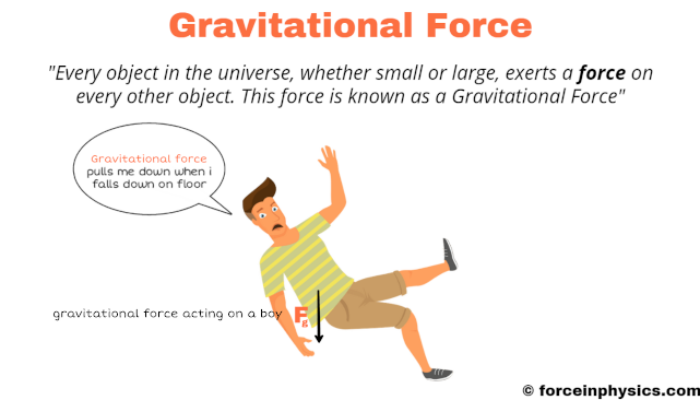
Gravity is a fundamental interaction that governs the attraction between masses in the universe. Despite being one of the most familiar forces, its true essence remains a profound mystery that has captivated scientists and philosophers for centuries. The nature of gravity raises intriguing questions: Is it a force, a field, or something more abstract and elusive? Understanding gravity requires exploring concepts from classical mechanics, field theory, and modern physics.
Historical Perspective: Gravity as a Force
Gravity was initially described as a force by Sir Isaac Newton in the 17th century. Newton’s law of universal gravitation states that every mass attracts every other mass with a force proportional to the product of their masses and inversely proportional to the square of the distance between them. This classical view portrayed gravity as an invisible force acting instantaneously across space, compelling objects to move toward one another. This framework provided a simple yet powerful mathematical model that explained planetary motions and terrestrial phenomena for centuries.
Limitations of the Newtonian Model
While Newton’s gravitational force concept was highly effective for everyday and many scientific applications, it encountered significant challenges under extreme conditions. For instance, the idea of instantaneous action at a distance conflicted with the finite speed of information transfer established by electromagnetic theory and later by Einstein’s special relativity. These inconsistencies highlighted the need for a more comprehensive theory of gravity.
Einstein’s Revolution: Gravity as Curved Spacetime
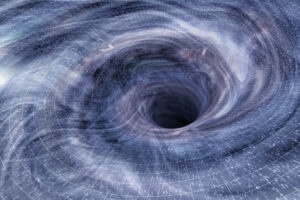
Albert Einstein’s general theory of relativity, introduced in 1915, transformed our understanding of gravity. Instead of viewing gravity as a force transmitted between masses, Einstein described it as the curvature of spacetime caused by mass and energy. Massive objects distort the fabric of spacetime, creating a curved geometry that dictates the motion of objects. What we perceive as gravitational attraction is actually objects following the straightest possible paths, called geodesics, within this warped spacetime continuum.
Gravity and Field Theory
In physics, a field assigns a value or mathematical object to every point in space and time. Electromagnetic phenomena are described by vector fields, while gravity in general relativity is represented by the metric tensor field, which encodes the geometry of spacetime itself. This places gravity within the field paradigm, but as a unique type of field with complex mathematical properties distinct from electromagnetic fields.
Quantum Gravity and the Search for Unification
Modern physics aims to unify gravity with the other fundamental forces-electromagnetism, the weak nuclear force, and the strong nuclear force-within a quantum framework. Quantum field theories have successfully described these forces, but gravity remains resistant to such unification. The hypothetical graviton, a quantum particle proposed to mediate gravitational interactions, has yet to be observed. This leaves open the question of whether gravity can be fully integrated into quantum field theory or if it represents a fundamentally different phenomenon.
Alternative and Emerging Theories of Gravity
- Scalar-Tensor Theories:
These models introduce additional fields alongside the metric tensor, suggesting gravity may involve multiple interacting components rather than a single entity. They aim to explain phenomena such as cosmic acceleration and dark energy. - Emergent Gravity:
This approach proposes that gravity is not fundamental but arises from microscopic degrees of freedom, similar to how fluid behavior emerges from molecular interactions. Gravity, in this view, is a macroscopic statistical or entropic force, hinting at deeper underlying structures of spacetime and matter.
Experimental Evidence and Observations
Gravitational effects are observed in various ways, from the everyday experience of weight to the precise orbits of planets. More recently, the detection of gravitational waves-ripples in spacetime generated by massive cosmic events-has provided strong support for the geometric interpretation of gravity. These waves travel at the speed of light, confirming predictions of general relativity and offering new insights into the dynamic nature of spacetime curvature.
Common Misconceptions About Gravity
Gravity is simply a force like electromagnetism.
Gravity is better understood as the curvature of spacetime, a geometric property rather than a conventional force.
Newton’s law of gravitation is universally accurate.
Newtonian gravity is an approximation that breaks down under extreme conditions, where general relativity provides a more precise description.
Gravity has been fully explained by current physics.
Gravity’s integration with quantum mechanics remains unresolved, and alternative theories continue to explore its deeper nature.
Significance of Understanding Gravity
Gravity plays a crucial role in shaping the universe, influencing the formation of stars, galaxies, and planetary systems. Its study is essential not only for astrophysics and cosmology but also for advancing fundamental physics. Insights into gravity’s true nature could unlock new technologies, deepen our comprehension of spacetime, and potentially reveal unknown aspects of reality. The ongoing quest to unravel gravity’s mysteries continues to drive scientific innovation and philosophical inquiry.
FAQ
What is gravity?
Gravity is the force that attracts two bodies toward each other, a fundamental interaction in the universe.
How did Einstein change our understanding of gravity?
Einstein described gravity as the curvature of spacetime rather than a traditional force.
Are there misconceptions about gravity?
Yes, common misconceptions include viewing gravity solely as a force and believing Newton's law is universally accurate.
Leave a Reply