
Short Answer
Understanding Stellar Diversity
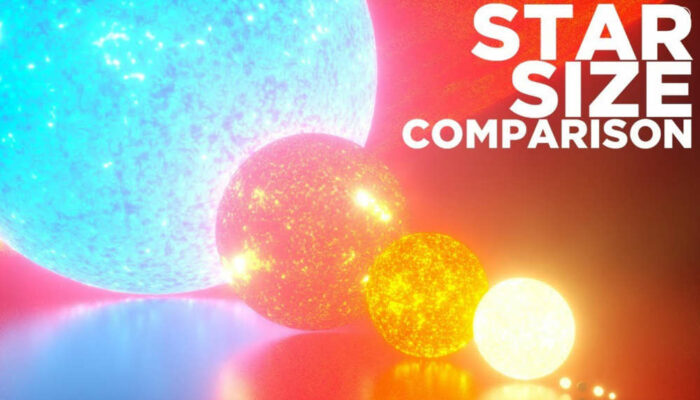
At first glance, the night sky appears as a uniform spread of sparkling dots, yet a deeper examination reveals an extraordinary variety among stars. This diversity extends well beyond mere differences in size, encompassing a complex array of physical and chemical properties. From diminutive red dwarfs to colossal supergiants, stars exhibit a wide range of characteristics that captivate astronomers and stargazers alike. This rich variety not only highlights the vastness of the cosmos but also underscores the intricate processes shaping stellar evolution.
Key Characteristics That Differentiate Stars
Mass: The Determinant of Stellar Fate
Mass is arguably the most crucial factor defining a star’s nature and lifecycle. It governs the internal pressure, temperature, and the nuclear fusion processes occurring within the core. Low-mass stars, such as red dwarfs with less than half the Sun’s mass, burn their fuel slowly and can shine steadily for trillions of years. In contrast, massive stars, which can be tens or even hundreds of times more massive than the Sun, consume their nuclear fuel rapidly and end their lives in spectacular supernova explosions within a relatively short cosmic timeframe.
Surface Temperature and Spectral Classification
The temperature at a star’s surface determines its color and spectral type, ranging from cool, red M-type stars to extremely hot, blue-white O-type stars. Surface temperatures span roughly from 2,500 to over 40,000 Kelvin. These temperatures influence the absorption lines seen in stellar spectra, which reveal the chemical elements present and their ionization states. Astronomers classify stars into spectral types O, B, A, F, G, K, and M, each corresponding to distinct physical conditions and evolutionary phases.
Internal Fusion Processes
Stars generate energy through nuclear fusion, where lighter elements combine to form heavier ones, releasing vast amounts of energy. The fusion mechanisms vary with stellar mass: low-mass stars primarily use the proton-proton chain reaction to fuse hydrogen, while more massive stars rely on the carbon-nitrogen-oxygen (CNO) cycle. These differences influence a star’s stability, brightness variations, and its progression through different evolutionary stages such as red giants or white dwarfs.
Evolutionary Stage
Stars at similar sizes or temperatures can be at vastly different points in their life cycles. A main-sequence star actively fusing hydrogen contrasts sharply with a red giant, which has expanded and cooled after exhausting core hydrogen. Some stars evolve further into neutron stars or black holes following supernova explosions. These stages bring dramatic changes in physical properties, spectral signatures, luminosity, and sometimes cause complex variability or pulsations.
Chemical Composition and Metallicity
Stars are not chemically uniform; their metallicity-the abundance of elements heavier than helium-varies depending on their formation epoch and location within the galaxy. Metallicity affects star formation efficiency, atmospheric opacity, luminosity, and spectral features. Younger Population I stars, like the Sun, have higher metallicities compared to older Population II stars, providing insights into the galaxy’s chemical evolution and stellar genealogy.
Magnetic Fields and Stellar Activity
Magnetic fields add another layer of complexity to stellar behavior. They can produce phenomena such as sunspots, flares, and stellar winds, which influence both the star and its surrounding environment. In extreme cases, such as magnetars-highly magnetized neutron stars-magnetic fields dominate the star’s physical characteristics, creating unique observational signatures rarely found elsewhere in the universe.
Rotation and Its Effects
The rotation speed of a star affects its shape and stability. Rapidly spinning stars develop an equatorial bulge due to centrifugal forces, which can cause uneven surface temperature distributions and broaden spectral lines. This anisotropy complicates modeling efforts but enriches the diversity of observable stellar phenomena.
Binary and Multiple Star Systems
A significant portion of stars exist in binary or multiple systems, where gravitational interactions between companions influence their evolution. Tidal forces and mass transfer can lead to exotic events such as novae, X-ray binaries, or mergers that produce gravitational waves. These interactions add complexity beyond the characteristics of isolated stars, highlighting the dynamic nature of stellar populations.
How Stellar Properties Shape Observations and Understanding
The combination of mass, temperature, chemical makeup, magnetic activity, rotation, evolutionary phase, and companionship creates a unique profile for each star. These factors determine the star’s brightness, color, spectral features, and variability, which astronomers use to infer physical conditions and evolutionary history. By studying these properties, scientists gain valuable insights into the life cycles of stars and the broader processes governing the cosmos.
Stellar Classification: A Systematic Approach
Stars are categorized based on their spectral characteristics, which reflect surface temperature and chemical composition. The widely used Morgan-Keenan (MK) system classifies stars into spectral types O, B, A, F, G, K, and M, arranged from hottest to coolest. Each type is further subdivided by luminosity classes indicating evolutionary status, such as main-sequence stars, giants, and supergiants. This classification framework helps astronomers organize the vast diversity of stars into a coherent scheme.
Common Misunderstandings About Stars
- Misconception: Stars differ only in size.
Correction: While size varies dramatically, stars also differ in mass, temperature, composition, magnetic activity, rotation, and evolutionary stage, all of which shape their unique characteristics. - Misconception: All stars have the same chemical composition.
Correction: Stars vary in metallicity depending on their age and formation environment, influencing their physical properties and spectral signatures. - Misconception: Stars are solitary objects.
Correction: Many stars exist in binary or multiple systems, where interactions significantly affect their evolution and observable phenomena.
Significance of Stellar Diversity
The vast range of stellar properties enriches our understanding of astrophysics and cosmic history. Stars serve as laboratories for nuclear physics, chemical synthesis, and gravitational dynamics. Their life cycles drive the chemical enrichment of galaxies, seeding the universe with elements essential for planet formation and life. Appreciating the multifaceted nature of stars deepens our comprehension of the universe’s complexity and our place within it.
Illustrative Examples of Stellar Variety
Consider the Sun, a G-type main-sequence star with moderate mass and temperature, providing a stable environment for life on Earth. In contrast, Betelgeuse, a red supergiant, is nearing the end of its life and will eventually explode as a supernova. Meanwhile, tiny red dwarfs like Proxima Centauri burn fuel slowly and can shine for trillions of years. Magnetars, a rare type of neutron star, exhibit intense magnetic fields that produce powerful X-ray and gamma-ray emissions. These examples showcase the remarkable range of stellar phenomena observable in our galaxy.
FAQ
What are the main factors that differentiate stars?
Stars differ in mass, surface temperature, chemical composition, evolutionary stage, magnetic activity, rotation, and whether they exist in binary or multiple systems.
How are stars classified?
Stars are classified using the Morgan-Keenan (MK) system into spectral types O, B, A, F, G, K, and M, based on their surface temperature and luminosity.



Leave a Reply