
Short Answer
Definition of Orbital Period
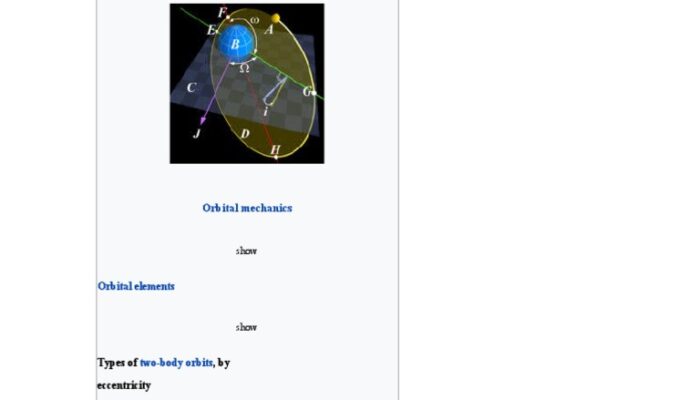
An orbital period refers to the duration a celestial object takes to complete one full revolution around another body. This fundamental concept governs the cyclical motions of planets around stars, moons around planets, and artificial satellites orbiting Earth. It represents the time interval between successive alignments of the orbiting body with a reference point, encapsulating the rhythmic nature of celestial mechanics.
Historical Context and Early Observations
The understanding of orbital periods dates back to ancient civilizations such as the Babylonians and Greeks, who meticulously recorded the repetitive movements of stars and planets. These early astronomers integrated these cycles into calendars and mythologies, recognizing the regularity yet puzzling over the varying lengths of orbits. For example, Mercury completes its orbit around the Sun in just 88 Earth days, whereas Neptune requires approximately 165 years. These observations laid the groundwork for later scientific inquiry into the forces governing orbital motion.
Fundamental Principles Governing Orbital Periods
The mechanics behind orbital periods are explained through Newton’s law of universal gravitation and Kepler’s laws of planetary motion. Gravitational attraction between two masses generates a centripetal force that compels the orbiting body to follow a curved path. The magnitude of this force depends on the masses involved and the distance between them.
- Newton’s Law of Universal Gravitation:
Every two masses attract each other with a force proportional to the product of their masses and inversely proportional to the square of the distance between them. - Kepler’s Third Law:
The square of the orbital period (T²) is proportional to the cube of the semi-major axis (a³) of the orbit, establishing a precise relationship between orbital time and distance.
Mathematical Explanation of Orbital Periods
The orbital period can be mathematically expressed using Kepler’s Third Law, often formulated as:
T² ∝ a³
Where:
- T = Orbital period (time taken to complete one orbit)
- a = Semi-major axis (average distance between the orbiting body and the central object)
In the context of Newtonian mechanics, the orbital period for a small body orbiting a much larger one can be calculated by:
T = 2π √(a³ / GM)
Where:
- G = Gravitational constant
- M = Mass of the central body
Orbital Dynamics: Circular vs. Elliptical Orbits
Most celestial orbits are elliptical rather than perfectly circular, meaning the distance between the orbiting body and the central object varies throughout the orbit. While the orbital period remains constant, the orbital speed fluctuates-faster when closer to the central body (periapsis) and slower when farther away (apoapsis). This variation adds complexity to orbital mechanics and influences phenomena such as tidal forces and orbital resonances.
Orbital Periods in Artificial Satellites and Space Missions
Human-made satellites and spacecraft adhere to the same gravitational principles as natural celestial bodies. Their orbital periods are carefully calculated to optimize mission objectives, such as maintaining consistent communication coverage or enabling rendezvous with other spacecraft. For instance, satellites in low Earth orbit typically complete an orbit in about 90 minutes, while geostationary satellites orbit approximately every 24 hours to remain fixed over a point on Earth’s surface.
Orbital Resonances and Perturbations
Orbital resonance occurs when two orbiting bodies exert regular gravitational influences on each other, often locking their orbital periods into simple ratios. This phenomenon can stabilize or destabilize orbits and affect geological activity or ring structures. A notable example is the 3:2 resonance between Pluto and Neptune, which prevents collisions despite their intersecting paths.
Perturbations refer to deviations from ideal two-body orbital motion caused by additional gravitational forces or irregular mass distributions. These effects can lead to gradual changes in orbital periods, shifts in orbital paths (precession), or chaotic trajectories, making their understanding crucial for accurate space navigation and long-term celestial predictions.
Significance of Orbital Periods in Science and Daily Life
Orbital periods are not only central to astrophysics but also have practical implications in technology and daily life. They enable the precise timing of satellite operations, global positioning systems, and space exploration missions. Moreover, the predictability of these cosmic cycles provides a framework for understanding natural rhythms, from seasonal changes to tidal patterns, linking celestial mechanics to terrestrial phenomena.
Common Misconceptions About Orbital Periods
All orbits are circular.
Most orbits are elliptical, causing variations in orbital speed despite a constant orbital period.
Orbital periods depend only on the mass of the orbiting object.
The orbital period primarily depends on the mass of the central body and the distance between the two objects, not the mass of the smaller orbiting body.
Orbital periods are fixed and unchanging.
Perturbations and gravitational interactions can cause gradual changes in orbital periods over time.
Real-World Examples of Orbital Periods
- Earth’s Moon:
Completes an orbit around Earth approximately every 27.3 days, influencing tides and calendars. - International Space Station (ISS):
Orbits Earth roughly every 90 minutes, enabling frequent passes over populated areas for observation and communication. - Mercury:
The closest planet to the Sun, with an orbital period of about 88 Earth days due to its proximity and the Sun’s gravitational pull. - Neptune:
The farthest recognized planet in the Solar System, taking about 165 Earth years to complete one orbit.
Philosophical and Cultural Reflections on Orbital Periods
Beyond their scientific significance, orbital periods symbolize the cyclical nature of existence-birth, growth, decay, and renewal-mirrored in the cosmos. Their steady rhythms offer a sense of order amidst the vastness of space, inspiring human curiosity and a deeper appreciation for the interconnectedness of all matter within the universe.
Conclusion
Orbital periods embody the elegant interplay of gravitational forces and motion, serving as fundamental measures of celestial dynamics. From ancient astronomical observations to modern aerospace achievements, they reveal the intricate synchrony that governs the cosmos. Understanding orbital periods enriches our comprehension of the universe’s structure and our place within its perpetual dance.
Leave a Reply