
Short Answer
Definition of Gravity and Its Propagation Speed
Gravity is a fundamental interaction that governs the attraction between masses, orchestrating the motion of celestial bodies such as galaxies, stars, and planets. Rather than being an instantaneous force, gravity propagates through the fabric of spacetime at a finite velocity. This speed is crucial in understanding how gravitational effects are transmitted across the vast distances of the universe.
- Gravity:
The natural phenomenon by which objects with mass attract one another. - Propagation Speed:
The rate at which changes in the gravitational field travel through spacetime, equal to the speed of light.
Historical Perspectives on Gravity’s Speed
Initially, gravity was perceived through the lens of classical physics, particularly Newtonian mechanics, where it was considered an instantaneous force acting across any distance. According to this view, the gravitational pull from the sun would affect Earth immediately, as if connected by an invisible, unbreakable thread.
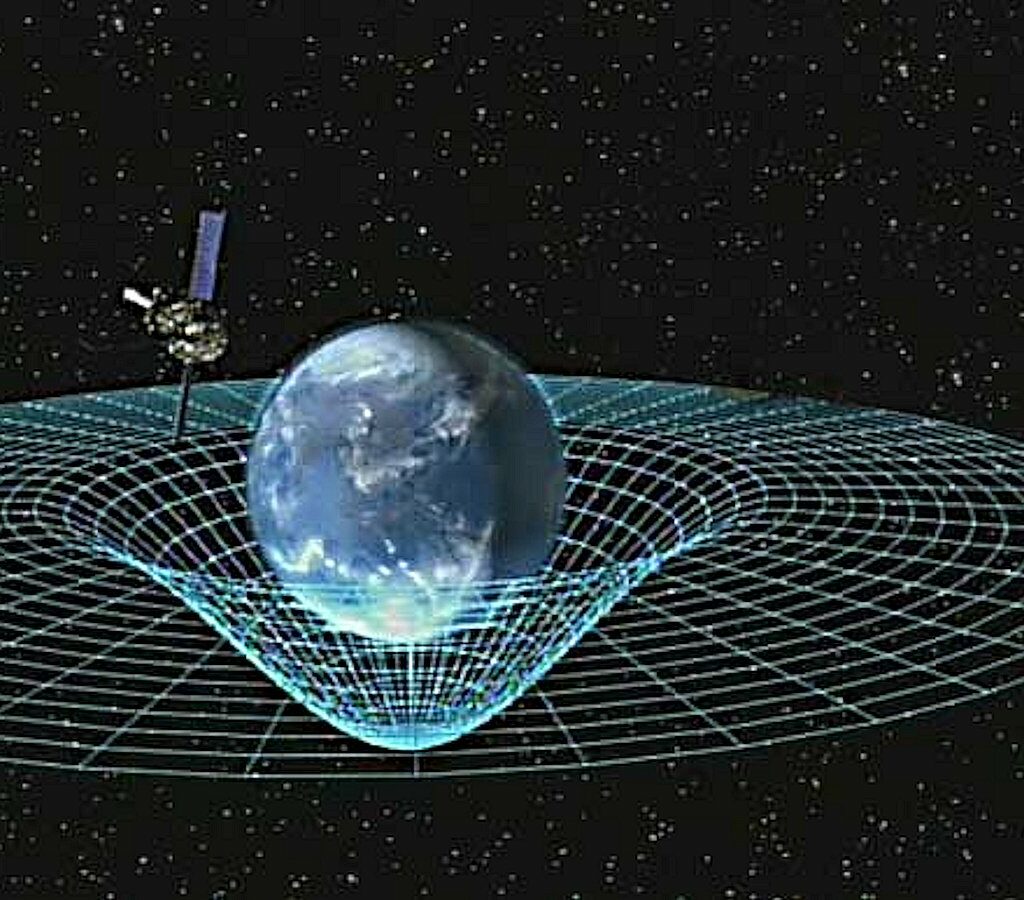
This notion was fundamentally challenged by Albert Einstein’s theory of General Relativity, which redefined gravity not as a force but as the curvature of spacetime caused by mass and energy. In this framework, gravitational influences propagate as waves or ripples traveling at a finite speed, specifically the speed of light, approximately 299,792 kilometers per second (186,282 miles per second).
Mechanism of Gravity Propagation
Gravity operates through distortions in spacetime geometry. When a massive object moves or changes its mass distribution, these alterations generate gravitational waves that ripple outward at light speed. This mechanism ensures that gravitational information does not travel instantaneously but respects the universal speed limit, preserving causality and the consistent structure of spacetime.
Mathematical Explanation and Key Concepts
In General Relativity, the Einstein field equations describe how matter and energy influence spacetime curvature:
Gμν = (8πG/c⁴) Tμν
- Gμν: Einstein tensor representing spacetime curvature.
- Tμν: Stress-energy tensor representing matter and energy content.
- G: Gravitational constant.
- c: Speed of light, the propagation speed of gravitational effects.
Gravitational waves are solutions to these equations that propagate disturbances in the curvature at speed c, ensuring that changes in gravity are not felt instantaneously but after a delay corresponding to the distance divided by the speed of light.
Empirical Evidence: Gravitational Waves and Observations
The finite speed of gravity was confirmed through the detection of gravitational waves by observatories such as LIGO and VIRGO. These waves, generated by cataclysmic events like black hole mergers and neutron star collisions, travel at light speed, carrying information about their sources across the cosmos. This discovery validated Einstein’s predictions and provided direct evidence that gravity propagates at a finite velocity.
Illustrative Example: The Sun-Earth Gravitational Interaction
Consider a hypothetical scenario where the sun suddenly vanished. If gravity acted instantaneously, Earth would immediately cease orbiting and drift away. However, Earth continues its orbit for approximately eight minutes-the time it takes for light and gravitational changes to travel from the sun to Earth. This delay exemplifies the finite speed at which gravitational influences propagate.
Common Misconceptions About Gravity’s Speed
Gravity acts instantaneously across any distance.
Gravity propagates at the speed of light, not instantaneously, ensuring causality is maintained.
Gravity is a force transmitted through a medium like sound or water waves.
Gravity is a manifestation of spacetime curvature, and its changes propagate as waves in spacetime itself.
Significance of Gravity’s Finite Speed
The finite velocity of gravity is fundamental to the universe’s structure and evolution. It governs the timing and dynamics of cosmic events, influences the formation and behavior of galaxies, stars, and black holes, and underpins the consistency of physical laws. Understanding this speed refines astrophysical models and aids in predicting phenomena such as gravitational wave signals and cosmic expansion.
Gravity’s Role in Modern Physics and Future Research
Gravity’s propagation speed is a cornerstone in the frameworks of relativity and quantum field theory. It provides critical insights into the quest for a unified theory that reconciles gravity with quantum mechanics. By studying how gravitational effects travel, physicists aim to unravel deeper connections between fundamental forces and the underlying fabric of reality.
Conclusion: Gravity as a Cosmic Messenger
Gravity’s journey through the universe is not instantaneous but a swift ripple moving at light speed, acting as a silent courier that maintains the harmony and causal order of the cosmos. This finite speed shapes the cosmic dance of mass and energy, enabling the formation of stars, planets, and ultimately life. Recognizing gravity’s propagation speed enriches our understanding of the universe’s intricate design and the elegant laws that govern it.
FAQ
How fast does gravity travel?
Gravity travels at the speed of light, approximately 299,792 kilometers per second.
What is the significance of gravity's speed?
The finite speed of gravity influences cosmic events, the structure of galaxies, and the consistency of physical laws.
What are gravitational waves?
Gravitational waves are ripples in spacetime caused by massive objects, propagating at the speed of light.




Leave a Reply