
Short Answer
Definition of Human Space Travel
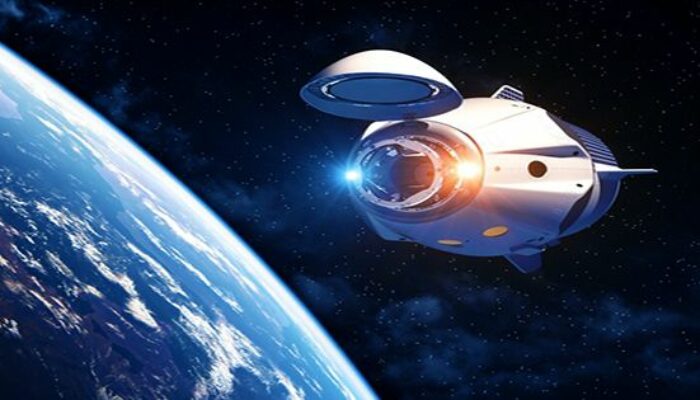
Human space travel refers to the exploration of outer space by astronauts beyond Earth’s atmosphere. It involves sending humans on missions to celestial bodies or through the vast expanse of space, driven by curiosity, scientific inquiry, and the desire to expand our presence beyond our home planet.
- Scope:
From low Earth orbit missions to potential interstellar voyages, human space travel encompasses a wide range of distances and objectives. - Purpose:
It aims to explore, understand, and possibly colonize other worlds, while pushing the boundaries of human endurance and technology.
Historical Milestones and Current Achievements
The journey of human space exploration began with brief forays into Earth’s orbit and culminated in the Apollo missions, which marked humanity’s first steps on the Moon approximately 384,400 kilometers away. These early missions demonstrated the feasibility of leaving our planet and set the stage for more ambitious endeavors.
Currently, the Moon remains the farthest destination reached by humans. However, ongoing programs like NASA’s Artemis seek to return astronauts to the lunar surface and establish a sustainable presence. Beyond the Moon, Mars represents the next major target, located roughly 225 million kilometers from Earth at its nearest point.
Challenges of Extended Space Travel
Traveling beyond the Moon introduces a host of scientific, technological, and physiological challenges. The vast distances involved require advanced propulsion systems, robust life-support mechanisms, and psychological resilience to endure months-long journeys.
- Physical Health Risks:
Prolonged exposure to microgravity causes muscle weakening and bone density reduction, while cosmic radiation threatens cellular health. - Mental Health Concerns:
Isolation, confinement, and distance from Earth impose significant psychological stress on astronauts. - Life Support and Sustainability:
Closed-loop systems for recycling air, water, and waste are essential, alongside innovations like space farming to provide fresh food and maintain morale.
Technological Innovations Enabling Deeper Space Exploration
Advancements in propulsion technology are critical to extending human reach. From traditional chemical rockets used in early missions, the field is evolving toward more efficient methods such as ion thrusters and nuclear thermal propulsion. These technologies promise higher speeds and longer mission durations.
Emerging concepts like solar sails utilize the momentum of sunlight to gradually accelerate spacecraft, potentially enabling travel at unprecedented velocities over time. Such innovations could dramatically reduce travel times to distant destinations.
Interplanetary and Interstellar Travel Prospects
While Mars is the immediate goal for human exploration beyond the Moon, the scientific community also contemplates journeys to star systems outside our solar system. The nearest star, Proxima Centauri, lies over four light years away, a distance that current technology would require tens of thousands of years to traverse.
To address these temporal challenges, theoretical ideas such as generational starships-where multiple human generations live and die en route-and cryogenic sleep, which would suspend metabolic functions, have been proposed. However, these concepts remain speculative and highlight the biological and engineering hurdles yet to be overcome.
Philosophical and Existential Motivations
The drive to explore space is deeply rooted in human nature, encompassing survival instincts, scientific curiosity, and the quest to understand our place in the cosmos. The search for extraterrestrial life holds the potential to revolutionize our worldview and challenge assumptions about life’s uniqueness.
Human Colonization of Other Celestial Bodies
Establishing permanent settlements on the Moon, Mars, or moons of the outer planets like Europa and Titan represents a tangible extension of human presence in space. Colonization efforts would test human adaptability to extreme environments, including harsh temperatures and alien atmospheres.
Such endeavors not only expand humanity’s footprint but also serve as a safeguard against planetary catastrophes, ensuring the survival of our species beyond Earth.
Common Misconceptions About Human Space Travel
Space travel is only limited by propulsion technology.
Biological and psychological factors, such as radiation exposure and mental health, are equally critical constraints.
Interstellar travel is currently feasible.
With existing technology, journeys to other star systems would take thousands of years, making crewed interstellar missions impractical at present.
Why Human Space Travel Is Crucial
Exploring space extends beyond mere curiosity; it is vital for scientific advancement, technological innovation, and the long-term survival of humanity. Space exploration drives the development of new technologies, inspires generations, and may one day provide alternative habitats for human civilization.
Moreover, the endeavor reflects the indomitable human spirit-a relentless pursuit to transcend earthly limits and embrace the vast unknown, enriching our understanding of existence itself.
FAQ
What is human space travel?
Human space travel refers to the exploration of outer space by astronauts, involving missions beyond Earth's atmosphere.
What are the main challenges of extended space travel?
Challenges include physical health risks, mental health concerns, and the need for sustainable life support systems.
What technological advancements are aiding space exploration?
Innovations such as ion thrusters, nuclear thermal propulsion, and solar sails are being developed to enhance space travel.




Leave a Reply