
Short Answer
Understanding Gravity: A Paradigm Shift
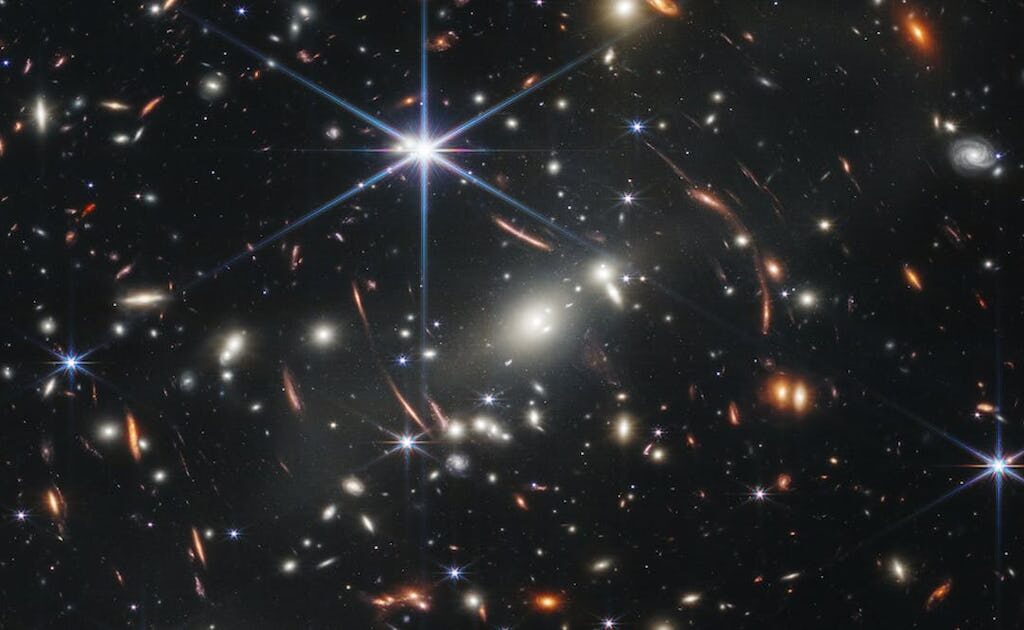
Envision the universe as an immense, stretched canvas extending infinitely in all directions. Every entity within it-from minuscule stones to colossal stars-impresses upon this cosmic fabric, bending and shaping it in ways that orchestrate the movements of planets and the path of light. This vivid analogy captures the revolutionary insight introduced by Albert Einstein over a century ago, which fundamentally altered our comprehension of gravity and the universe’s underlying structure.
Historical Perspective: From Newton to Einstein
Before Einstein’s groundbreaking work, gravity was interpreted through the framework of Newtonian physics-a force acting invisibly at a distance, pulling objects toward each other across the vastness of space. This model was both elegant and effective, providing accurate predictions for centuries. However, it was limited, akin to observing a complex masterpiece through a tiny aperture, missing the broader strokes and subtle nuances. Einstein’s theory of General Relativity redefined gravity not as a force but as the curvature of spacetime caused by mass and energy.
Definition of Gravity in General Relativity
General Relativity presents gravity as a geometric property of spacetime rather than a conventional force. Massive objects distort the fabric of spacetime, creating curves and dips that influence the motion of other bodies.
- Spacetime Fabric:
A four-dimensional continuum combining space and time into a single interwoven entity. - Mass-Energy Influence:
Objects with mass and energy cause spacetime to bend, affecting the trajectories of nearby objects. - Geodesics:
The paths that objects follow in curved spacetime, analogous to straight lines on a curved surface.
How Gravity Operates According to Einstein
Imagine placing a heavy sphere on a stretched trampoline; the surface dips under the weight. Smaller balls rolling nearby do not move because of an invisible pull but because they follow the curved surface created by the heavy sphere. Similarly, in the universe, massive bodies like stars and planets warp spacetime, and other objects move along these curves, which we perceive as gravitational attraction.
Mathematical Framework: Einstein’s Field Equations
The core of General Relativity is encapsulated in Einstein’s field equations, which mathematically describe how matter and energy influence the curvature of spacetime and how this curvature governs the motion of objects.
- Field Equations:
( G_{munu} + Lambda g_{munu} = frac{8pi G}{c^4} T_{munu} ) - Variables:
( G_{munu} ) represents the Einstein tensor describing spacetime curvature; ( T_{munu} ) is the stress-energy tensor representing matter and energy; ( Lambda ) is the cosmological constant; ( G ) is the gravitational constant; ( c ) is the speed of light. - Interpretation:
The equations link the geometry of spacetime (left side) with its energy and momentum content (right side).
Empirical Evidence Supporting General Relativity
Several key observations have confirmed Einstein’s theory:
- Light Deflection:
During the 1919 solar eclipse, starlight bending around the sun was observed, validating that light follows curved spacetime. - Gravitational Time Dilation:
Time runs slower in stronger gravitational fields, a phenomenon confirmed by precise atomic clock experiments. - Gravitational Waves:
Ripples in spacetime caused by massive accelerating bodies were directly detected in 2015, providing further proof of the theory’s predictions.
Broader Implications and Ongoing Research
Einstein’s conception of gravity has far-reaching consequences beyond initial confirmations. It underpins modern astrophysics and cosmology, enabling the study of black holes, the expansion of the universe, and the quest to unify gravity with quantum mechanics. Scientists continue to refine tests of General Relativity and explore its integration with other fundamental forces, aiming for a comprehensive theory of everything.
Common Misunderstandings About Gravity
- Misconception: Gravity is a force pulling objects through space.
Correction: Gravity is the effect of objects moving along curved spacetime, not a force acting at a distance. - Misconception: Space and time are separate entities.
Correction: Space and time are interwoven into a four-dimensional spacetime continuum.
Significance of Einstein’s Gravity in Science and Daily Life
The redefinition of gravity has transformed our understanding of the cosmos and has practical applications in technology. For instance, the Global Positioning System (GPS) relies on corrections for gravitational time dilation to provide accurate location data. Moreover, the theory enriches our philosophical and scientific appreciation of the universe as a dynamic, interconnected whole shaped by geometry and matter.
Conclusion: The Enduring Legacy of Einstein’s Theory
Einstein’s revolutionary view of gravity invites us to see the universe not as a rigid machine but as a graceful interplay of space, time, and matter. Over a century later, his insights continue to inspire exploration and discovery, reminding us that our grasp of reality evolves with human curiosity and imagination. The fabric of spacetime remains a vibrant frontier, promising new revelations that deepen our connection to the cosmos.
FAQ
What is General Relativity?
General Relativity is Einstein's theory that describes gravity as the curvature of spacetime caused by mass and energy.
How does gravity work according to Einstein?
Gravity is understood as objects following curved paths in spacetime rather than being pulled by a force.
What are some key confirmations of General Relativity?
Key confirmations include the bending of light during solar eclipses, gravitational waves, and time dilation effects.


Leave a Reply