
Short Answer
Understanding Gravity Across Celestial Bodies
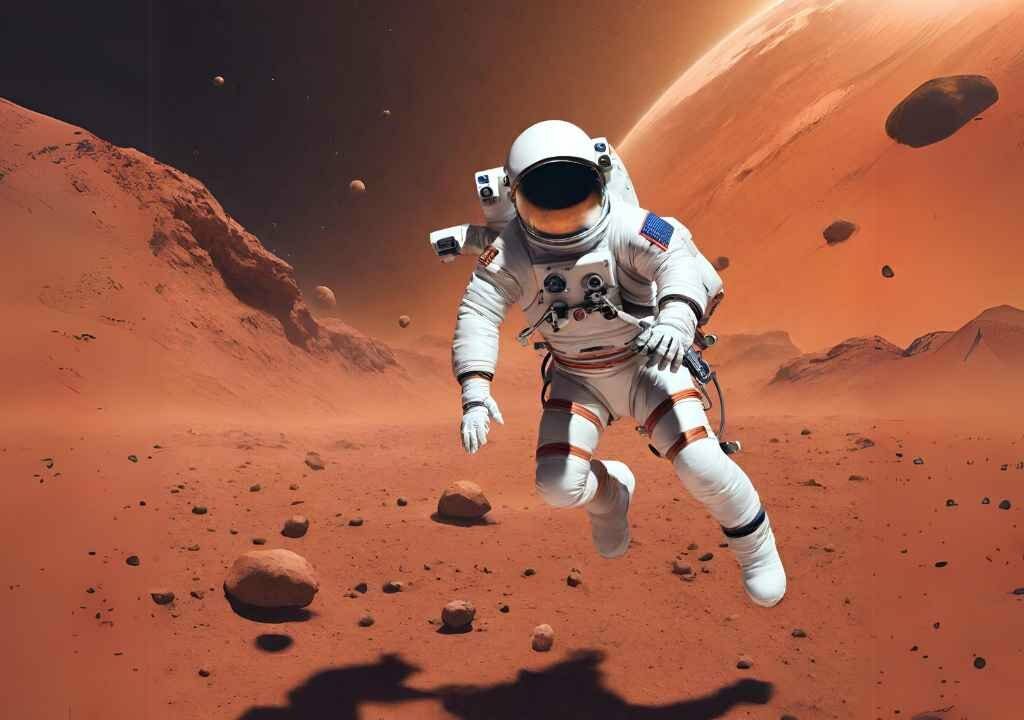
Imagine the sensation of leaping with the effortless elegance of a gazelle, unshackled from the constant pull of Earth’s gravity. Picture bounding across the Martian terrain, where each step feels like a giant leap due to the planet’s gentler gravitational force. This intriguing scenario invites a deeper inquiry: how does Earth’s gravity compare to that of Mars and other celestial bodies within our solar system and beyond?
Definition of Gravity
Gravity is a fundamental force that governs the motion and interaction of objects throughout the universe. It is the invisible force that holds planets in orbit, shapes galaxies, and influences the behavior of matter on both cosmic and terrestrial scales.
- Universal Force:
Gravity acts between any two masses, attracting them toward each other. - Earth’s Gravity:
The gravitational acceleration on Earth averages about 9.81 meters per second squared (m/s²), anchoring life and natural processes.
Gravity on Earth: The Baseline
Earth’s gravitational pull, approximately 9.81 m/s², serves as the standard reference for understanding gravity’s effects on living organisms and physical phenomena. This force not only keeps us grounded but also regulates vital biological functions and environmental systems, such as the ocean tides driven by the gravitational interplay between Earth, the Moon, and the Sun.

Gravity on Mars: A Different Experience
Mars, often called the Red Planet, exhibits a gravitational acceleration of about 3.71 m/s², which is roughly 38% of Earth’s gravity. This reduced gravity presents both opportunities and challenges for human exploration and potential colonization.
- Lower Weight:
Astronauts on Mars would weigh significantly less, allowing them to carry heavier loads and move with less effort. - Health Concerns:
Prolonged exposure to Mars’ low gravity could lead to muscle weakening and bone density reduction, necessitating innovative health countermeasures.
Why Mars Has Weaker Gravity
The diminished gravitational force on Mars is primarily due to its smaller size and mass compared to Earth. Mars has about half the diameter of Earth and only 11% of its mass. Since gravity depends on both mass and the distance from the center of the object, Mars’ smaller mass and radius result in a weaker gravitational pull at its surface. This difference influences everything from dust behavior to the flight paths of objects thrown on the planet.
Gravity on Other Celestial Bodies
The Moon
Earth’s natural satellite, the Moon, has a surface gravity of approximately 1.62 m/s², about one-sixth that of Earth. This low gravity allowed Apollo astronauts to move in a distinctive bounding gait, highlighting how gravity shapes movement and physical experience.
Gas Giants: Jupiter, Saturn, Uranus, and Neptune
Jupiter, the largest planet in our solar system, boasts a surface gravity near 24.79 m/s², more than twice Earth’s. Although it lacks a solid surface, this immense gravity compresses its atmosphere, creating iconic features like the Great Red Spot. Saturn, Uranus, and Neptune also have gravitational fields comparable to or exceeding Earth’s, influencing their moons, rings, and passing celestial objects.
Extreme Gravity: Neutron Stars and Black Holes
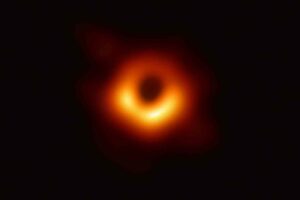
Beyond planets, gravity reaches extraordinary intensities in compact objects. Neutron stars, with masses comparable to the Sun compressed into a sphere about 20 kilometers wide, exhibit surface gravities billions of times stronger than Earth’s. Black holes represent regions where gravity is so intense it warps spacetime itself, creating phenomena that challenge our understanding of physics.
Implications of Varying Gravity for Human Exploration
Differences in gravitational strength have profound effects on human physiology, technology, and daily life in extraterrestrial environments. For example, future Martian settlers may experience changes in body structure and function due to lower gravity. Engineering habitats, machinery, and daily routines must account for these conditions to ensure safety and efficiency. Gravity also influences energy use, cardiovascular health, and psychological well-being, making it a critical factor in planning long-term space missions.
Common Misconceptions About Gravity
Gravity is the same everywhere in the universe.
Gravity varies significantly depending on an object’s mass and size, leading to different gravitational forces on planets, moons, and stars.
Mars’ lower gravity means humans can live there without health issues.
Prolonged exposure to low gravity can cause muscle and bone deterioration, requiring medical and technological interventions.
Why Understanding Gravity Is Crucial
Gravity is a cornerstone of astrophysics, planetary science, and space exploration. It shapes the structure and behavior of celestial bodies and directly impacts the feasibility of human activities beyond Earth. Grasping the nuances of gravitational forces enables scientists and engineers to design better spacecraft, plan sustainable habitats, and envision humanity’s future across diverse planetary environments. Ultimately, gravity connects us to our home planet while inviting us to explore the vast, varied cosmos.
FAQ
How does Earth's gravity compare to Mars?
Earth's gravity is approximately 9.81 m/s², while Mars has about 3.71 m/s², making it roughly 38% of Earth's gravity.
What are the health implications of lower gravity on Mars?
Prolonged exposure to Mars' lower gravity can lead to muscle weakening and bone density reduction.

Leave a Reply