
Short Answer
Definition of Neutron Stars
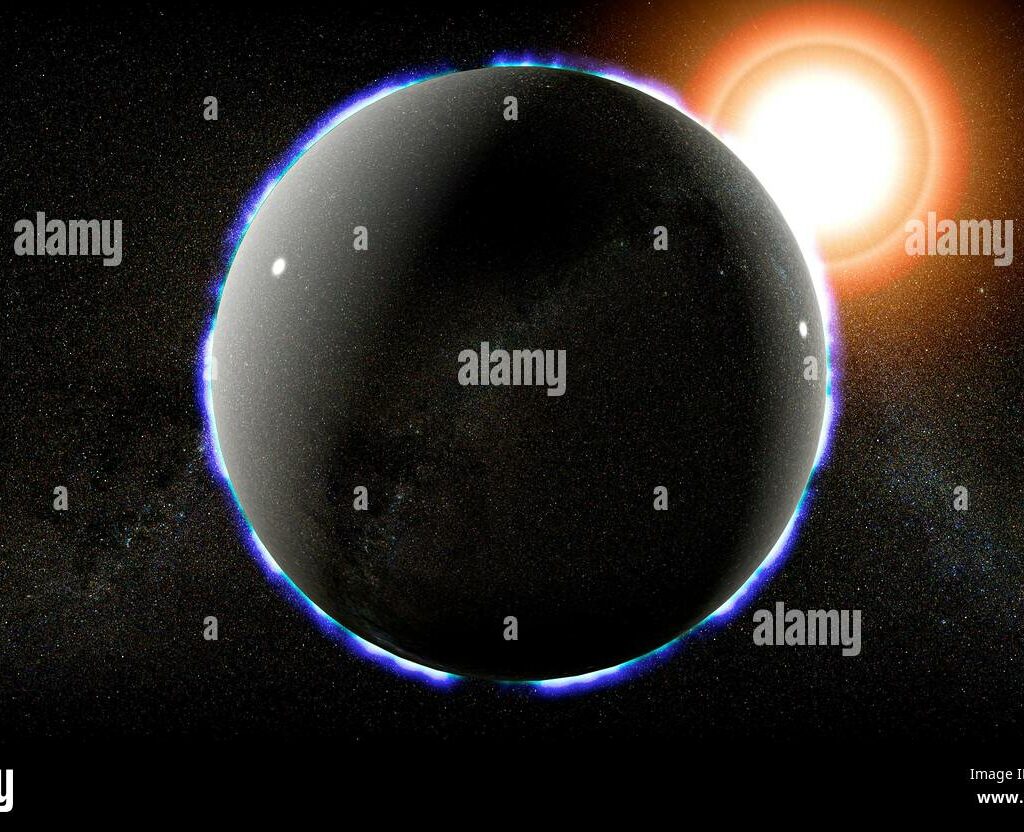
Neutron stars are extraordinary remnants of massive stars that have undergone a supernova explosion. These compact objects are characterized by their incredibly high density and small size, representing one of the most extreme states of matter in the universe. Formed from the collapsed core of a star, neutron stars challenge our conventional understanding of matter and physics due to their unique composition and gravitational properties.
Physical Characteristics and Size
Despite their immense mass, neutron stars are surprisingly small in diameter, typically measuring between 10 and 15 kilometers-comparable to the size of a medium-sized city. This compactness is remarkable when considering that a neutron star contains a mass greater than that of our Sun. The compression of such a vast amount of matter into such a tiny volume results in densities that are almost unimaginable by everyday standards.
Understanding Neutron Star Density
The density of neutron stars is so extreme that it defies simple numerical comparison. To illustrate, a mere teaspoon of neutron star material would weigh approximately one billion tons on Earth. This staggering density arises because the matter inside neutron stars is compressed beyond atomic structure, forming a state where neutrons are packed tightly together in a nearly perfect fluid known as neutron degenerate matter.
- Density Range:
Neutron stars typically have densities between 4 × 10¹⁷ and 6 × 10¹⁷ kilograms per cubic meter. - Comparison to Earthly Materials:
For perspective, lead-the densest common element on Earth-has a density of about 11,340 kilograms per cubic meter, making neutron star matter roughly 40 trillion times denser.
Composition and Internal Structure
The internal makeup of neutron stars is layered and complex, reflecting the extreme conditions within:
- Outer Crust:
Composed of heavy atomic nuclei immersed in a sea of electrons. - Outer Core:
Dominated by superfluid neutrons with a small fraction of superconducting protons. - Inner Core:
Remains largely mysterious; it may contain exotic forms of matter such as hyperons or quark-gluon plasma, where quarks exist freely beyond typical nuclear boundaries.
Formation Process
Neutron stars originate from the catastrophic collapse of massive stars after they exhaust their nuclear fuel. During this supernova event, the core is compressed so intensely that electrons combine with protons to form neutrons, eliminating traditional atomic structures. This transformation results in a dense neutron-rich core stabilized by quantum mechanical pressures known as neutron degeneracy pressure, which counteracts gravitational collapse.
Gravitational Effects and Relativity
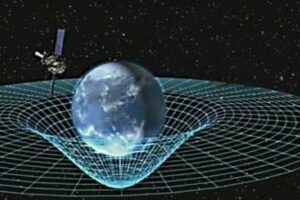
The immense density of neutron stars generates a gravitational field so strong that it significantly warps spacetime around them. The escape velocity from their surface approaches a substantial fraction of the speed of light, leading to pronounced relativistic effects. These conditions influence the behavior of nearby matter and light, making neutron stars critical objects for studying gravity under extreme circumstances.
Neutron Stars vs. Black Holes
While neutron stars are incredibly dense, they differ fundamentally from black holes. Black holes represent singularities with infinite density and zero volume, where known physics breaks down. In contrast, neutron stars have a finite, though extraordinarily high, density maintained by the balance between gravitational forces and neutron degeneracy pressure. This equilibrium determines whether a collapsing stellar core stabilizes as a neutron star or continues collapsing into a black hole.
Scientific Significance
Studying neutron stars provides invaluable insights into the behavior of matter under conditions unattainable on Earth. They serve as natural laboratories for nuclear physics, quantum mechanics, and general relativity, helping scientists explore the fundamental forces at subatomic scales. Understanding neutron star density also advances our knowledge of stellar evolution and the ultimate fate of massive stars.
Common Misconceptions About Neutron Star Density
Neutron stars are just very dense stars like white dwarfs.
Neutron stars are far denser than white dwarfs, with matter compressed beyond atomic nuclei into neutron degenerate matter.
The density of neutron stars is infinite.
While extremely dense, neutron stars have a finite density, unlike black holes which contain singularities with theoretically infinite density.
Why Neutron Star Density Matters
The extraordinary density of neutron stars exemplifies nature’s ability to compress matter to its ultimate limits, offering a profound glimpse into the fundamental properties of the universe. These objects challenge our understanding of physics, inspire technological and theoretical advancements, and deepen our appreciation of the cosmos. By studying neutron stars, we not only uncover the mysteries of stellar remnants but also gain a broader perspective on the fabric of reality itself.


Leave a Reply