
Short Answer
Definition of Gravity in Modern Physics
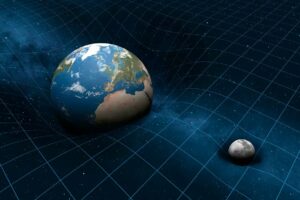
Gravity, traditionally understood as the invisible force that anchors objects to Earth and governs planetary motions, has undergone a profound conceptual transformation. Rather than being a force in the classical sense-a push or pull acting at a distance-gravity is now recognized as a fundamental property of spacetime itself. This revolutionary perspective, introduced by Albert Einstein, redefines gravity as the curvature of the four-dimensional fabric of spacetime caused by mass and energy.
Historical Context: From Newton to Einstein
For centuries, Isaac Newton’s law of universal gravitation provided a remarkably effective explanation of gravitational phenomena. Newton described gravity as an instantaneous force attracting two masses, whether apples falling from trees or planets orbiting the sun. This force-based model was intuitive and mathematically elegant, dominating scientific thought for over two hundred years.
However, by the late 19th and early 20th centuries, certain observations challenged this framework. The orbit of Mercury exhibited subtle irregularities that Newtonian gravity could not account for. Additionally, the development of electromagnetism and Einstein’s special relativity questioned the assumptions about space and time, setting the stage for a new theory.
Einstein’s General Theory of Relativity: A New Paradigm
Einstein’s groundbreaking insight was to interpret gravity not as a force but as the effect of curved spacetime geometry. Imagine a stretched trampoline representing spacetime: placing a heavy object like a bowling ball causes the surface to deform. A smaller object, such as a marble, rolling nearby will follow a curved path, not because it is pulled by a force, but because the surface it moves on is warped. This analogy captures the essence of Einstein’s idea-massive bodies distort spacetime, and this curvature guides the motion of other objects.
Spacetime Curvature and Motion
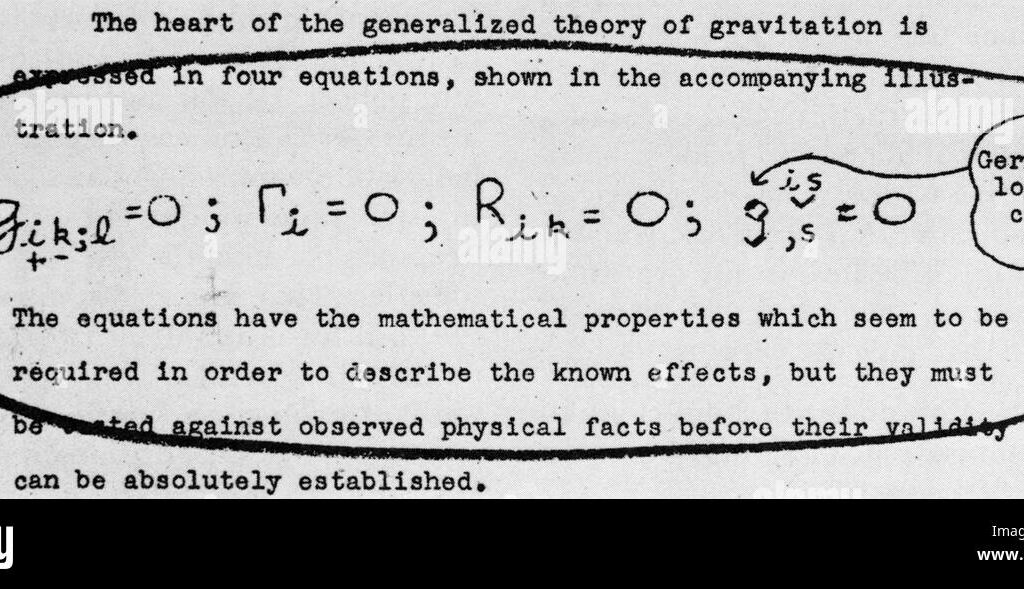
In this framework, gravity emerges from the geometry of spacetime itself. Objects move along the straightest possible paths, called geodesics, within this curved geometry. The presence of mass and energy tells spacetime how to curve, and the curvature of spacetime tells matter how to move. This mutual relationship is mathematically described by Einstein’s field equations, a set of ten interlinked partial differential equations connecting energy, momentum, and spacetime curvature.
Empirical Evidence Supporting Curved Spacetime
Einstein’s theory made several predictions that diverged from Newtonian expectations, providing opportunities for experimental validation:
- Light Bending Around Massive Objects:
Unlike Newton’s theory, which predicted no gravitational effect on massless light, General Relativity forecasted that light passing near a massive body like the sun would bend due to spacetime curvature. This was spectacularly confirmed during the 1919 solar eclipse by Arthur Eddington’s observations, which showed stars’ apparent positions shifted by the sun’s gravity. - Precession of Mercury’s Orbit:
Mercury’s orbit exhibits a slight precession-its elliptical path shifts over time in a way unexplained by Newtonian gravity. Einstein’s equations precisely accounted for this anomaly as a natural consequence of curved spacetime near the sun. - Gravitational Waves:
Changes in spacetime curvature propagate at the speed of light, producing ripples known as gravitational waves. These waves were directly detected a century later by the LIGO observatory, confirming a key prediction of General Relativity.
Conceptual Advances: Equivalence Principle and Gravity’s Nature
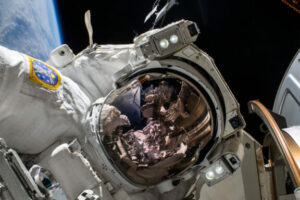
The equivalence principle, a cornerstone of General Relativity, states that locally, the effects of gravity are indistinguishable from those of acceleration. This principle explains why astronauts in orbit experience weightlessness-not because gravity is absent, but because they are in free fall along geodesics in curved spacetime. This insight challenges the classical view of gravity as an external force pulling objects and instead frames it as the natural motion within a curved geometric landscape.
Mathematical Framework: Einstein’s Field Equations
At the heart of General Relativity lie Einstein’s field equations:
Gμν + Λgμν = (8πG/c4) Tμν
- Gμν (Einstein tensor):
Represents the curvature of spacetime. - Λ (Cosmological constant):
Accounts for the energy density of empty space. - gμν (Metric tensor):
Describes the geometry of spacetime. - Tμν (Stress-energy tensor):
Encodes the distribution of matter and energy. - G:
Newton’s gravitational constant. - c:
Speed of light in vacuum.
These equations express how matter and energy influence the curvature of spacetime, which in turn governs the motion of matter.
Common Misconceptions About Gravity
Gravity is a force like electromagnetism.
Gravity is a geometric property of spacetime curvature, not a force transmitted through space.
Gravity acts instantaneously at a distance.
Changes in gravitational fields propagate at the speed of light via gravitational waves.
Light is unaffected by gravity because it has no mass.
Light follows curved spacetime paths, causing it to bend near massive objects despite having no rest mass.
Significance of the Geometric View of Gravity
Reconceptualizing gravity as the curvature of spacetime has far-reaching implications across physics and cosmology. It provides a unified framework for understanding planetary motion, black holes, gravitational waves, and the expanding universe. This geometric perspective also underpins ongoing efforts to reconcile gravity with quantum mechanics, aiming to develop a quantum theory of gravity. Beyond theoretical physics, it reshapes our cosmic narrative, portraying the universe as a dynamic, malleable fabric shaped by mass and energy rather than a static stage acted upon by forces.
Real-World Applications and Observations
The geometric theory of gravity is not merely abstract; it has practical consequences and observable effects:
- GPS Technology:
Satellite navigation systems must account for relativistic effects due to Earth’s gravitational field to maintain accuracy. - Black Hole Imaging:
Understanding spacetime curvature enables the interpretation of phenomena near black holes, such as the event horizon and gravitational lensing. - Gravitational Wave Astronomy:
Detection of gravitational waves opens a new window into cosmic events like black hole mergers and neutron star collisions.
FAQ
What is the main difference between Newtonian gravity and Einstein's view of gravity?
Newton viewed gravity as a force between two masses, while Einstein described it as the curvature of spacetime caused by mass and energy.
How did Einstein's theory of General Relativity change our understanding of gravity?
Einstein’s theory redefined gravity from a force to a geometric property of spacetime, explaining how mass influences the curvature of spacetime.
Leave a Reply