
Short Answer
Definition of Solar Gravity
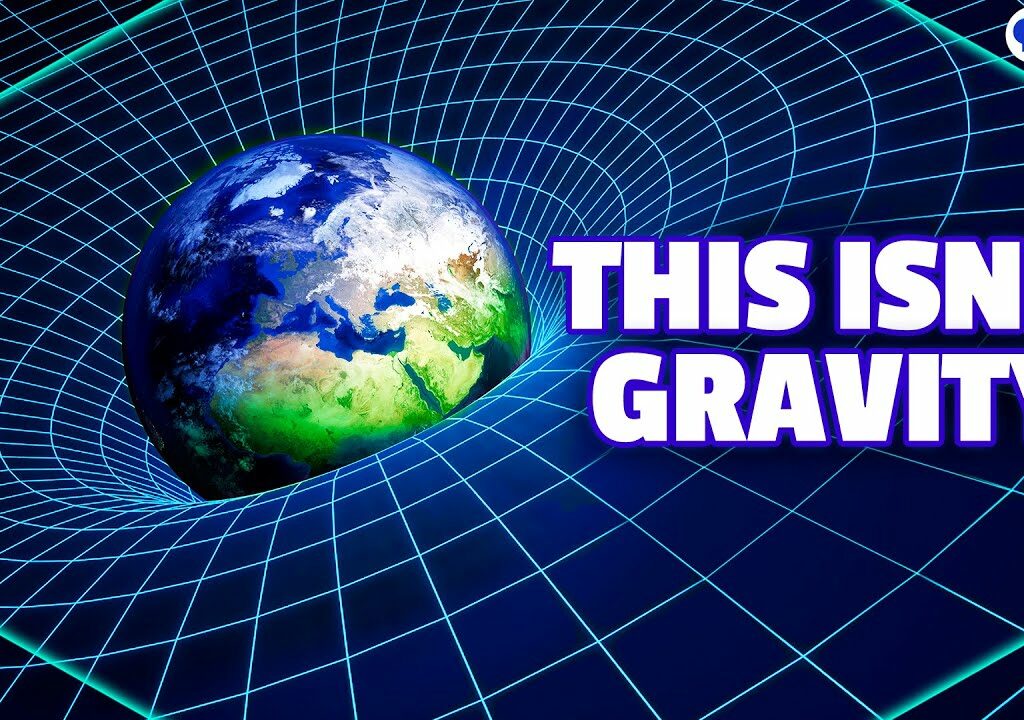
Solar gravity refers to the gravitational force exerted by the Sun, a massive sphere of hot plasma, which governs the motion of all objects within the solar system. This force is responsible for maintaining the orbits of planets, comets, asteroids, and other celestial bodies around the Sun, effectively anchoring the solar system’s structure.
- Massive Central Body:
The Sun contains about 99.86% of the total mass of the solar system, making its gravitational influence dominant. - Gravitational Force:
It is the attractive force that pulls objects toward the Sun, keeping them in stable orbits.
Fundamental Principles of Solar Gravity
Newton’s law of universal gravitation provides the basic understanding of how the Sun’s gravity operates. According to this law, the gravitational force between two objects depends directly on their masses and inversely on the square of the distance between them. The Sun’s enormous mass, approximately 1.989 × 1030 kilograms, generates a powerful gravitational field that shapes the trajectories of orbiting bodies.
In classical physics, if the Sun’s mass were constant, its gravitational pull on planets would remain unchanged. However, the Sun is a dynamic star undergoing continuous physical changes that subtly affect its mass and, consequently, its gravitational influence over vast timescales.
Mechanisms of Solar Mass Loss
The Sun gradually loses mass through two primary processes: the emission of solar wind and the release of electromagnetic radiation.
- Solar Wind:
A continuous flow of charged particles emitted from the Sun’s outer layers, carrying away mass at an estimated rate of about 4.3 million tons per second. - Radiation:
The Sun emits energy in the form of light and other electromagnetic waves, which also results in a loss of mass according to Einstein’s mass-energy equivalence principle.
Although these losses are enormous in human terms, they represent only a tiny fraction of the Sun’s total mass. Over billions of years, this cumulative mass loss leads to a slight reduction in the Sun’s gravitational pull, particularly affecting the orbits of distant objects like Pluto and comets in the Kuiper Belt.
Solar Evolution and Its Effect on Gravity
The Sun’s gravitational force is not static but evolves as the star progresses through its life cycle. Currently in the main-sequence phase, the Sun fuses hydrogen into helium in its core. As this fuel depletes, the Sun will expand into a red giant, significantly altering its size, structure, and mass distribution.
During the red giant phase, intensified stellar winds will cause accelerated mass loss, further weakening the Sun’s gravitational hold. This will cause the orbits of planets to shift outward, with Earth’s orbit likely expanding. However, the increased solar radiation during this phase will make Earth inhospitable long before orbital changes become significant.
External Gravitational Influences on the Solar System
The Sun’s gravity is also affected indirectly by its environment within the Milky Way galaxy. The solar system is embedded in a halo of dark matter and experiences tidal forces from nearby stars and galactic structures.
- Dark Matter Halo:
This invisible mass surrounds the galaxy and influences the motion of the solar system as a whole, though it does not directly change the Sun’s gravitational strength. - Galactic Tidal Forces:
These forces can perturb the orbits of distant objects like comets in the Oort Cloud, occasionally sending them into the inner solar system.
Challenges in Measuring Changes in Solar Gravity
Detecting variations in the Sun’s gravitational force is extremely difficult due to the minuscule scale of changes and the long timescales involved. Direct measurement is beyond current technological capabilities, so scientists rely on indirect methods.
By precisely tracking the orbits of planets such as Venus, Mars, and Earth using space probes and ground-based observatories, researchers can identify subtle anomalies that indicate gradual solar mass loss. These observations confirm that the Sun’s gravitational pull is not perfectly constant but evolves slowly over time.
Mathematical Explanation of Solar Gravity
The gravitational force F between the Sun and a planet is given by Newton’s law of universal gravitation:
F = G × (M × m) / r²
- F: Gravitational force between the two bodies
- G: Gravitational constant (6.67430 × 10⁻¹¹ m³ kg-1 s-2)
- M: Mass of the Sun (~1.989 × 1030 kg)
- m: Mass of the orbiting body (planet, comet, etc.)
- r: Distance between the centers of the two masses
As the Sun’s mass M decreases over time due to mass loss, the gravitational force F correspondingly diminishes, affecting orbital dynamics.
Future Outlook: Solar Gravity in the Distant Future
In the far future, the Sun will lose a significant portion of its mass-up to 30%-during its red giant phase, drastically reducing its gravitational influence. This will cause the outer planets to migrate outward noticeably.
Eventually, the Sun will shed its outer layers and contract into a white dwarf, retaining about half of its current mass. Although this remnant will be dense, it will no longer sustain nuclear fusion, resulting in a weaker gravitational pull and a transformed solar system dynamic.
Implications of Changing Solar Gravity
The gradual evolution of the Sun’s gravity has profound effects beyond orbital mechanics:
- Planetary Atmospheres and Climate:
Changes in orbital distances alter the amount of solar energy planets receive, influencing atmospheric conditions and potential habitability. - Minor Bodies and Debris:
Variations in gravitational forces can modify the trajectories of asteroids, comets, and interplanetary dust, potentially increasing impact events or redistributing material within the solar system.
Common Misconceptions About Solar Gravity
The Sun’s gravity is constant and unchanging.
While largely stable over short periods, the Sun’s gravity slowly decreases due to mass loss from solar wind and radiation.
External galactic forces directly weaken the Sun’s gravity.
Galactic forces influence the solar system’s motion but do not directly alter the Sun’s intrinsic gravitational strength.
Significance of Solar Gravity
The Sun’s gravitational force is fundamental to the structure and stability of the solar system. It governs planetary orbits, influences climate and habitability, and shapes the distribution of smaller celestial bodies. Understanding how solar gravity changes over time is crucial for astrophysics, planetary science, and predicting the long-term evolution of our cosmic neighborhood.
FAQ
How does the Sun's gravity change over time?
The Sun loses mass through solar wind and radiation, leading to a gradual decrease in its gravitational pull.
What are the effects of changing solar gravity?
Changes in solar gravity can alter planetary orbits, affect climates, and influence the trajectories of minor celestial bodies.






Leave a Reply