
Short Answer
Definition of the Universe as a Black Hole
The proposition that the universe might have existed as a black hole prior to the Big Bang is a profound and speculative idea in cosmology. It suggests that before the rapid expansion of space and time, the entire cosmos was compressed into a state analogous to a black hole-a region of spacetime exhibiting extreme gravitational effects from which nothing can escape. This hypothesis challenges traditional views of cosmic origins and invites a deeper examination of the nature of singularities, spacetime, and the fundamental laws governing reality.
Understanding Black Holes and Their Characteristics
Black holes are defined within Einstein’s theory of general relativity as regions where gravity is so intense that even light cannot escape their pull. At the center of a black hole lies a singularity, a point of infinite density where classical physics breaks down. Typically, black holes form from the gravitational collapse of massive stars, but the concept of a primordial or universe-encompassing black hole extends this idea to a cosmic scale.
- Event Horizon:
The boundary surrounding a black hole beyond which no information or matter can return. - Singularity:
The core of a black hole where density becomes infinite and known physical laws cease to apply. - Gravitational Collapse:
The process by which massive stars implode under their own gravity, leading to black hole formation.
Cosmic Scale Black Hole Hypothesis
The central question is whether the universe itself could have been compressed into a state resembling a supermassive black hole before the Big Bang. The initial singularity from which our universe emerged shares striking similarities with black hole singularities, suggesting a possible equivalence. Some theoretical frameworks propose that the universe’s early state was confined within a cosmic horizon analogous to a black hole’s event horizon, limiting the flow of information and causal interaction.
Event Horizon and Cosmic Horizon: A Comparative Analysis
Both black holes and the early universe feature horizons that restrict information exchange:
- Black Hole Event Horizon:
The point of no return around a black hole, beyond which escape is impossible. - Cosmic Horizon:
In the early universe, a boundary beyond which signals could not propagate due to the finite speed of light and rapid expansion of spacetime.
Some physicists argue these horizons are not merely analogous but may be fundamentally connected through the geometry of spacetime, hinting at deeper underlying principles.
Quantum Gravity and the Nature of Singularities
Classical singularities present mathematical infinities that defy physical understanding. Quantum gravity theories, such as loop quantum gravity and string theory, aim to reconcile general relativity with quantum mechanics and offer mechanisms to resolve these infinities. These approaches suggest that the universe’s initial singularity might represent a “bounce” from a prior contracting phase, similar to the interior dynamics of a black hole, rather than an absolute beginning.
Observational Evidence and Astrophysical Investigations
Astrophysicists seek empirical clues to support or refute the black hole universe hypothesis by studying phenomena such as gravitational waves and the cosmic microwave background (CMB). Precise measurements of cosmic anisotropies and density fluctuations may reveal signatures indicative of a pre-Big Bang phase dominated by gravitational collapse. These observations could provide critical insights into whether black hole physics influenced the universe’s birth.
Implications for Time, Causality, and Cosmology
If the universe originated as a black hole, conventional notions of time and causality may require revision. Inside and near black holes, time behaves non-linearly and diverges from everyday experience. This raises profound questions about the meaning of “before” the Big Bang, as traditional cosmology treats the Big Bang as the origin of time itself. A black hole origin suggests time might extend beyond this event into previously inaccessible domains.
Connections to the Multiverse Theory
The black hole universe concept intersects with multiverse theories, where black holes could serve as gateways or seeds for new universes. Known as cosmological natural selection or the fecund universes hypothesis, this idea posits that universes born from black holes might undergo their own expansions with varying physical laws. This framework transforms our universe’s origin from a singular event into part of an ongoing evolutionary process across a multiverse landscape.
Common Misconceptions
The universe as a black hole means it is trapped and cannot expand.
The hypothesis suggests the universe emerged from a black hole-like state but subsequently underwent rapid expansion, differentiating it from a static black hole.
Black holes and the Big Bang singularity are identical in all respects.
While they share similarities, the physical conditions and interpretations differ, especially when quantum effects are considered.
Significance of the Black Hole Universe Hypothesis
This theory enriches our understanding of cosmic origins by bridging quantum mechanics and general relativity, two pillars of modern physics. It challenges existing paradigms about the beginning of time and space, offering a framework that could unify disparate phenomena. Moreover, it stimulates new lines of inquiry in both theoretical and observational cosmology, pushing the boundaries of knowledge about the universe’s deepest mysteries.
Future Directions in Research
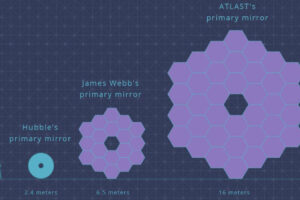
Advancements in observational technology, such as next-generation telescopes and gravitational wave detectors, combined with progress in quantum gravity theories, promise to clarify the viability of the black hole universe model. Continued interdisciplinary research will be crucial in unraveling whether our cosmos truly emerged from a black hole-like state or if alternative explanations better describe its origins.
Philosophical and Existential Reflections
Contemplating the universe as a black hole before the Big Bang extends beyond scientific inquiry into philosophical realms. It challenges human conceptions of beginnings, existence, and the nature of reality itself. This perspective invites us to reconsider the boundaries between creation and collapse, origin and destiny, within the vast and enigmatic fabric of spacetime.
FAQ
What is the significance of the black hole universe hypothesis?
It offers a new perspective on cosmic origins, bridging quantum mechanics and general relativity.
What evidence supports this hypothesis?
Astrophysicists investigate gravitational waves and cosmic microwave background for clues related to pre-Big Bang conditions.

Leave a Reply