
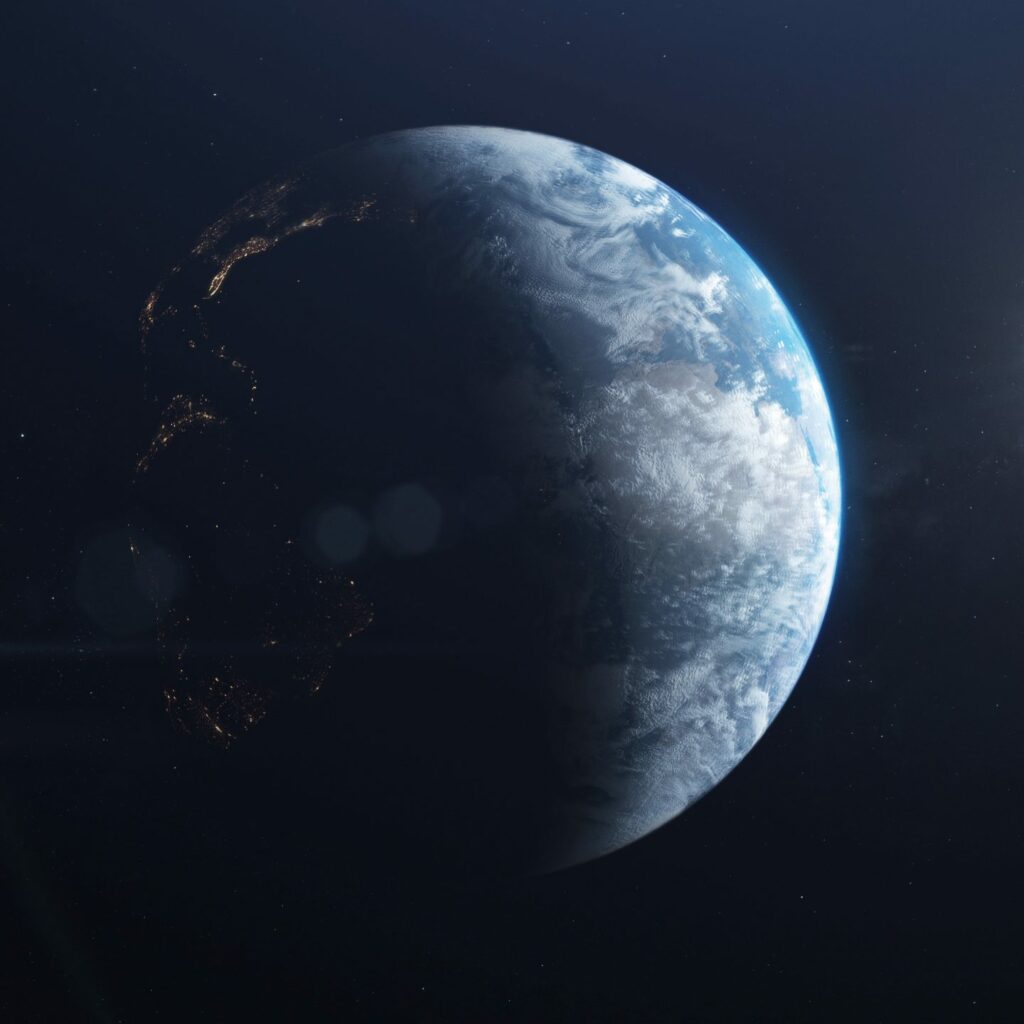
Short Answer
Definition of Earth’s Orbit
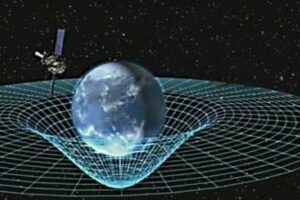
Earth’s revolution around the Sun can be described as a finely tuned cosmic dance, governed by the fundamental force of gravity. This gravitational connection acts like an invisible tether, binding our planet in a continuous orbital path around the Sun. The orbit is a stable trajectory resulting from the balance between the Sun’s gravitational pull and Earth’s forward motion, ensuring a consistent elliptical path that sustains the cycles of seasons and life on our planet.
Fundamentals of Orbital Mechanics
Earth’s orbit is maintained through a dynamic equilibrium between two opposing forces:
- Gravitational Attraction:
The Sun’s gravity exerts an inward pull on Earth, drawing it closer. - Centrifugal Force:
Earth’s velocity generates an outward force that counteracts the Sun’s pull.
This balance creates a stable orbit where Earth’s forward speed precisely offsets the Sun’s gravitational force, preventing it from either spiraling inward or drifting away.
Escape Velocity and Its Significance
To break free from the Sun’s gravitational influence, Earth would need to reach a critical speed known as the escape velocity. This is the minimum velocity required to overcome the Sun’s pull and move into interstellar space. For Earth, this escape velocity relative to the Sun is approximately 42 kilometers per second, a threshold that is not naturally attained under normal solar system conditions.
Potential Natural Causes for Orbital Disruption
Although highly unlikely, certain extraordinary cosmic events could theoretically alter Earth’s orbit enough to cause escape:
- Close Stellar Encounters:
Passing stars or massive objects like black holes could exert gravitational forces strong enough to perturb Earth’s trajectory. - Galactic Gravitational Influences:
Over billions of years, the solar system’s orbit around the Milky Way and interactions with nearby stars can induce subtle shifts in planetary orbits.
Despite these possibilities, such events are exceedingly rare due to the vast distances between stars and the relative stability of our solar neighborhood.
Long-Term Evolution of the Sun and Its Impact
The Sun is not a static entity; it undergoes gradual changes that influence its gravitational hold on Earth:
- Red Giant Phase:
In several billion years, the Sun will expand dramatically, potentially engulfing the inner planets and drastically altering orbital dynamics. - Mass Loss:
Continuous emission of solar wind and radiation causes the Sun to lose mass slowly, weakening its gravitational grip and causing planetary orbits to expand outward over time.
While these processes do not directly cause Earth to escape the Sun’s orbit, they modify the parameters of the orbital relationship, leading to gradual changes in Earth’s path.
Influence of External Forces in Space
Space is a complex environment where multiple forces interact continuously:
- Solar Wind and Radiation Pressure:
These forces exert subtle influences on planetary orbits over millions of years. - Cosmic Dust and Gravitational Perturbations:
The cumulative effect of these factors can cause minor orbital variations, though Earth’s orbit remains largely stable.
Human Concepts of Orbital Manipulation
Beyond natural phenomena, theoretical ideas have been proposed about deliberately altering Earth’s orbit:
- Stellar Engines:
Hypothetical megastructures designed to harness vast energy to adjust planetary orbits, potentially moving Earth away from the Sun’s expanding influence.
While these concepts remain speculative and technologically unattainable today, they highlight the imaginative possibilities of future space engineering.
Gravitational Interactions Within the Solar System
The solar system’s planets exert gravitational forces on each other, creating complex interactions:
- Orbital Resonances:
Particularly influenced by massive planets like Jupiter, these resonances can cause gradual shifts in Earth’s orbit over extremely long timescales.
Despite these subtle effects, current scientific models do not predict any natural scenario where Earth would gain enough velocity or trajectory change to escape the Sun’s orbit during the solar system’s lifetime.
Philosophical and Symbolic Perspectives
The idea of Earth breaking free from the Sun’s orbit also carries metaphorical significance. The Sun symbolizes stability, warmth, and life, anchoring Earth in a nurturing cosmic relationship. Imagining Earth’s escape evokes themes of freedom, uncertainty, and the vast unknown of interstellar space. This duality reflects humanity’s fascination with both security and exploration within the universe.
Why Understanding Earth’s Orbital Stability Matters
Studying Earth’s orbit and its potential for change is crucial for several reasons:
- Scientific Insight:
It deepens our understanding of gravitational dynamics and celestial mechanics. - Long-Term Planetary Safety:
Knowledge of orbital stability informs predictions about Earth’s future environment and habitability. - Technological Aspirations:
It inspires futuristic concepts for planetary engineering and space exploration.
Ultimately, Earth’s stable orbit is a testament to the intricate balance of forces that sustain life and the cosmic dance that has persisted for billions of years.
FAQ
What is escape velocity?
Escape velocity is the minimum speed required for an object to break free from the gravitational influence of a celestial body, in this case, approximately 42 kilometers per second for Earth relative to the Sun.
Can Earth ever escape the Sun's orbit?
Under normal conditions, Earth cannot escape the Sun's orbit, but extraordinary cosmic events could alter its trajectory.




Leave a Reply