
Short Answer
Understanding Planetary Capture
Within the immense vastness of space, Earth is often seen as a lone sanctuary-a unique cradle of life amid the cold, dark void. However, the solar system is a dynamic stage where planets, asteroids, and comets continuously move in a gravitational dance. This raises an intriguing question: is it possible for Earth to gravitationally capture another planet into a stable orbit? Such an occurrence would challenge our current understanding of planetary motion and expand the boundaries of our cosmic neighborhood.
Definition of Planetary Capture
Planetary capture refers to the process by which a celestial body, such as a planet or asteroid, becomes gravitationally bound to another body, resulting in a stable or semi-stable orbit. Unlike simple gravitational influence, capture involves a complex set of conditions including relative velocities, distances, and external forces that alter the trajectory of the incoming object enough to prevent it from escaping.
- Gravitational Binding:
The incoming object must lose enough kinetic energy relative to the capturing body to become bound in orbit. - External Forces:
Often, a third body or dissipative forces are necessary to facilitate the energy loss required for capture. - Temporary vs. Permanent Capture:
Objects can be temporarily captured, orbiting for a limited time before escaping, or permanently captured, remaining in orbit indefinitely.
Mechanics Behind Gravitational Capture
The process of gravitational capture is highly complex. For a planet-sized object to enter Earth’s gravitational domain and remain in orbit, it must significantly reduce its velocity relative to Earth’s orbital motion around the Sun. Without this deceleration, the object would simply pass by, continuing its path around the Sun. This slowing down rarely happens spontaneously and typically requires interaction with a third massive body or a dissipative mechanism such as atmospheric drag, which is negligible at planetary distances.
Temporary Captures: Minimoons and Small Bodies
Earth occasionally experiences temporary gravitational captures of small celestial objects, often called “minimoons.” These are small asteroids or meteoroids, usually tens of meters in size, that orbit Earth for months or years before solar gravitational forces eject them back into heliocentric orbits. While these events demonstrate the possibility of capture, scaling this phenomenon to planet-sized bodies introduces significant challenges due to the vastly greater mass and energy involved.
Rogue Planets and Their Role in Capture Scenarios
Rogue planets are planetary-mass objects that drift through the galaxy unattached to any star, often ejected from their original systems during early planetary formation. If such a rogue planet were to pass through our solar system, it might theoretically be captured by Earth’s gravity under very specific conditions. However, typical rogue planet velocities-often tens of kilometers per second-make permanent capture highly improbable without substantial energy dissipation.
Comparative Gravitational Influence: Earth vs. Jupiter
Earth’s gravitational reach is relatively limited compared to massive planets like Jupiter. Jupiter’s immense mass allows it to act as a cosmic gatekeeper, capturing numerous small bodies as moons and redirecting comets and asteroids. With over 70 known moons, Jupiter’s gravitational dominance far exceeds Earth’s single natural satellite. Consequently, the likelihood of Earth capturing another planet is minuscule compared to Jupiter’s frequent captures.
Orbital Stability and Long-Term Capture Challenges
Even if Earth were to temporarily capture a planet-sized object, maintaining a stable, long-term orbit would be extremely difficult. The Sun’s gravitational pull continuously perturbs objects within the inner solar system, often destabilizing secondary orbits around planets. Additional gravitational influences from the Moon and neighboring planets further complicate orbital stability, potentially leading to orbital decay, collision, or ejection over millions of years.
Binary Systems and Theoretical Capture Models
Binary asteroid systems, where two bodies orbit each other while jointly orbiting the Sun, are well-documented within our solar system. Extrapolating this concept, a captured planet could theoretically form a binary system with Earth, locked in mutual orbit. Although no such planetary binary companion currently exists, this possibility encourages astronomers to refine models and search for subtle orbital anomalies that might indicate such relationships.
Historical Context: Early Solar System and Planetary Interactions
The early solar system was a chaotic environment marked by frequent collisions and gravitational interactions. The prevailing giant impact hypothesis suggests that Earth’s Moon formed from debris after a Mars-sized body collided with Earth. This raises the question: could a similar event have resulted in a planetary body being captured into orbit rather than fragmented? While speculative, such scenarios highlight the dynamic nature of planetary formation and capture processes.
Exoplanetary Systems and Complex Gravitational Dynamics
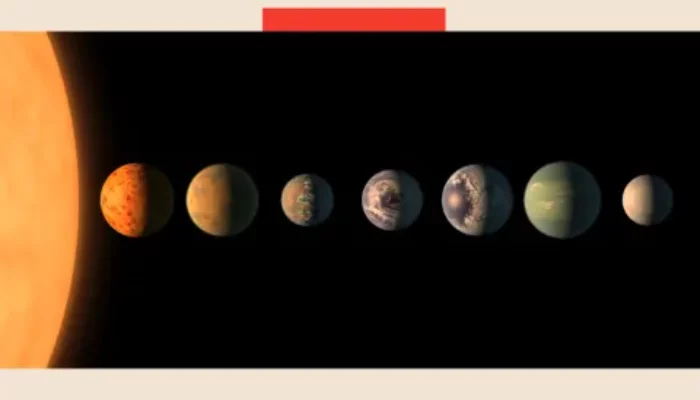
Beyond our solar system, exoplanets have been discovered in binary and multiple star systems, where gravitational interactions create complex orbital configurations. In these environments, stable orbits can exist at gravitational balance points known as Lagrange points. Such systems suggest that planetary capture might be more feasible under certain stellar arrangements, inspiring ongoing research into the diversity of planetary system architectures.
Significance of Planetary Capture
The potential capture of another planet by Earth carries profound implications. It would alter Earth’s orbital environment, influencing tidal forces, climate patterns, and possibly life itself. A captured planet could provide additional reflected light or new opportunities for exploration. More broadly, such an event would underscore the dynamic and evolving nature of planetary systems, challenging the notion of a fixed solar system structure.
Common Misconceptions About Planetary Capture
Earth’s gravity is strong enough to easily capture other planets.
Earth’s gravitational influence is limited compared to the Sun and giant planets, making permanent capture of another planet extremely unlikely.
Any object passing near Earth will be captured.
Without significant velocity reduction or external forces, objects will continue their solar orbits rather than becoming bound to Earth.
Temporary captures are equivalent to permanent planetary capture.
Temporary captures involve small bodies orbiting briefly, whereas permanent capture of a planet requires highly specific and rare conditions.
Conclusion: Earth’s Place in the Cosmic Dance
While the permanent capture of another planet by Earth remains a highly improbable event, the concept invites us to reconsider Earth’s role within the broader cosmic environment. It highlights the intricate gravitational interactions shaping planetary systems and encourages continued exploration of celestial mechanics. Ultimately, Earth is not an isolated orb but a participant in an ongoing cosmic ballet, where even planets may change partners in the vastness of space.
FAQ
What conditions are necessary for planetary capture?
For a planet-sized object to be captured, it must lose enough kinetic energy relative to the capturing body, often requiring interaction with a third body.
What are minimoons?
Minimoons are small celestial objects temporarily captured by Earth's gravity, orbiting for a limited time before escaping.

Leave a Reply