
Short Answer
Definition of Black Holes
Black holes are often imagined as empty voids or pits in space that consume everything around them. However, this common perception oversimplifies their true nature. Rather than being mere holes or gaps, black holes are regions in spacetime exhibiting extreme gravitational effects caused by an immense concentration of mass. They represent some of the most fascinating and complex objects in the universe, where conventional physics breaks down.
Formation and Structure
Black holes originate from the gravitational collapse of massive stars. When such stars exhaust their nuclear fuel, their cores implode under their own gravity, compressing mass into an incredibly small volume. This process creates a singularity-a point of infinite density where classical physics no longer applies. Surrounding this singularity is the event horizon, a boundary beyond which nothing, not even light, can escape.
- Singularity:
The core of a black hole where density becomes infinite and known physical laws cease to function. - Event Horizon:
The invisible boundary marking the point of no return, beyond which escape is impossible.
Misconceptions About Black Holes as “Holes”
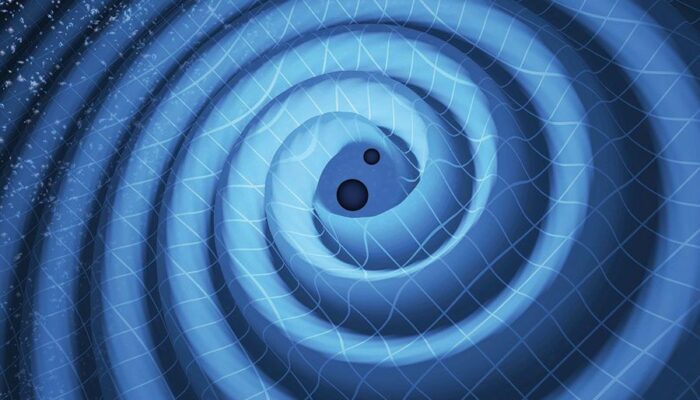
The term “black hole” can be misleading. Unlike a simple hole, which is an absence of matter, a black hole contains an extraordinary amount of mass concentrated in a tiny space. This immense mass warps spacetime around it, creating a gravitational well rather than an empty cavity.
- Misconception: Black holes are empty voids.
Correction: They are extremely dense objects with mass concentrated at the singularity. - Misconception: The event horizon is a physical surface.
Correction: It is a theoretical boundary, not a tangible surface, marking where escape velocity exceeds the speed of light.
How Black Holes Function
The event horizon acts as a one-way boundary. Once an object crosses this threshold, it cannot return to the outside universe because escaping would require traveling faster than light, which is impossible according to relativity. Inside the event horizon, spacetime is so intensely curved that all paths lead inevitably toward the singularity.
Theoretical Extensions: Wormholes and Quantum Effects
Advanced theories propose that black holes might connect different parts of the universe or even different universes through hypothetical structures called wormholes. These speculative bridges challenge the idea of black holes as dead ends and suggest they could be cosmic gateways.
Moreover, quantum physics introduces complexities such as the information paradox, which questions whether information swallowed by black holes is lost forever. Stephen Hawking’s work suggests that information may be encoded on the event horizon itself, hinting at a holographic nature of reality and indicating that black holes preserve information in subtle ways.
Observational Evidence and Visualizations
Images captured by instruments like the Event Horizon Telescope have provided direct visual evidence of black holes. These images show a bright accretion disk of matter swirling around a dark central region, which is the black hole’s silhouette. This confirms that black holes are not empty spaces but highly active regions dominated by intense gravitational forces.
Role of Black Holes in the Universe
Black holes exert a profound influence on their cosmic surroundings. Supermassive black holes, found at the centers of galaxies, govern the motion of stars and gas clouds, shaping the structure and evolution of galaxies. Far from being passive voids, they are dynamic entities that play a crucial role in the architecture of the cosmos.
Scientific Challenges and Future Directions
While general relativity predicts the existence of singularities and event horizons, integrating these concepts with quantum mechanics remains a major challenge. The true nature of black holes lies at the frontier of modern physics, inspiring ongoing research in quantum gravity, string theory, and other advanced frameworks. Until these theories mature, black holes will continue to defy simple explanations.
Why Understanding Black Holes Is Important
Black holes push the boundaries of our knowledge about space, time, and matter. They embody extreme conditions that test the limits of physical laws and inspire new scientific paradigms. Understanding black holes is essential for advancing astrophysics, cosmology, and fundamental physics, offering insights into the universe’s most profound mysteries.
Summary: Are Black Holes Really Holes?
In conclusion, black holes are not holes in the conventional sense of empty spaces or voids. Instead, they are extraordinarily dense objects with immense gravitational pull that distort spacetime itself. They serve as cosmic engines of transformation and gateways to unknown physics, challenging our understanding of reality and compelling us to rethink the nature of existence.
FAQ
What is a black hole?
A black hole is a region in spacetime exhibiting extreme gravitational effects due to a concentration of mass.
Do black holes really consume everything?
No, black holes are not just holes; they are dense objects that warp spacetime around them.



Leave a Reply