
Short Answer
Definition of Galaxy Clusters
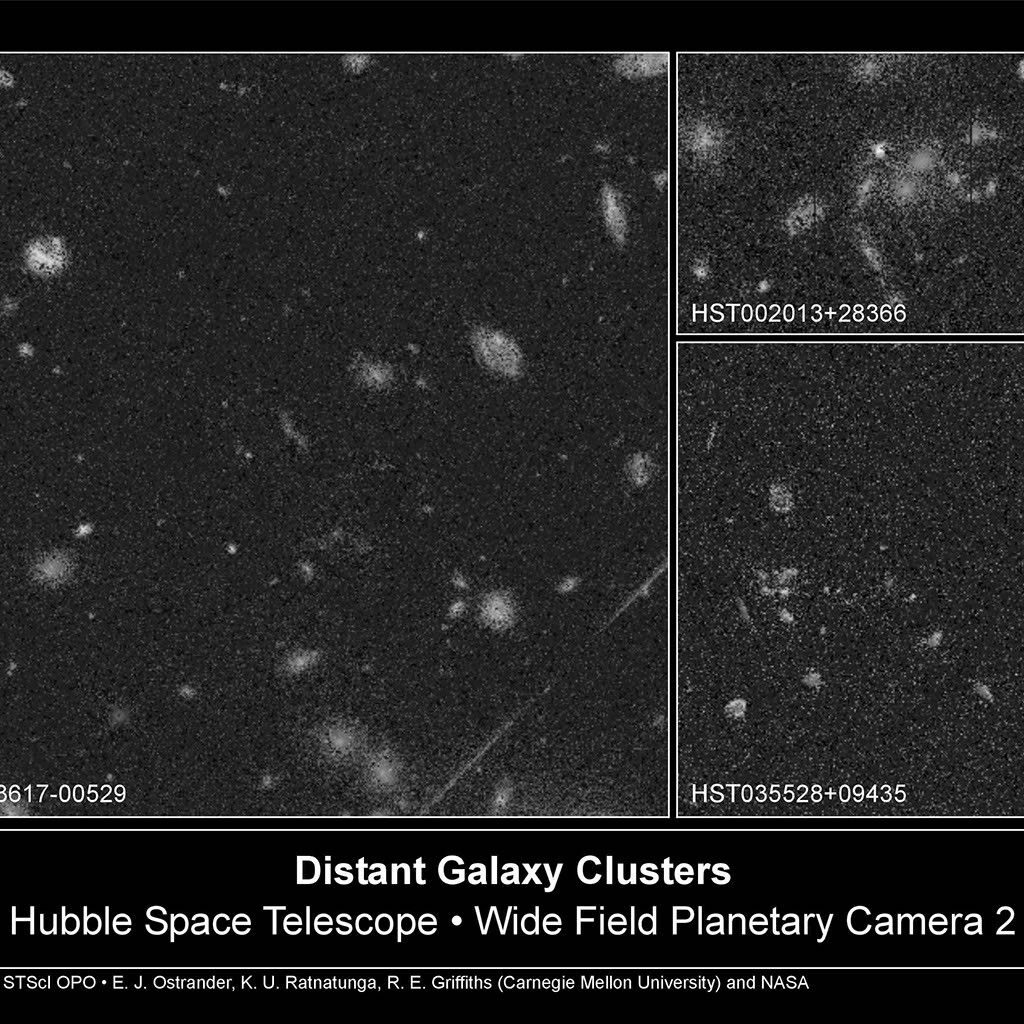
Galaxy clusters are immense cosmic structures consisting of hundreds to thousands of galaxies gravitationally bound together. These colossal formations are not merely random groupings of galaxies but serve as vital cosmic archives, preserving the history and evolution of the universe. By studying galaxy clusters, scientists gain profound insights into the universe’s past, present, and potential future.
Large-Scale Structure and Composition
Unlike isolated galaxies drifting through space, galaxy clusters exemplify the hierarchical nature of cosmic structure formation, where matter aggregates into increasingly larger systems over billions of years. These clusters are composed of several key components:
- Dark Matter:
An invisible form of matter that dominates the mass of clusters, detectable only through its gravitational effects. - Galaxies:
Hundreds to thousands of luminous galaxies that form the visible part of the cluster. - Intracluster Medium (ICM):
A hot, diffuse plasma filling the space between galaxies, emitting X-rays due to its extremely high temperature. - Non-baryonic Components:
Other elusive particles and forms of matter that contribute to the cluster’s overall mass and dynamics.
Role in Dark Matter Research
Galaxy clusters act as natural laboratories for investigating dark matter, a mysterious substance that does not emit or absorb light but exerts gravitational influence. One of the most compelling evidences for dark matter within clusters comes from gravitational lensing, where the cluster’s gravity bends and magnifies light from more distant galaxies. This lensing effect allows astronomers to map the mass distribution within clusters, revealing that visible matter alone cannot account for the observed gravitational forces, thereby confirming the dominance of dark matter.
Intracluster Medium and Its Significance
The intracluster medium (ICM) is a superheated plasma permeating galaxy clusters, with temperatures soaring to tens of millions of degrees Kelvin. This hot gas emits X-rays detectable by space telescopes, providing crucial information about the cluster’s formation and evolution. By studying the spectral characteristics and spatial distribution of the ICM, researchers can trace dynamic events such as mergers between smaller clusters and the impact of active galactic nuclei, which influence the growth and morphology of clusters.
Galaxy Clusters as Probes of Cosmic Expansion
Galaxy clusters serve as important markers for understanding the universe’s expansion history. The Sunyaev-Zel’dovich (SZ) effect, a phenomenon where cosmic microwave background photons scatter off hot electrons in the ICM, enables precise measurements of cluster distances and velocities. Coupled with observations of cluster abundance at different epochs, these measurements provide stringent constraints on dark energy models, the mysterious force driving the accelerated expansion of the universe. Tracking how the number and mass of clusters change over time helps refine predictions about the universe’s ultimate fate.
Formation and Distribution in the Cosmic Web
The spatial distribution of galaxy clusters reflects primordial density fluctuations seeded shortly after the Big Bang. Quantum fluctuations in the early universe created slight variations in matter density, which later evolved into the large-scale filamentary network known as the cosmic web. Detailed surveys of clusters reveal this intricate web-like pattern, supporting inflationary cosmology theories and reinforcing the standard cosmological model that describes the universe’s evolution.
Cluster Dynamics and Morphology
Galaxy clusters are dynamic systems that frequently undergo mergers and interactions, releasing vast amounts of energy and reshaping their internal structure. These cosmic collisions provide unique opportunities to study fundamental physics under extreme conditions, analogous to high-energy particle experiments but on a vastly larger scale. Observations across the electromagnetic spectrum capture these events, offering insights into the behavior of matter and the forces at play within clusters.
Challenges from Distant and Massive Clusters
Some of the most remote and massive galaxy clusters discovered challenge existing theories about the timeline of structure formation in the universe. These primordial clusters appear to have formed earlier than predicted by standard cosmological simulations, prompting scientists to reconsider certain parameters and explore potential new physics. This includes reevaluating the properties of dark matter and dark energy to better understand how such massive structures emerged so quickly.
Future Directions and Scientific Impact
The study of galaxy clusters continues to drive advancements in cosmology and astrophysics. By integrating multi-wavelength observations, advanced simulations, and innovative theoretical models, researchers are unraveling the complex processes governing cluster formation and evolution. This ongoing research not only deepens our understanding of the universe’s structure but also challenges and refines our broader cosmic perspective.
Why Galaxy Clusters Are Crucial to Cosmology
Galaxy clusters encapsulate key epochs of cosmic history, revealing the scaffolding of dark matter, the mechanisms behind cosmic expansion, and the evolution of large-scale structures. Their study is essential for testing cosmological theories, understanding the nature of dark energy and dark matter, and exploring the fundamental forces shaping the universe. As such, galaxy clusters remain indispensable tools for expanding humanity’s knowledge of the cosmos and our place within it.




Leave a Reply