
Short Answer
Definition of Dark Energy and Atomic Void
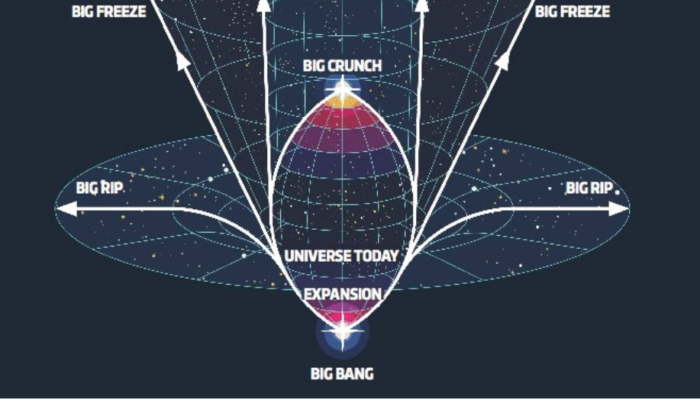
Dark energy is a mysterious force believed to be responsible for the accelerated expansion of the universe. It constitutes approximately 70% of the total energy content of the cosmos, yet its nature remains elusive. A fascinating hypothesis in theoretical physics suggests that the seemingly empty space within atoms-the atomic void-might play a role in or even embody dark energy. This idea invites an exploration of the quantum properties of matter, vacuum energy, and the structure of space-time.
Atomic Structure and the Nature of Empty Space
Atoms are often depicted as a dense nucleus orbited by electrons; however, the space between the nucleus and electrons is not truly empty. Instead, this region is characterized by probabilistic electron clouds where the likelihood of finding an electron varies. These clouds define volumes largely devoid of particles but permeated by electromagnetic and quantum fields.
- Quantum Fluctuations:
The vacuum inside atoms is a dynamic environment filled with transient virtual particles that continuously appear and vanish, a phenomenon predicted by quantum electrodynamics (QED). - Zero-Point Energy:
This is the lowest possible energy that a quantum mechanical system may have, present even in a perfect vacuum, contributing to measurable effects such as the Lamb shift in atomic spectra.
Vacuum Energy and Its Cosmological Significance
On a cosmic scale, vacuum energy is linked to the cosmological constant (Λ) in Einstein’s field equations of General Relativity. This constant represents a uniform energy density filling space-time, exerting a repulsive gravitational force that accelerates the universe’s expansion.
- Cosmological Constant Problem:
Theoretical calculations of vacuum energy density from quantum field theory predict values vastly larger than those observed for dark energy, presenting one of the most profound puzzles in modern physics. - Dark Energy Composition:
Dark energy is often modeled as vacuum energy, but the discrepancy between theory and observation suggests unknown physics or new fields may be involved.
Exploring the Link Between Atomic Void and Dark Energy
The idea that the vacuum energy inside atoms could cumulatively contribute to dark energy raises intriguing questions:
- Does the zero-point energy within atomic voids scale up to a cosmologically significant level?
- Are the quantum fluctuations inside atoms fundamentally different from the vacuum energy driving cosmic acceleration?
Since ordinary matter accounts for only about 5% of the universe’s total energy, understanding whether the vacuum energy embedded in matter influences dark energy is a key area of investigation.
Distinguishing Microscopic Quantum Effects from Cosmic Expansion
Quantum vacuum fluctuations inside atoms operate at microscopic scales and involve high-energy electromagnetic interactions. In contrast, dark energy influences the universe on the largest scales, governing its expansion dynamics. The energy densities involved differ by many orders of magnitude, complicating direct comparisons.
- Local Quantum Effects:
Phenomena such as the Casimir effect demonstrate that vacuum fluctuations produce measurable forces at small scales but do not cause cosmic expansion. - Cosmological Influence:
Dark energy’s repulsive gravity acts uniformly across vast distances, a behavior not observed in local quantum vacuum effects.
Theoretical Approaches and Alternative Models
Several theoretical frameworks attempt to reconcile atomic-scale vacuum energy with cosmological dark energy:
- Dynamic Dark Energy Models:
Concepts like quintessence propose that dark energy varies over time and space, potentially interacting with quantum fields at smaller scales. - Quantum Gravity and String Theory:
These advanced theories explore the integration of quantum vacuum phenomena with the geometry of space-time, introducing ideas such as extra dimensions and complex vacuum states that might resolve the cosmological constant problem.
Experimental and Observational Efforts
Progress in understanding the connection between atomic vacuum energy and dark energy depends on both laboratory experiments and astronomical observations:
- Precision Spectroscopy and Atomic Interferometry:
These techniques probe vacuum fluctuations within atoms with high accuracy, refining our knowledge of zero-point energies. - Cosmological Surveys:
Observations of supernovae, galaxy distributions, and the cosmic microwave background provide critical data on dark energy’s properties and distribution. - Future Technologies:
Particle accelerators, space telescopes, and gravitational wave detectors may reveal subtle links between quantum vacuum effects and cosmic expansion.
Common Misconceptions
The empty space inside atoms is truly empty.
Atomic voids are filled with fluctuating quantum fields and zero-point energy, making them far from empty.
Vacuum energy inside atoms directly causes the universe’s accelerated expansion.
While vacuum energy exists locally, its magnitude and effects differ greatly from the dark energy driving cosmic acceleration.
Importance of Understanding Dark Energy and Atomic Vacuum
Unraveling the relationship between atomic-scale vacuum phenomena and dark energy is crucial for advancing fundamental physics. It bridges quantum mechanics and cosmology, potentially leading to new insights into the universe’s composition, evolution, and ultimate fate. This research not only deepens our grasp of the cosmos but also enhances technologies reliant on quantum principles.
Summary
The hypothesis that the vacuum within atoms might be connected to dark energy presents a profound scientific challenge. Although atomic voids contain measurable zero-point energy and quantum fluctuations, these local energies differ significantly from the dark energy responsible for cosmic acceleration. The cosmological constant problem highlights the gap between quantum theory and astronomical observations, motivating ongoing theoretical and experimental efforts. Exploring this intersection enriches our understanding of both the microscopic and macroscopic realms, bringing us closer to deciphering the universe’s most enigmatic forces.


Leave a Reply