
Short Answer
Understanding the Concept of a Dark Big Bang
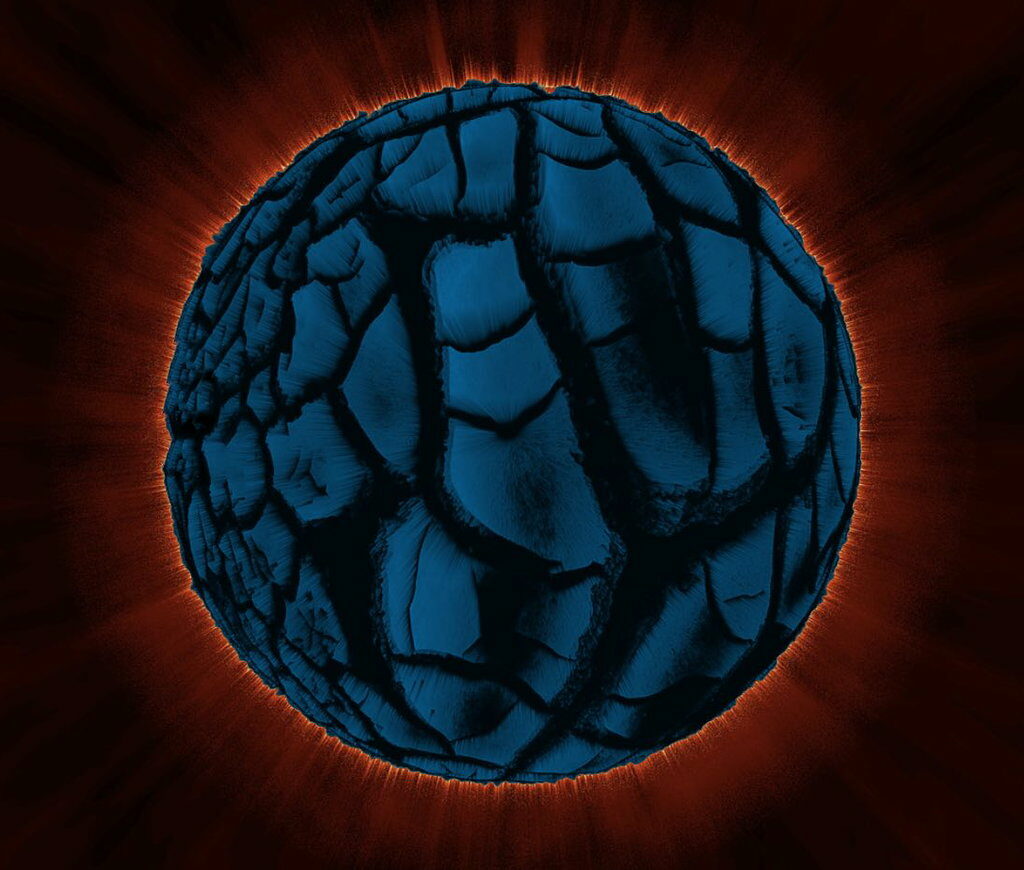
Envision standing at the edge of the universe, peering into a vast, enigmatic void that conceals the very essence of existence. This mysterious domain is the realm of dark matter, an invisible substance that makes up about 27% of the universe’s total mass-energy but eludes detection by even the most advanced instruments. For many years, researchers have sought to uncover the origins and characteristics of dark matter. A compelling theory emerging from this quest is the idea of a “Dark Big Bang”-a cosmic event that parallels and complements the well-known Big Bang responsible for the visible universe’s creation.
Definition and Origins of the Dark Big Bang
The phrase “Dark Big Bang” suggests a monumental and secretive cosmic birth, a hidden explosion that gave rise to the dark sector-an unseen counterpart to the particles and forces that form the visible universe. Unlike the original Big Bang, which unleashed light and matter across space-time roughly 13.8 billion years ago, this hypothesized event would have occurred quietly, primarily affecting dark particles that evade direct observation.
- Dark Sector:
A hypothesized realm consisting of particles and forces invisible to electromagnetic detection but influencing the universe gravitationally. - Independent Genesis:
The idea that dark matter originated from a separate primordial explosion distinct from the visible universe’s Big Bang.
Revisiting Cosmological Models: A Dual-Origin Universe
Traditional cosmology often views dark matter as a passive relic formed during the initial Big Bang, a silent byproduct with minimal interaction beyond gravity. The “Dark Big Bang” hypothesis challenges this view by proposing a more dynamic and autonomous origin for dark matter. This theory suggests that dark matter’s abundance and unique behaviors might be better explained by an independent cosmic event, prompting a reconsideration of how the visible and dark components of the universe interrelate.
Properties and Characteristics of Dark Matter
Dark matter differs fundamentally from ordinary matter, which interacts with light by emitting, absorbing, or reflecting it. Instead, dark matter remains invisible, revealing itself only through gravitational effects on galaxies and large-scale cosmic structures. Scientists have struggled to identify typical particle interactions within the dark sector, such as electromagnetic forces. The “Dark Big Bang” concept implies that dark matter may possess its own complex set of particles and interactions, born from a primordial explosion separate from the luminous universe’s fiery birth.
Mechanics of the Dark Big Bang
Imagine the universe as a grand orchestral performance, where the visible cosmos plays a familiar tune while a hidden ensemble performs a complex counter-melody. The “Dark Big Bang” could represent the opening movement of this unseen symphony, initiating the evolution of dark matter’s intricate behavior. This metaphor highlights the possibility of a parallel cosmic narrative, unfolding alongside the visible universe but largely unexplored.
Implications for Astrophysics and Cosmology
The “Dark Big Bang” theory offers potential solutions to longstanding astrophysical puzzles, such as the “small-scale structure problem,” where observed galactic formations and dynamics do not align with predictions from standard dark matter models. If dark matter emerged from a distinct event with unique properties, it might exhibit interactions or decay processes unfamiliar to conventional theories, thereby explaining discrepancies in the development of structures ranging from dwarf galaxies to massive clusters.
The Richness of the Dark Sector
This hypothesis also opens the door to a complex dark sector filled with phenomena analogous to those in the visible universe. It suggests the existence of dark forces, dark particles, and even dark radiation, potentially forming a cosmic web as elaborate as the one we observe. Concepts such as “dark atoms,” “dark photons,” or entire dark galaxies could exist, remaining hidden but possibly detectable through indirect methods like gravitational effects or advanced particle physics experiments designed to probe beyond the visible spectrum.
Challenges in Testing the Dark Big Bang Hypothesis
Due to its inherently elusive nature, the “Dark Big Bang” is difficult to observe directly. Researchers rely on indirect evidence, analyzing cosmic microwave background radiation, patterns of galaxy clustering, and gravitational lensing for subtle signs that might support a dual-origin universe. Particle physicists are developing innovative detectors to capture faint signals from dark particles, expanding the search beyond the assumption of a single dark matter particle to a diverse family born from a dark primordial event.
Philosophical and Scientific Significance
Beyond its scientific implications, the “Dark Big Bang” represents a profound shift in how we perceive the universe’s origins. It encourages embracing complexity and acknowledges that the cosmos may be far more intricate than previously thought. Rather than a mere absence or void, dark matter could be a vibrant domain born from a primordial fire, echoing alongside the luminous universe’s creation.
Common Misconceptions About Dark Matter and the Dark Big Bang
Dark matter is simply invisible ordinary matter.
Dark matter does not interact with light and is fundamentally different from ordinary matter, requiring new physics to explain its properties.
The Big Bang created all matter simultaneously.
The “Dark Big Bang” hypothesis suggests that dark matter may have originated from a separate, distinct event.
Why the Dark Big Bang Matters
Understanding whether dark matter emerged from a “Dark Big Bang” is crucial for advancing cosmology, particle physics, and our comprehension of the universe’s structure. It challenges existing paradigms, inspires new experimental approaches, and deepens our appreciation of the cosmos’s complexity. This theory not only enriches scientific inquiry but also invites a broader philosophical reflection on the nature of existence, the interplay of light and darkness, and the hidden dimensions of reality.
Exploring the Future of Dark Matter Research
The question of a “Dark Big Bang” remains an open invitation to scientists worldwide to push the boundaries of knowledge. As technology advances and theoretical models evolve, the pursuit of this hidden cosmic origin promises to reveal secrets as profound and awe-inspiring as the universe’s first radiant moments.
FAQ
What is the Dark Big Bang hypothesis?
The Dark Big Bang hypothesis suggests that dark matter originated from a separate primordial explosion distinct from the visible universe's Big Bang.
How does dark matter differ from ordinary matter?
Dark matter does not interact with light and is fundamentally different from ordinary matter, revealing itself only through gravitational effects.


Leave a Reply