

Short Answer
Understanding Black Holes and Dark Matter
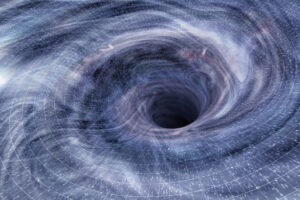
Within the vast expanse of the cosmos, black holes stand as mysterious phenomena-regions where gravity intensifies to such an extent that even light cannot escape their pull. Alongside these enigmatic objects lies dark matter, an invisible substance that constitutes the majority of the universe’s mass but remains undetectable through traditional electromagnetic means. The intriguing possibility that black holes and dark matter might be interconnected opens a fascinating chapter in astrophysics and cosmology, prompting us to explore whether these cosmic enigmas are fundamentally linked as architects of the universe’s unseen framework.
Defining Black Holes and Dark Matter
- Black Holes:
Extremely dense regions in space where gravitational forces are so strong that nothing, not even light, can escape beyond their event horizons-the boundary marking the point of no return. - Dark Matter:
A form of matter that does not emit, absorb, or reflect light, making it invisible to current detection methods, yet its gravitational effects influence the structure and motion of galaxies and galaxy clusters.
Primordial Black Holes as Dark Matter Candidates
One compelling hypothesis suggests that a specific category of black holes, known as primordial black holes (PBHs), could constitute dark matter. Unlike black holes formed from the collapse of massive stars, PBHs are theorized to have originated shortly after the Big Bang due to density fluctuations in the early universe. These ancient black holes vary widely in size and mass and may be dispersed throughout galactic halos, effectively mimicking the gravitational effects attributed to dark matter. This theory proposes that PBHs and dark matter are intertwined components of the cosmic fabric, jointly shaping the universe’s large-scale structure.
Mass Range and Detection Challenges of Primordial Black Holes
The mass distribution of primordial black holes spans a broad spectrum, potentially aligning with the gravitational signatures observed in dark matter studies. Confirming their existence, however, presents significant observational hurdles. Scientists employ techniques such as gravitational lensing-where PBHs bend light from distant objects-analysis of the cosmic microwave background radiation, and detection of gravitational waves to identify subtle imprints left by these elusive objects. Despite these efforts, direct evidence remains elusive, underscoring the complexity of detecting such ancient cosmic relics.
Interactions Between Black Holes and Hypothetical Dark Matter Particles
Beyond primordial black holes, black holes may indirectly reveal the nature of dark matter through interactions with theoretical dark matter particles. Candidates like weakly interacting massive particles (WIMPs) or axions could accumulate near black holes, influencing their growth rates or radiation emissions. This interaction zone, where conventional matter meets speculative particles, might produce detectable anomalies-such as slight variations in black hole behavior or emitted radiation-that hint at the presence of dark matter.
Quantum and Theoretical Perspectives on Black Holes and Dark Matter
Explorations into quantum mechanics and string theory further complicate the relationship between black holes and dark matter. Some models propose that dark matter could form accretion disks around black holes or belong to undiscovered particle families affecting black hole thermodynamics. These advanced theories suggest a universe woven with hidden symmetries and dualities, positioning black holes as natural experimental grounds for probing the quantum characteristics of dark matter.
Gravitational Wave Astronomy and Its Role
Recent progress in gravitational wave detection has opened new avenues for investigating the connection between black holes and dark matter. Collisions involving black holes generate ripples in spacetime that may carry information about the surrounding dark matter distribution. Observatories like LIGO and Virgo monitor these signals, searching for irregularities that could indicate dark matter’s influence, potentially offering groundbreaking insights into the cosmic interplay of these phenomena.
Common Misconceptions About Black Holes and Dark Matter
Black holes are simply empty voids.
Black holes are incredibly dense objects with intense gravitational fields, not empty spaces.
Dark matter can be directly observed with telescopes.
Dark matter does not interact with electromagnetic radiation, making it invisible to traditional telescopes; its presence is inferred through gravitational effects.
All black holes are formed from dying stars.
While many black holes result from stellar collapse, primordial black holes are theorized to have formed in the early universe independently of stars.
Significance of Exploring the Black Hole-Dark Matter Connection
Investigating the potential link between black holes and dark matter holds profound implications for our understanding of cosmic evolution, galaxy formation, and the fundamental nature of matter. If primordial black holes are confirmed as dark matter constituents, it would unify two of the universe’s greatest mysteries under a single framework. Alternatively, uncovering interactions between dark matter particles and black holes could pave the way for new physics beyond the Standard Model, expanding our comprehension of the universe’s hidden forces and components.
Conclusion: Illuminating the Cosmic Shadows
Black holes are not merely cosmic voids but pivotal points through which we can explore the universe’s deepest secrets. Their potential connection to dark matter challenges us to bridge the gap between observable phenomena and theoretical constructs, weaving a narrative where darkness embodies a complex and rich cosmic identity. As scientific techniques advance and observational data accumulate, humanity moves closer to unraveling the true nature of these shadowy entities, transforming our understanding of the cosmos and our place within it.
FAQ
What are black holes?
Black holes are extremely dense regions in space with gravitational forces strong enough that nothing, not even light, can escape.
What is dark matter?
Dark matter is an invisible substance that does not emit, absorb, or reflect light, yet its gravitational effects are crucial for understanding the structure of the universe.
How are primordial black holes related to dark matter?
Primordial black holes are theorized to have formed shortly after the Big Bang and may constitute dark matter due to their gravitational effects.

Leave a Reply