
Short Answer
Understanding the Solar System Exploration Challenge
Venturing beyond Earth’s familiar blue sphere reveals an immense and mysterious cosmic expanse-a vast celestial network filled with planets, moons, and other bodies that ignite human curiosity and innovation. Despite centuries of astronomical progress and decades of robotic missions, much of our solar system remains largely unexplored and enigmatic. This ongoing mystery is shaped not only by the immense distances involved but also by a complex array of scientific, technological, and financial hurdles.
Definition and Scope of the Solar System
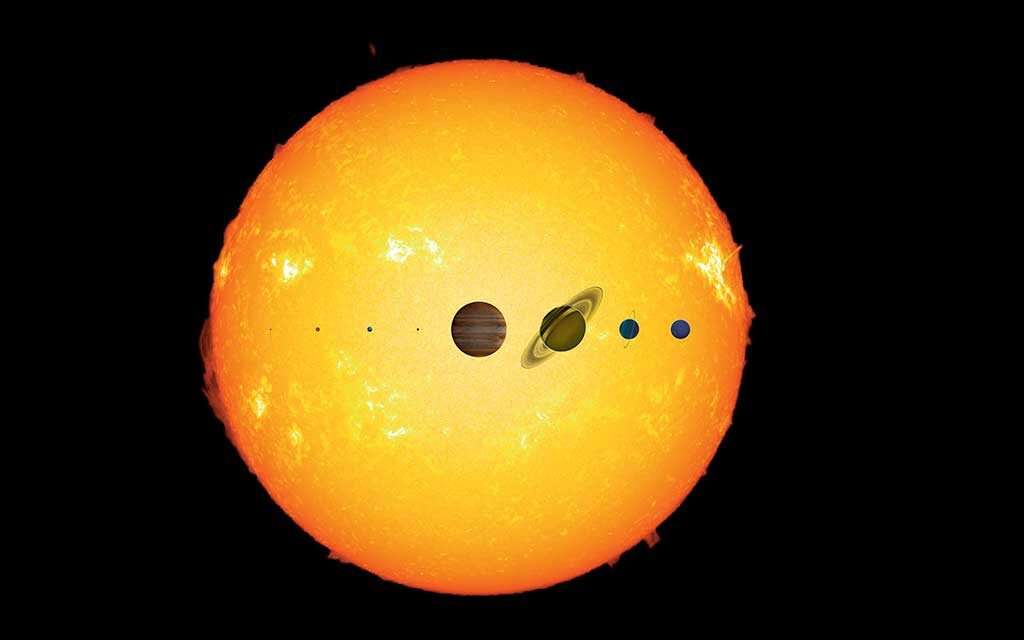
The solar system encompasses the Sun and all objects gravitationally bound to it, including planets, moons, asteroids, comets, and the heliosphere boundary. It extends roughly 100 astronomical units (AU) from the Sun, where 1 AU equals the average distance between Earth and the Sun (~150 million kilometers).
- Spatial Scale:
The vast distances between celestial bodies make travel and communication challenging. For example, the distance from Earth to Mars ranges from about 54.6 million kilometers to over 400 million kilometers depending on their relative positions. - Temporal Scale:
Missions to other planets often take years or even decades, requiring long-term planning and patience unlike terrestrial exploration.
Environmental Diversity Within the Solar System
The solar system is a realm of extreme and varied environments, each presenting unique obstacles for exploration:
- Venus:
Surface temperatures soar high enough to melt lead, creating a hostile environment for spacecraft. - Mercury:
Features shadowed craters with permanent darkness and intense radiation exposure. - Gas Giants (Jupiter, Saturn, Uranus, Neptune):
These massive planets have crushing atmospheric pressures, persistent storms lasting centuries, and strong magnetic fields that generate hazardous radiation belts. - Moons of Gas Giants:
Many moons harbor subsurface oceans beneath thick ice layers, dormant volcanic activity, or tenuous atmospheres, each requiring specialized instruments for study.
Technological Constraints in Space Exploration
Technological innovation is both a driving force and a limiting factor in exploring the solar system. Current propulsion methods, spacecraft durability, and onboard systems face significant challenges:
- Propulsion Systems:
Chemical rockets, while reliable, have limited efficiency and require large fuel quantities to escape Earth’s gravity. Emerging technologies like ion propulsion and nuclear thermal rockets promise faster travel and greater payloads but remain under development. - Spacecraft Durability:
Spacecraft must endure extreme temperatures, intense radiation, micrometeoroid impacts, and the vacuum of space, demanding advanced materials and electronics.
Financial and Logistical Challenges
Funding space missions involves balancing ambitious scientific goals with practical budgetary constraints. The high costs of interplanetary missions necessitate careful justification and long-term planning:
- Cost Considerations:
Missions beyond Earth orbit often require billions of dollars, with benefits that are primarily scientific or technological rather than immediate economic returns. - Political and Budget Cycles:
Government funding is influenced by competing priorities such as healthcare and climate change, leading to cautious investment and extended timelines for mission approval and execution.
Human Exploration: Complexities and Risks
Sending humans beyond the Moon introduces additional layers of difficulty beyond robotic missions:
- Physiological Challenges:
Prolonged exposure to microgravity and cosmic radiation affects human health, requiring advanced life support systems. - Psychological Factors:
Isolation and confinement during long-duration missions pose mental health risks. - Life Support Reliability:
Systems must provide air, water, food, and shelter with near-perfect dependability, as rescue or resupply is often impossible.
Scientific Prioritization and Exploration Strategy
Exploration efforts are often guided by specific scientific questions, which shape mission targets and objectives. This focused approach, while efficient, means many regions remain unexplored:
- Targeted Missions:
Probes are sent to answer particular hypotheses about planetary formation, habitability, or potential life. - Unexplored Areas:
Large portions of the solar system remain unvisited due to limited resources and prioritization.
Why Exploring the Solar System Is Crucial
The pursuit of solar system exploration embodies humanity’s relentless quest to push beyond known boundaries and deepen our cosmic understanding. Each mission enriches our knowledge of planetary science, informs technological advancement, and inspires future generations. Despite the slow pace dictated by distance, cost, and complexity, every discovery contributes to a broader tapestry of insight about our place in the universe.
Real-World Examples of Solar System Exploration
Several landmark missions illustrate the challenges and achievements in solar system exploration:
- Voyager Probes:
Launched in the 1970s, these spacecraft provided unprecedented data on the outer planets and continue to send information from interstellar space. - Mars Rovers:
Robotic explorers like Curiosity and Perseverance have conducted detailed surface studies, searching for signs of past life and preparing for future human missions. - Juno Mission:
Currently orbiting Jupiter, Juno studies the planet’s atmosphere, magnetic field, and internal structure, overcoming intense radiation challenges.
Common Misconceptions About Solar System Exploration
Space travel within the solar system is quick and straightforward.
Distances are vast, and missions often take years or decades due to current propulsion limitations.
Robotic missions can easily replace human explorers.
While robots handle many tasks, human presence is essential for complex decision-making and adaptability, though it comes with significant challenges.
The benefits of space exploration are immediate and economic.
Most benefits are long-term, including scientific knowledge, technological innovation, and cultural inspiration.




Leave a Reply