
Short Answer
Definition of Deep Space Probes
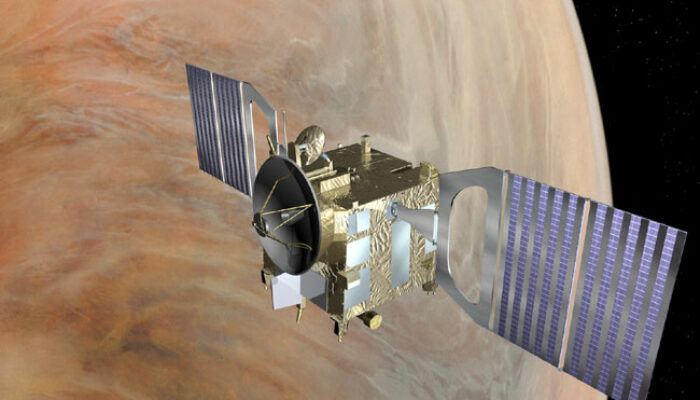
Deep space probes are robotic spacecraft designed to travel vast distances beyond Earth’s immediate vicinity, venturing into the far reaches of our solar system and beyond. These unmanned explorers serve as our physical representatives in the cosmos, tasked with gathering scientific data from regions unreachable by human missions. Their journeys span billions of miles, navigating the immense and often hostile environment of outer space.
Historical and Conceptual Overview
Envision a message cast adrift in an endless, dark ocean-this metaphor aptly captures the essence of deep space exploration. Each probe launched embodies human curiosity and technological prowess, embarking on a voyage that is as much about endurance and precision as it is about distance. The mission of these probes is not simply to cover space but to orchestrate a complex interplay of engineering, celestial mechanics, and time management to unlock the secrets of the universe.
Propulsion Methods in Deep Space Travel
Chemical Rockets: The Initial Thrust
Chemical propulsion has traditionally been the primary means of launching spacecraft from Earth. These rockets generate the immense thrust necessary to overcome Earth’s gravitational pull, providing the initial velocity required for deep space missions. However, their efficiency diminishes over long distances, limiting their effectiveness for sustained interplanetary travel.
Gravity Assists: Harnessing Planetary Momentum
To overcome the limitations of chemical rockets, mission planners employ gravitational slingshots, or gravity assists. This technique involves directing a spacecraft close to a planet, using the planet’s orbital velocity to boost the probe’s speed without expending additional fuel. Comparable to a skateboarder gaining momentum from a moving ramp, gravity assists significantly shorten travel times and conserve onboard resources.
Advanced Propulsion Technologies
- Ion Propulsion:
This method ionizes a propellant and accelerates the charged particles using electromagnetic fields, producing a continuous but gentle thrust. Although the initial acceleration is slow, the sustained force allows the spacecraft to reach high velocities over extended periods, ideal for long-duration missions. - Solar Sails:
Inspired by the way sunlight exerts pressure, solar sails use expansive, reflective surfaces to capture solar radiation. This pressure generates a subtle yet persistent acceleration, enabling probes to gradually increase speed without relying on finite fuel supplies, effectively turning the Sun’s light into a cosmic wind.
Navigation and Course Correction
Precision navigation is critical for deep space probes to successfully reach their distant targets. Utilizing a global network of tracking stations and sophisticated telemetry systems, mission control continuously monitors spacecraft trajectories. This allows for timely mid-course adjustments, ensuring probes remain on optimal paths for data collection and mission objectives.
Communication Across the Void
Maintaining contact with probes millions or billions of miles away requires advanced communication systems. High-gain antennas and sensitive transmitters send and receive radio signals that can take hours to traverse the vast distances. Despite these delays, the data transmitted back to Earth provides invaluable insights into distant celestial bodies and phenomena.
Durability and Autonomous Operation
Deep space probes are engineered to endure extreme conditions, including intense radiation, drastic temperature variations, and impacts from micrometeoroids. Their robust construction protects sensitive instruments, while onboard autonomous systems enable them to perform scientific experiments and navigate without real-time human intervention, compensating for communication delays.
Philosophical and Scientific Significance
Beyond their technical achievements, deep space probes serve as cosmic time capsules, preserving and transmitting information across the vastness of space and time. Their missions inspire reflection on humanity’s place in the universe, capturing fleeting moments from distant worlds and expanding our cosmic perspective.
Why Deep Space Exploration Matters
The exploration of deep space epitomizes human ambition and the quest for knowledge. By leveraging advanced physics, durable materials, and innovative engineering, these probes extend our senses into the unknown, illuminating the mysteries of the cosmos. Each successful mission enriches scientific understanding and symbolizes hope, marking humanity’s relentless pursuit of discovery in the final frontier.
FAQ
What are deep space probes?
Deep space probes are robotic spacecraft designed to explore the far reaches of our solar system and beyond, gathering scientific data.
How do deep space probes navigate?
Deep space probes navigate using a global network of tracking stations and sophisticated telemetry systems to ensure accurate trajectories.
What propulsion methods are used by deep space probes?
Deep space probes utilize various propulsion methods including chemical rockets, gravity assists, ion propulsion, and solar sails.
Why is deep space exploration important?
Deep space exploration expands our understanding of the universe, inspires future generations, and contributes to scientific knowledge.


Leave a Reply