
Short Answer
Definition of the Galactic Center Black Hole
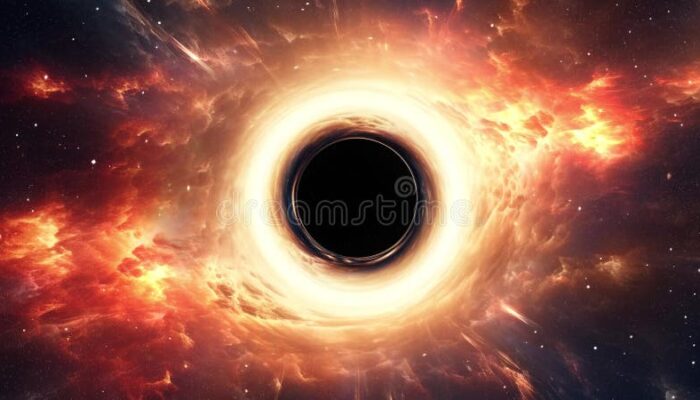
At the heart of the Milky Way galaxy lies a mysterious and powerful entity known as a supermassive black hole. This astronomical object is a region in space where gravity is so intense that nothing, not even light, can escape its pull. Unlike stars or planets, black holes do not emit light, making them inherently invisible to direct observation. Instead, they are characterized by a singularity-a point of infinite density-surrounded by an event horizon, which marks the boundary beyond which escape is impossible.
- Supermassive Black Hole:
A black hole with a mass millions to billions of times that of the Sun, typically found at the centers of galaxies. - Event Horizon:
The “point of no return” around a black hole, beyond which matter and radiation cannot escape. - Singularity:
The core of a black hole where matter is thought to be infinitely dense.
Identification of Sagittarius A*
The supermassive black hole at the center of our galaxy is known as Sagittarius A* (Sgr A*). Although it cannot be seen directly, its existence is inferred through the observation of stars and gas clouds orbiting an invisible, massive object. These stars move at extremely high velocities along elliptical orbits, indicating the presence of a gravitational force equivalent to millions of suns compressed into a very small volume.
Observational Techniques and Indirect Evidence
While direct visual detection of Sagittarius A* is impossible due to its nature, astronomers employ a variety of advanced methods to study it indirectly. Instruments such as radio telescopes, X-ray observatories, and infrared cameras detect emissions from the hot accretion disk-a swirling mass of gas and dust heated to extreme temperatures as it spirals into the black hole. These emissions create a shadow or silhouette that outlines the black hole’s presence against the surrounding luminous material.
Event Horizon Telescope and the First Black Hole Image
In 2019, the Event Horizon Telescope (EHT) collaboration achieved a historic milestone by capturing the first-ever image of a black hole’s shadow, located in the galaxy M87. This breakthrough demonstrated the capability of current technology to visualize the event horizon’s silhouette, providing a new window into black hole physics. Although this image was not of Sagittarius A*, it has paved the way for future observations aimed at imaging our own galactic center’s black hole.
Challenges in Observing Sagittarius A*
Several factors complicate efforts to image Sagittarius A* directly. The galactic core is obscured by dense clouds of interstellar dust that absorb and scatter visible light, making optical observations ineffective. Additionally, Sagittarius A* exhibits variable and flaring emissions, which add complexity to data collection. The relative position and distance from Earth also introduce distortions and require multi-wavelength, coordinated observations to overcome these obstacles.
Scientific and Philosophical Significance
Black holes represent the extremes of physical laws, where conventional understanding of space, time, and gravity breaks down. Studying Sagittarius A* not only provides empirical insights into these phenomena but also challenges our perception of reality. The black hole’s enigmatic nature fuels human curiosity and symbolizes the frontier of cosmic exploration, where time dilation and space curvature become tangible concepts.
Role in Galactic Evolution
The supermassive black hole at the Milky Way’s center plays a crucial role in shaping the galaxy’s structure and evolution. Its gravitational influence regulates star formation and affects the dynamics of surrounding matter. Understanding Sagittarius A* is therefore essential for piecing together the history and future trajectory of our galaxy.
Methods to “See” the Invisible
Although the black hole itself cannot be seen, scientists use indirect proxies to visualize its presence. These include:
- High-frequency Radio Observations:
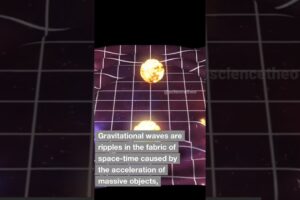
Detect emissions from the accretion disk and jets. - Gravitational Wave Astronomy:
Measures ripples in space-time caused by black hole interactions. - Theoretical Simulations:
Models the behavior of matter and light near the event horizon.
These approaches collectively create a conceptual image of the black hole’s silhouette and its effects on the surrounding environment.
Common Misconceptions About Black Holes
Black holes are cosmic vacuum cleaners that suck in everything around them.
Black holes exert gravitational pull like any other massive object; objects must be very close to be captured.
Black holes are visible as dark holes in space.
Black holes themselves emit no light; what we observe are effects on nearby matter and radiation.
Importance of Studying Sagittarius A*
Exploring the black hole at the center of our galaxy is vital for advancing astrophysics and cosmology. It provides a natural laboratory for testing theories of gravity, quantum mechanics, and general relativity under extreme conditions. Moreover, understanding this cosmic giant enhances our knowledge of galaxy formation and the universe’s large-scale structure, making it a cornerstone of modern astronomical research.
Conclusion: The Ongoing Quest to Visualize the Galactic Black Hole
The question of whether we can see the black hole at the Milky Way’s core invites a deeper exploration of observational science, technology, and human curiosity. While direct visualization remains beyond current capabilities, the combination of indirect evidence and innovative techniques continues to bring this invisible giant into clearer focus. Each scientific advancement transforms the unknown into knowledge, embodying humanity’s relentless pursuit to illuminate the darkest corners of the cosmos.


Leave a Reply