
Short Answer
Definition of Gamma Rays
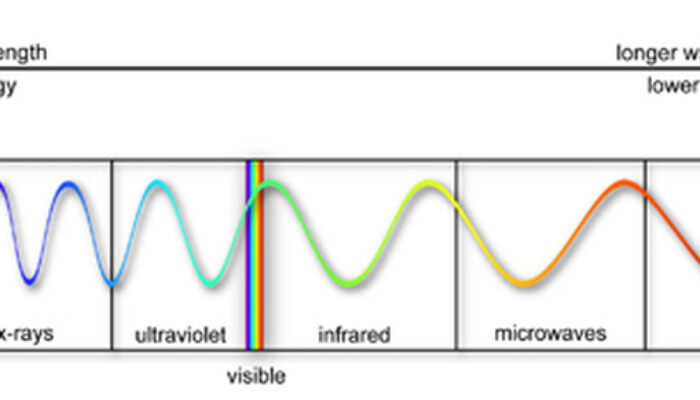
Gamma rays are a form of electromagnetic radiation characterized by extremely short wavelengths and exceptionally high energy. They exist at the far end of the electromagnetic spectrum, with wavelengths smaller than the atomic nucleus, making them the most energetic photons known. Unlike visible light, gamma rays are invisible to the human eye and possess unique properties that distinguish them from other types of radiation.
- Nature:
Gamma rays are quanta of electromagnetic energy, massless and without electric charge, embodying the wave-particle duality fundamental to quantum mechanics. - Origin:
They are primarily produced by radioactive decay processes and violent cosmic events such as supernovae and neutron star collisions.
Physical Characteristics and Quantum Nature
Gamma rays are photons, the smallest indivisible packets of light energy, but unlike the photons of visible light, they carry immense energy due to their extraordinarily high frequencies, often measured in exahertz (1018 Hz) or higher. This high frequency corresponds to a very short wavelength, enabling gamma rays to penetrate materials that would block lower-energy radiation.
Despite being particles of light, gamma rays have no rest mass or electric charge, which sets them apart from other particles such as alpha and beta particles emitted during radioactive decay. This dual wave-particle nature means gamma rays exhibit behaviors characteristic of both waves and particles, a cornerstone concept in quantum physics.
Production Mechanisms of Gamma Rays
Gamma rays are generated through several natural processes, primarily involving the transformation of atomic nuclei and extreme astrophysical phenomena:
- Radioactive Decay:
When unstable atomic nuclei release excess energy to reach a more stable state, they emit gamma photons. This emission is a key part of nuclear decay, where the nucleus reorganizes itself and sheds energy without losing mass. - Astrophysical Events:
Cataclysmic cosmic occurrences such as supernova explosions, collisions of neutron stars, and matter accretion around black holes produce intense bursts of gamma radiation, sending these high-energy photons across vast interstellar distances.
Interaction with Matter and Ionization Effects
Gamma rays possess the ability to ionize atoms by dislodging electrons and breaking molecular bonds. This ionization capability makes them both hazardous and beneficial:
- Biological Impact:
Gamma radiation can damage living cells by altering molecular structures, which can lead to mutations or cell death. - Medical Applications:
Harnessed carefully, gamma rays are used in cancer radiotherapy to target and destroy malignant cells, as well as in sterilization and diagnostic imaging techniques.
Gamma Rays in Scientific Research and Technology
In experimental physics, gamma rays serve as powerful probes to investigate the internal structure of matter. Their interactions with atoms and nuclei-through phenomena such as the photoelectric effect, Compton scattering, and pair production-allow scientists to explore subatomic details and material properties.
In nuclear medicine, gamma-emitting isotopes are invaluable for both imaging and treatment, providing insights into organ function and enabling precise therapeutic interventions.
Distinguishing Gamma Rays from Other Radiation Types
Unlike alpha and beta particles, which are tangible fragments of matter with mass and charge, gamma rays are pure energy quanta without mass or charge. This distinction grants gamma rays a superior penetrating power, allowing them to pass through thick shielding materials that stop charged particles.
Wave-Particle Duality and Quantum Implications
Gamma rays exemplify the quantum mechanical principle of wave-particle duality, where entities exhibit both wave-like and particle-like properties. They are discrete packets of energy (photons) that also behave as waves, oscillating electric and magnetic fields traveling through space. This duality challenges classical notions of matter and energy, revealing the complex and often counterintuitive nature of the quantum world.
Real-World Examples of Gamma Ray Phenomena
- Cancer Treatment:
Gamma rays are employed in radiotherapy to selectively destroy cancerous tissues while minimizing damage to surrounding healthy cells. - Astrophysical Observations:
Space telescopes detect gamma rays emitted by distant cosmic events, providing critical data about the universe’s most energetic and violent processes. - Industrial Applications:
Gamma radiation is used for sterilizing medical equipment and inspecting materials for structural integrity through radiography.
Common Misconceptions About Gamma Rays
Gamma rays are particles with mass.
Gamma rays are massless photons, carrying energy but no rest mass.
Gamma rays are simply “pure energy” without particle characteristics.
While gamma rays are energy quanta, they also exhibit particle-like behavior as photons, embodying wave-particle duality.
Gamma rays are always harmful.
Although gamma radiation can be dangerous, it is also a valuable tool in medicine and industry when used with proper safety measures.
Significance of Gamma Rays in Science and Daily Life
Gamma rays hold a pivotal role in advancing scientific understanding and practical technology. Their ability to reveal the inner workings of atomic nuclei and cosmic phenomena expands our knowledge of the universe’s fundamental forces. In medicine, gamma radiation improves diagnostic accuracy and treatment efficacy, saving countless lives. Moreover, their unique properties continue to inspire innovations in physics, astronomy, and material science, underscoring their indispensable place in both theoretical research and applied science.
FAQ
What are gamma rays?
Gamma rays are high-energy electromagnetic radiation produced by radioactive decay and cosmic events, characterized by their lack of mass.
How are gamma rays produced?
Gamma rays are produced during radioactive decay and extreme cosmic events like supernovae.
What are the applications of gamma rays?
Gamma rays are used in medical imaging, cancer treatment, and sterilizing medical equipment.





Leave a Reply