
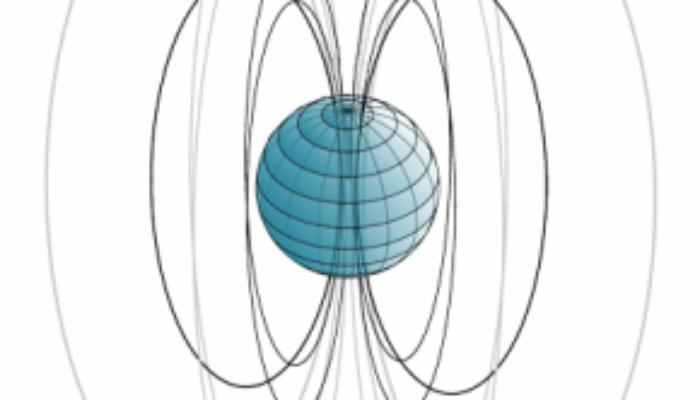
Short Answer
Definition of Geomagnetic Reversals
Geomagnetic reversals refer to the phenomenon where the Earth’s magnetic field undergoes a polarity switch, causing the magnetic north and south poles to interchange. These reversals occur over extensive timescales, ranging from thousands to millions of years, and result in significant alterations in the orientation of the planet’s magnetic field.
- Polarity Switch:
The magnetic poles reverse, meaning the magnetic north pole becomes the south pole and vice versa. - Timescale:
Reversals happen irregularly, with intervals spanning thousands to millions of years. - Magnetic Field Impact:
The Earth’s magnetic field weakens and then re-establishes itself in the opposite direction during these events.
Historical Context and Frequency
Traditionally, geomagnetic reversals have been viewed as unpredictable and sporadic occurrences. However, geological evidence derived from sedimentary layers and volcanic rock formations has allowed scientists to construct a timeline of past reversals. For example, the Brunhes-Matuyama reversal, which took place roughly 780,000 years ago, is one of the most recent well-documented polarity changes. This timeline reveals alternating phases of rapid magnetic field shifts and prolonged periods of stability, suggesting that the processes behind these reversals are complex and warrant deeper exploration.
Geophysical Mechanisms Behind Reversals
The Earth’s magnetic field is generated by the geodynamo effect within the outer core, where molten iron and nickel move in convective patterns. These movements, driven by thermal and compositional gradients, create electrical currents that sustain the magnetic field. Advances in geophysical modeling now incorporate turbulent fluid dynamics and magnetic interactions, offering a more detailed understanding of how these internal processes might trigger polarity reversals. This evolving knowledge challenges the notion that reversals are purely random, hinting at underlying physical drivers.
The Geodynamo Process
The geodynamo is the mechanism by which the Earth’s magnetic field is produced:
- Convection Currents:
Heat from the inner core causes molten metals in the outer core to circulate. - Electrical Conductivity:
The movement of conductive fluids generates electric currents. - Magnetic Field Generation:
These currents produce and maintain the Earth’s magnetic field.
Correlation with Geological Activity
Research in paleomagnetism-the study of the magnetic properties recorded in rocks-has revealed intriguing links between geomagnetic reversals and geological phenomena. Some reversals coincide with major tectonic shifts or intense volcanic episodes, suggesting a possible connection between Earth’s internal dynamics and magnetic field behavior. This relationship implies that reversals may not be isolated events but part of a broader geodynamic system.
Patterns and Cyclicity in Reversal Occurrences
Emerging studies propose that geomagnetic reversals may follow quasi-periodic patterns rather than occurring at random intervals. Factors such as variations in heat flow from the Earth’s interior and changes in the planet’s rotational speed could influence the timing of these polarity flips. This perspective integrates geophysical processes with the geological record, portraying Earth as a dynamic system responsive to both internal and external forces.
Biological and Ecological Implications
Geomagnetic reversals have also been linked to biological and ecological changes observed in the fossil record. During periods of magnetic field weakening, increased cosmic radiation may have impacted biodiversity, potentially contributing to extinction events. Understanding how these magnetic shifts affect life on Earth provides valuable insights into the resilience and adaptability of ecosystems in the face of environmental stressors.
Contemporary Relevance and Future Considerations
Current observations indicate that the Earth’s magnetic field is weakening, raising concerns about the possibility of an impending reversal within the near future. This scenario underscores the importance of interdisciplinary research combining geology, atmospheric science, and biology to assess the potential consequences of such a shift on modern technology, climate, and living organisms.
Technological Advances in Geomagnetic Research
Recent progress in computational modeling and magnetic field simulations has enhanced scientists’ ability to study geomagnetic behavior with greater accuracy. These tools allow for the exploration of complex interactions among geophysical processes, helping to identify patterns and predict future magnetic field changes. Such advancements are crucial for deepening our understanding of geomagnetic reversals within the broader context of Earth sciences.
Summary and Scientific Significance
The growing body of evidence suggests that geomagnetic reversals are not entirely random but may be governed by intricate geophysical mechanisms. This evolving viewpoint enriches our comprehension of Earth as a dynamic, living system and highlights the interconnectedness of magnetic, geological, and biological processes. Continued research promises to unravel the mysteries of magnetic polarity flips, offering insights that are vital for anticipating future planetary changes and understanding the resilience of life on Earth.
FAQ
What are the biological implications of geomagnetic reversals?
Research indicates that geomagnetic reversals may correlate with significant ecological changes, including potential impacts on biodiversity.





Leave a Reply