
Short Answer
Understanding the Cosmos: An Overview
The universe, an immense and enigmatic expanse filled with countless mysteries, has long inspired humanity to explore its complex nature. This fascination has fostered a rich intersection between astronomy and physics, unveiling extraordinary stories that push the boundaries of human knowledge. Through advanced telescopes and particle accelerators, scientists have uncovered remarkable phenomena that deepen our grasp of existence and the cosmos.
Revolutionary Discoveries with the James Webb Space Telescope
The James Webb Space Telescope (JWST) has revolutionized our view of the early universe. Designed to observe the cosmos’ infancy, JWST offers unprecedented spectral resolution, surpassing previous instruments. Among its most significant achievements is the identification of primordial galaxies formed mere hundreds of millions of years after the Big Bang. This breakthrough compels scientists to rethink the timeline and processes of galactic formation, as JWST’s observations peel back the layers of cosmic history with extraordinary precision.
Gravitational Waves: Listening to the Universe’s Ripples
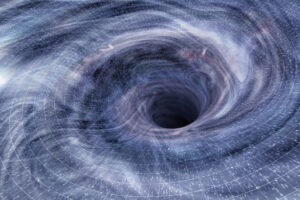
Building on Albert Einstein’s century-old prediction, the study of gravitational waves has advanced considerably. These waves are distortions in spacetime generated by colossal cosmic events, such as black hole mergers. Facilities like the Laser Interferometer Gravitational-Wave Observatory (LIGO) detect these subtle vibrations, linking them to their astrophysical sources. Each detection enriches our understanding of the dynamic and often violent interactions shaping the universe.
The Enigma of Dark Matter
Dark matter, constituting about 27% of the universe’s mass-energy, remains one of the most perplexing components of cosmic structure. Although invisible and undetectable through direct means, its gravitational influence is evident in the behavior of galaxies. Cutting-edge experiments, including those at the Large Hadron Collider (LHC), aim to identify dark matter particles. Theoretical candidates such as weakly interacting massive particles (WIMPs) and axions guide this search, offering potential keys to unlock the universe’s hidden mass.
Exploring Exoplanets and the Search for Life
The discovery of planets beyond our solar system continues to expand rapidly, revealing a vast array of planetary systems. The Transiting Exoplanet Survey Satellite (TESS) has been instrumental in identifying numerous exoplanet candidates, some of which lie within habitable zones. Investigations into their atmospheric compositions and potential biosignatures are gaining momentum, fueling hopes of detecting extraterrestrial life. Each new exoplanet enriches our understanding of planetary diversity and the conditions that might support life.
The Multiverse Hypothesis: Beyond Our Universe
The concept of multiple universes, or the multiverse, has transitioned from speculative theory to a subject of serious scientific discourse. Theoretical frameworks like string theory propose the existence of alternate dimensions with varying physical laws and constants. This idea challenges traditional notions of reality and invites philosophical reflection on the nature of existence, suggesting that our universe may be one of countless others in a vast cosmic ensemble.
Rethinking Time Through Quantum Physics
Time, traditionally viewed as a linear progression, is being reinterpreted through the lens of quantum mechanics. Phenomena such as quantum entanglement imply that past, present, and future might coexist in a complex, non-linear framework. This challenges classical concepts of causality and temporal flow, prompting new debates about the fundamental nature of reality and the structure of time itself.
Climate Science and Space Technology: A Symbiotic Relationship
As Earth faces significant climatic changes, space-based technologies originally developed for extraterrestrial exploration are increasingly applied to monitor our planet’s atmosphere. Satellite observations provide critical data that improve climate models and enhance our understanding of atmospheric dynamics. This synergy underscores the importance of space science in addressing terrestrial environmental challenges and highlights the shared responsibility of planetary stewardship.
Advances in Particle Physics and the Quest for Fundamental Understanding
Research at particle accelerators has uncovered new subatomic particles, challenging existing models and potentially signaling a paradigm shift in physics. These discoveries deepen our insight into the fundamental forces and constituents of matter, revealing the intricate dance of particles that form the foundation of the universe. Each breakthrough invites further exploration into the microscopic realms that govern all physical phenomena.
The Role of Mathematics in Modeling the Universe
Mathematics serves as a powerful tool for describing and predicting cosmic phenomena. Recent progress in cosmological simulations has achieved remarkable agreement with observational data, demonstrating that the universe’s large-scale structures emerge from complex mathematical relationships. This interplay between abstract equations and physical reality highlights the elegance and precision with which nature can be understood.
Significance of These Scientific Narratives
Together, these scientific advancements weave a compelling narrative that fuels humanity’s innate curiosity and drives the pursuit of knowledge. By integrating theoretical insights with empirical discoveries, they transcend disciplinary boundaries and inspire new generations to explore the cosmos. The universe, in all its complexity, reflects our enduring quest to comprehend the vastness of existence and our place within it.
FAQ
What are gravitational waves?
Gravitational waves are ripples in spacetime caused by massive cosmic events like black hole mergers, detected by observatories such as LIGO.
How does the James Webb Space Telescope impact astronomy?
JWST allows astronomers to observe ancient galaxies and early universe phenomena with unprecedented clarity.
What is dark matter?
Dark matter is a mysterious form of matter that makes up approximately 27% of the universe's mass-energy but cannot be observed directly.
Why is exoplanet research important?
Studying exoplanets helps scientists understand planetary formation, diversity, and the potential for life beyond Earth.
What does quantum physics reveal about time?
Quantum physics suggests that time may not be strictly linear and that past, present, and future could coexist in complex states.

Leave a Reply