

Short Answer
Definition of Quasars
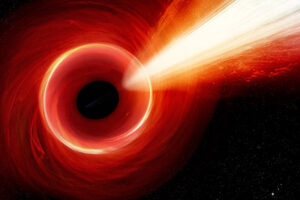
Quasars are extraordinarily bright astronomical objects powered by supermassive black holes located at the centers of distant galaxies. These luminous sources emit vast amounts of energy, primarily from the accretion disks formed by matter spiraling into the black holes. Due to their intense brightness, quasars are visible across immense cosmic distances, making them vital probes for studying the early universe and the large-scale structure of the cosmos.
Physical Mechanism Behind Quasar Emission
The core process driving quasar luminosity involves gravitational forces exerted by supermassive black holes. As gas and dust fall inward, they form a rapidly rotating accretion disk. Friction and gravitational energy within this disk heat the material to extreme temperatures, causing it to radiate electromagnetic energy across a broad spectrum. This radiation is what makes quasars some of the most luminous and observable objects in the universe, even from billions of light-years away.
Quasar Characteristics and Cosmological Significance
- High Luminosity:
Quasars outshine entire galaxies, enabling their detection at vast distances. - Redshift:
The significant redshift of quasars indicates their rapid recession due to cosmic expansion, providing insights into the universe’s growth over time.
These properties make quasars indispensable tools for astronomers to investigate the universe’s evolution and the distribution of matter on cosmic scales.
Alignment Phenomenon Among Quasars
Recent observations have revealed intriguing patterns of alignment among quasars that appear to be oriented differently across the sky. Contrary to the expectation of random distribution, these alignments suggest an underlying order in the spatial arrangement of quasars. This phenomenon challenges traditional views of cosmic randomness and hints at deeper physical principles influencing the orientation and clustering of these distant objects.
Large-Scale Cosmic Structures and Quasar Clustering
Studies indicate that quasars tend to cluster in patterns that mirror the cosmic web-the vast network of filaments and voids formed by dark matter and galaxies. This clustering behavior implies that quasars are not isolated phenomena but are connected to the universe’s large-scale structure. The discovery of such order supports the idea that gravitational interactions and fundamental physical laws shape the distribution of matter and energy on the grandest scales.
Gravitational Lensing and Its Role in Quasar Observation
Gravitational lensing occurs when massive objects, like galaxies, bend the light from background quasars, creating multiple images or distorted views. This effect not only reinforces the concept of quasar alignment but also provides astronomers with a powerful tool to map the distribution of both visible and dark matter in the universe. By studying lensing patterns, researchers gain insights into regions otherwise hidden from direct observation, highlighting the interconnectedness of cosmic structures.
Connections to Dark Matter and Dark Energy
The alignment of quasars may be influenced by the gravitational effects of dark matter, the invisible substance that constitutes a significant portion of the universe’s mass. Additionally, understanding quasar orientations could shed light on dark energy, the mysterious force driving the accelerated expansion of the cosmos. Investigating these relationships offers a promising avenue to unravel the complex interplay between observable phenomena and the unseen components that dominate the universe’s energy budget.
Techniques for Studying Quasar Alignments
Researchers employ a variety of sophisticated methods to analyze quasar alignments, including:
- Cross-Correlation Studies:
Statistical tools to identify spatial relationships between quasars. - Spectroscopic Analysis:
Measuring redshifts and other spectral features to determine distances and velocities. - Statistical Modeling:
Simulating quasar distributions to test hypotheses about their alignment and clustering.
Advancements in telescope technology, such as the James Webb Space Telescope, enhance these studies by providing higher resolution and more detailed data.
Implications for Astrophysical and Cosmological Models
The evidence of quasar alignment invites a reexamination of existing cosmological theories, including models of cosmic inflation and structure formation. These findings may necessitate adjustments to our understanding of how the universe evolved and how large-scale structures emerged. Exploring new theoretical frameworks that accommodate quasar orientation complexities could lead to breakthroughs in astrophysics.
Philosophical Perspectives on Cosmic Order and Chaos
The observed order within quasar alignments resonates with the concept of emergent order, where complex systems develop organized patterns from simple underlying rules. This interplay between apparent chaos and hidden structure reflects the profound relationship between fundamental physical laws and the dynamic behavior of celestial bodies. Such insights encourage deeper contemplation of humanity’s place within the vast and intricate cosmic tapestry.
Conclusion: The Significance of Quasar Alignment Research
Investigating the alignment of quasars offers a compelling window into the universe’s fundamental nature. By uncovering patterns amid cosmic vastness, scientists can enhance our understanding of the universe’s architecture, the role of dark matter and energy, and the forces shaping cosmic evolution. Continued exploration in this field promises to expand our knowledge and inspire ongoing curiosity about the universe’s deepest mysteries.
FAQ
What are quasars?
Quasars are extraordinarily bright astronomical objects powered by supermassive black holes at the centers of distant galaxies.
Why are quasars significant in astronomy?
Quasars provide vital insights into the early universe and the large-scale structure of the cosmos due to their immense brightness.
What is quasar alignment?
Quasar alignment refers to the observed patterns of orientation among quasars, suggesting an underlying order in the cosmic distribution.


Leave a Reply