
Short Answer
Understanding the Concept of a Lego Quantum Computer
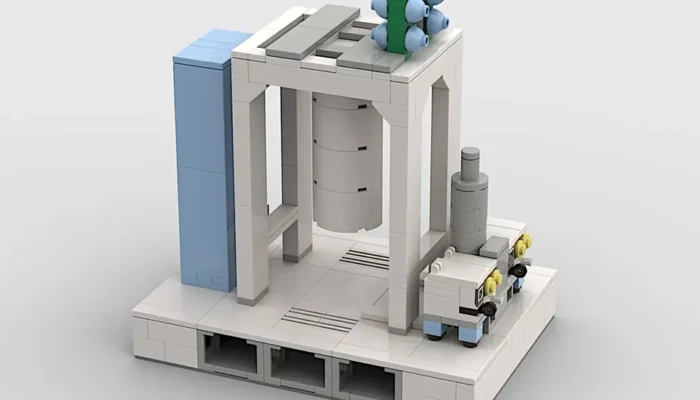
The idea of building a quantum computer using Lego-a toy celebrated for its adaptability and imaginative potential-elicits a wide range of reactions, from skepticism to excitement. This concept sparks intellectual intrigue by merging the playful nature of Lego with the sophisticated realm of quantum computing. Quantum computers signify a revolutionary leap in computational power by exploiting the principles of quantum mechanics. Although the complex theories of quantum physics and computer engineering seem far removed from the simplicity of colorful plastic bricks, the notion that these two worlds might intersect opens up innovative avenues for education and public engagement.
Definition and Core Principles of Quantum Computing
Quantum computing is founded on the use of quantum bits, or qubits, which differ fundamentally from classical bits. Unlike traditional bits that represent either a 0 or a 1, qubits can exist in multiple states simultaneously due to the phenomena of superposition and entanglement. This unique property allows quantum computers to perform calculations at speeds and efficiencies unattainable by classical machines.
- Qubits:
The basic units of quantum information that can represent both 0 and 1 simultaneously. - Superposition:
A quantum state where a qubit exists in multiple states at once, enabling parallel computation. - Entanglement:
A phenomenon where qubits become interconnected such that the state of one instantly influences the state of another, regardless of distance.
Fundamental Requirements for Quantum Computer Construction
Building a functional quantum computer demands highly specialized components and environments. Typically, qubits are realized through superconducting circuits, trapped ions, or photonic systems, all requiring precise control and coherence maintenance. These conditions are essential to preserve the fragile quantum states and to manipulate them accurately. This raises the question: can a toy like Lego, with its simple plastic blocks, be used to assemble a working quantum processor?
Using Lego as a Conceptual Model for Quantum Computing
While Lego bricks cannot physically replicate the quantum properties necessary for real qubits, they serve as excellent tools for conceptual modeling. Enthusiasts and educators can use Lego to visually and tangibly represent quantum computing components and principles. For example, Lego structures can illustrate superposition by showing how a qubit can exist in multiple states, or demonstrate entanglement by linking blocks to represent interconnected qubits whose states depend on each other.
Educational Benefits of Lego-Based Quantum Models
Employing Lego to create physical models of quantum concepts helps demystify the abstract and often intimidating theories of quantum mechanics. These colorful, hands-on representations make complex ideas more accessible, especially for students. Models can mimic quantum gates-devices that manipulate qubit states-allowing learners to visualize quantum logic operations. This tactile approach enhances comprehension by connecting theoretical quantum phenomena with physical manipulation.
Interdisciplinary Insights Through Lego Quantum Models
The use of Lego to explore quantum computing highlights the interdisciplinary nature of this cutting-edge technology. Quantum computing integrates physics, engineering, and computer science, requiring collaboration across multiple scientific domains. Lego models can serve as a bridge, illustrating how these diverse fields converge to tackle the challenges of quantum computation, blending theoretical knowledge with practical engineering.
Cultural and Scientific Significance of Lego in Quantum Education
Beyond education, the fusion of Lego and quantum computing symbolizes a broader cultural movement toward democratizing science. Lego’s reputation for fostering creativity makes it an ideal medium for engaging a wide audience-from children to experts-in complex scientific topics. This approach reduces the intimidation factor of advanced physics, transforming it into an inviting and playful experience. By leveraging a universally recognized creative tool, the journey from understanding to innovation becomes more approachable.
Human Creativity and Scientific Exploration
The enthusiasm surrounding the idea of a Lego quantum computer reflects humanity’s innate drive for creativity and abstraction. Science often categorizes and defines boundaries, but Lego encourages playful experimentation that transcends these limits. As individuals assemble Lego models to simulate quantum systems, they unknowingly emulate the iterative research and development processes fundamental to real-world quantum technology advancements.
Limitations of Lego in Real Quantum Computing
Despite their educational value, Lego models cannot replicate the essential physical properties of qubits, such as coherence time and resistance to noise. These limitations underscore the delicate and complex nature of quantum states, which require advanced materials and environments to sustain. Thus, while Lego-based quantum computers serve as powerful teaching aids, they also highlight the profound scientific challenges inherent in actual quantum computing.
The Role of Playful Inquiry in Scientific Advancement
The fascination with combining Lego and quantum computing exemplifies how curiosity often begins with simple questions. The interaction between children’s block-building and the complexities of quantum science embodies the spirit of inquiry that drives discovery. This blend of playful engagement and rigorous science nurtures the development of future innovators and thinkers.
Conclusion: The Symbolic Power of Lego Quantum Computers
Although constructing a fully operational quantum computer from Lego remains beyond current capabilities, the symbolic use of Lego to represent quantum principles plays a vital role in education and public interest. By bridging the gap between structured academic study and imaginative exploration, this concept fosters a culture that values curiosity, creativity, and the relentless pursuit of knowledge. In this way, the hypothetical Lego quantum computer stands as a testament to the inventive spirit fueling scientific progress.
FAQ
Is it possible to build a quantum computer with Lego?
No, a functional quantum computer cannot be built with Lego, but it can serve as a model for educational purposes.
What is a qubit?
A qubit is the basic unit of quantum information, capable of representing multiple states simultaneously.





Leave a Reply