
Short Answer
Definition of Absolute Zero
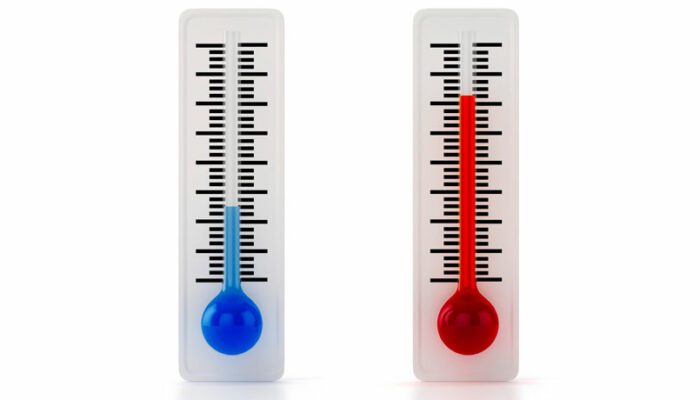
Absolute zero represents the theoretical temperature at which all classical kinetic motion of particles ceases. It is the lowest limit of the thermodynamic temperature scale, defined as 0 Kelvin (K), equivalent to -273.15 degrees Celsius (°C) or -459.67 degrees Fahrenheit (°F). At this temperature, particles reside in their minimum energy state, and thermal energy is effectively nonexistent.
- Temperature equivalences:
0 K = -273.15 °C = -459.67 °F - Physical significance:
Particles have minimal vibrational motion, representing the lowest possible energy state.
Historical and Scientific Context
The concept of absolute zero has fascinated scientists since the early development of thermodynamics. It symbolizes a fundamental boundary in physics, where classical descriptions of motion break down and quantum effects dominate. The pursuit of temperatures near absolute zero has driven advances in experimental physics, enabling the exploration of quantum phenomena and novel states of matter.
Techniques for Approaching Absolute Zero
Achieving temperatures close to absolute zero requires sophisticated cooling methods that reduce particle kinetic energy to near minimal levels. Several key techniques have been developed and refined over decades:
- Laser Cooling:
Utilizes the momentum of photons to slow down atoms, effectively lowering their kinetic energy. By directing laser beams at atoms, their motion is reduced, allowing temperatures to reach billionths of a Kelvin above absolute zero. - Magnetic Evaporation Cooling:
Involves selectively removing higher-energy atoms from a trapped gas using magnetic fields, which lowers the average temperature of the remaining particles. - Adiabatic Demagnetization:
Exploits the alignment and subsequent randomization of magnetic moments in certain materials to reduce entropy and thus temperature.
Quantum Phenomena Near Absolute Zero
As temperatures approach absolute zero, classical physics gives way to quantum mechanical effects, revealing extraordinary states of matter:
- Bose-Einstein Condensate (BEC):
First realized in the 1990s at MIT, BEC occurs when bosons occupy the lowest quantum state, resulting in macroscopic quantum phenomena that defy classical intuition. - Superfluidity:
Observed in helium-4 near absolute zero, superfluidity is characterized by the complete absence of viscosity, allowing fluid to flow without resistance. - Superconductivity:
Certain materials exhibit zero electrical resistance at ultra-low temperatures, a property closely studied to develop higher-temperature superconductors.
Notable Experimental Milestones
Significant breakthroughs have marked the journey toward absolute zero:
- Creation of the First BEC:
In the 1990s, researchers at the Massachusetts Institute of Technology successfully produced the first Bose-Einstein condensate, opening new avenues in quantum physics. - Ultracold Molecules at Berkeley:
In 2019, scientists at the University of California, Berkeley cooled sodium-potassium (NaK) molecules to approximately 500 nanokelvins, enabling unprecedented studies of molecular interactions at near-zero temperatures.
Thermodynamic Limits and the Third Law
The Third Law of Thermodynamics establishes that absolute zero cannot be reached through any finite sequence of processes. This fundamental principle imposes a natural boundary on cooling efforts, underscoring the inherent constraints of the universe. Despite this, experimental advances continue to push ever closer to this limit, yielding valuable insights into thermodynamic behavior and quantum mechanics.
Importance and Applications
The exploration of temperatures near absolute zero is crucial for both theoretical and applied physics. Understanding matter under these extreme conditions has led to:
- Advances in Quantum Mechanics:
Revealing new quantum states and behaviors that challenge classical physics. - Technological Innovations:
Development of superconductors and quantum computing components. - Fundamental Research:
Insights into chemical bonding, reaction dynamics, and material properties at ultra-low temperatures.
Common Misconceptions About Absolute Zero
Absolute zero can be physically reached.
According to the Third Law of Thermodynamics, absolute zero is unattainable in a finite number of steps; experiments can only approach it asymptotically.
All motion stops at absolute zero.
While classical kinetic motion ceases, quantum mechanical zero-point energy persists, meaning particles still exhibit intrinsic quantum fluctuations.
Conclusion: The Ongoing Quest
The pursuit of absolute zero epitomizes humanity’s relentless drive to expand scientific horizons. Each incremental advance into colder regimes unveils new quantum phenomena and deepens our understanding of the universe’s fundamental laws. Although absolute zero remains an unreachable ideal, the journey toward it continues to inspire innovation and discovery, promising future breakthroughs in physics and technology.
FAQ
What is absolute zero?
Absolute zero is the lowest possible temperature, where all classical motion of particles ceases.
Can absolute zero be reached?
No, according to the Third Law of Thermodynamics, absolute zero cannot be attained through any finite processes.
What happens to matter at absolute zero?
At absolute zero, particles reside in their minimum energy state, leading to unique quantum phenomena.



Leave a Reply