
Short Answer
Definition of Lightning and Cosmic Rays
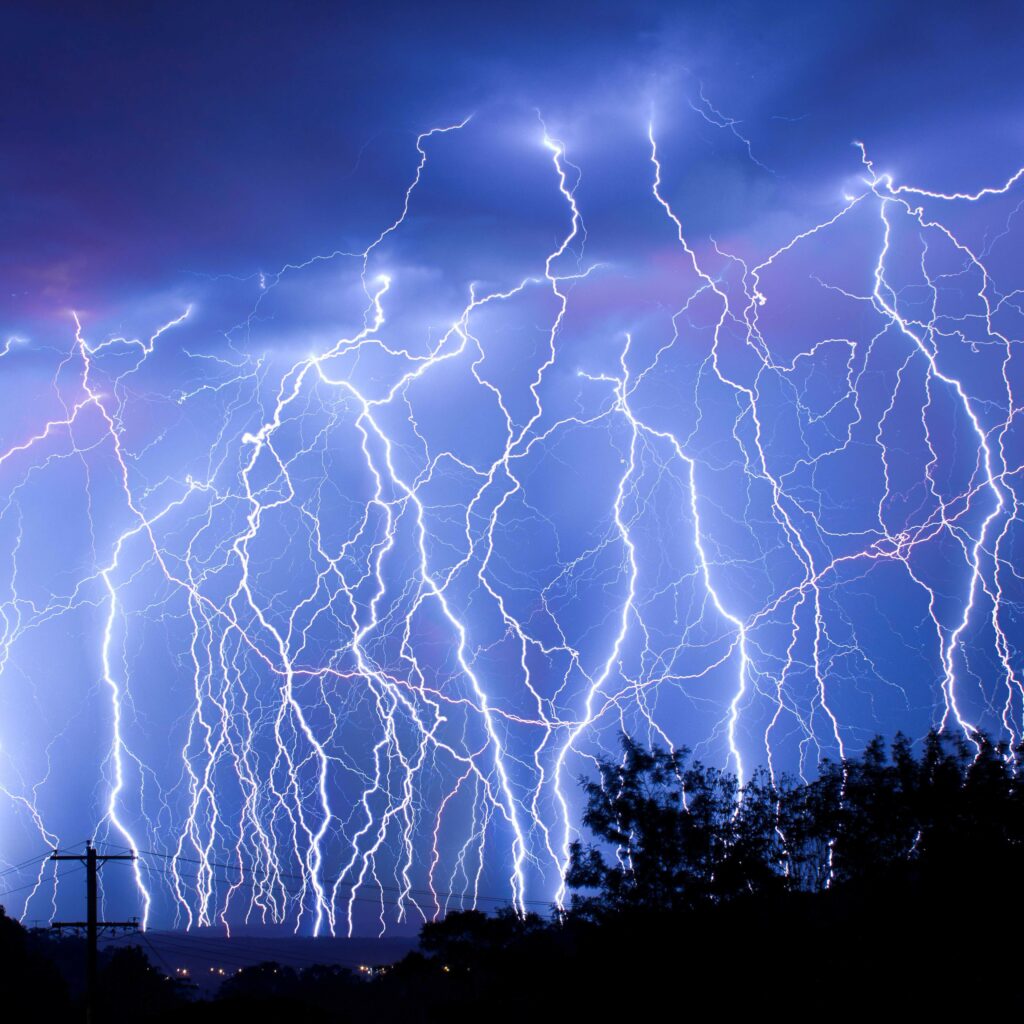
Lightning is a spectacular atmospheric event characterized by a sudden, intense electrical discharge accompanied by thunder. It primarily occurs within towering cumulonimbus clouds, where complex physical processes lead to the buildup and release of electrical energy. Cosmic rays, on the other hand, are highly energetic particles originating from outer space, mostly composed of protons traveling near the speed of light. These particles interact with Earth’s atmosphere, influencing various atmospheric phenomena, including lightning.
- Lightning:
A natural electrical discharge resulting from charge separation within storm clouds, producing visible flashes and thunder. - Cosmic Rays:
High-energy particles from beyond the solar system that penetrate Earth’s atmosphere, initiating particle cascades.
Mechanism Behind Lightning Formation
Lightning originates from the electrical charge separation inside cumulonimbus clouds. As water vapor condenses into droplets and ice particles collide within these clouds, charges are transferred, creating regions of positive and negative electrical potential. This separation generates an intense electric field, sometimes reaching millions of volts. However, for a lightning strike to occur, this electric field must overcome the insulating properties of air, requiring an initial ionization trigger.
Cosmic rays contribute to this process by penetrating the atmosphere and colliding with air molecules, producing secondary particles such as electrons and gamma rays. These secondary particles can initiate electron avalanches-chains of ionization events-that help to break down the air’s resistance, facilitating the electrical discharge that manifests as lightning.
Role of Cosmic Rays in Lightning Initiation
The interaction of cosmic rays with atmospheric molecules creates a cascade of charged particles, which can serve as the initial spark for lightning. This ionization process lowers the threshold for electrical breakdown in the atmosphere, effectively acting as a catalyst for lightning formation. Studies have observed correlations between regions with higher cosmic ray flux and increased lightning activity, suggesting a significant influence of cosmic rays on thunderstorm dynamics.
Cosmic Ray Particle Cascade
When cosmic rays enter the atmosphere, they collide with nitrogen and oxygen molecules, producing a shower of secondary particles. These include:
- Electrons: Free electrons that can initiate ionization chains.
- Gamma Rays: High-energy photons that contribute to further ionization.
- Muons and Other Particles: Penetrate deeper into the atmosphere, influencing electrical properties.
Scientific Approaches to Studying Lightning and Cosmic Rays
Research into the cosmic ray-lightning connection employs a combination of observational data, theoretical modeling, and experimental simulations. Ground-based lightning detection networks and satellite instruments provide extensive datasets to analyze temporal and spatial patterns of lightning relative to cosmic ray intensity. Particle accelerators simulate cosmic ray interactions under controlled conditions, offering insights into the fundamental physics involved.
Additionally, advanced computational techniques, including machine learning, are increasingly used to process large volumes of atmospheric data. These methods help isolate the effects of cosmic rays from other meteorological variables such as humidity, temperature gradients, and terrain, which also influence thunderstorm development.
Challenges in Isolating Cosmic Ray Effects
Understanding the precise role of cosmic rays in lightning formation is complicated by the multifaceted nature of weather systems. Factors such as atmospheric moisture, temperature variations, and geographic features all impact thunderstorm behavior, making it difficult to attribute lightning activity solely to cosmic ray influence. Researchers continue to refine models and experimental designs to better quantify this relationship.
Practical Implications and Importance
Unraveling how cosmic rays affect lightning has significant implications for meteorology, climate science, and public safety. Improved knowledge could enhance the accuracy of thunderstorm and severe weather forecasts, aiding in disaster preparedness. Furthermore, integrating cosmic ray interactions into climate models may provide a more comprehensive understanding of atmospheric electrical phenomena and their role in Earth’s climate system.
Philosophical and Cosmic Perspectives
The study of cosmic rays’ impact on lightning invites reflection on the interconnectedness of cosmic and terrestrial processes. It highlights how distant cosmic forces subtly influence our immediate environment, challenging us to reconsider humanity’s place within the broader universe. Lightning, as a vivid example of this interplay, symbolizes the profound links between celestial phenomena and everyday life on Earth.
Summary and Future Directions
In summary, lightning is a complex electrical event influenced by charge separation within storm clouds and catalyzed by cosmic ray-induced ionization. The ongoing investigation into this relationship bridges atmospheric physics and cosmic science, revealing new dimensions of natural phenomena. While challenges remain in fully understanding these interactions, advancements in technology and data analysis promise to deepen our insight. Exploring the cosmic origins of lightning not only enriches scientific knowledge but also inspires a greater appreciation for the mysteries of our universe.
FAQ
What are cosmic rays?
Cosmic rays are highly energetic particles from outer space, primarily protons, that can interact with Earth's atmosphere.
How do cosmic rays influence lightning?
Cosmic rays can initiate ionization in the atmosphere, lowering the threshold for electrical breakdown and facilitating lightning formation.
What is the mechanism of lightning formation?
Lightning forms from charge separation within storm clouds that creates an electric field, which can be triggered by cosmic ray-induced ionization.

Leave a Reply