How is AMO different from CM?

Overview of Atomic, Molecular, and Optical (AMO) Physics and Condensed Matter (CM) Physics Physics encompasses a wide array of specialized fields, each focusing on different aspects of the natural world. Among these, Atomic, Molecular, and Optical (AMO) physics and Condensed Matter (CM) physics stand out as two distinct yet complementary disciplines. Understanding their differences enhances […]

Read More →

Why is it assumed that neutrinos have rest mass?

Definition of Neutrinos and Their Rest Mass Neutrinos are a unique category of subatomic particles that have intrigued scientists for many decades due to their elusive nature. Originally thought to be devoid of mass, modern experimental findings have necessitated a revision of this assumption, particularly concerning their intrinsic rest mass. This article aims to clarify […]

Read More →

What’s the smallest time unit measured by an atomic clock?

Definition of Atomic Clocks and Their Precision Atomic clocks are highly advanced timekeeping instruments that have transformed how we measure and comprehend time. They achieve extraordinary accuracy by utilizing the natural oscillations of atoms, which serve as an exceptionally stable frequency standard. This precision has enabled breakthroughs across various scientific and technological domains, including satellite […]

Read More →

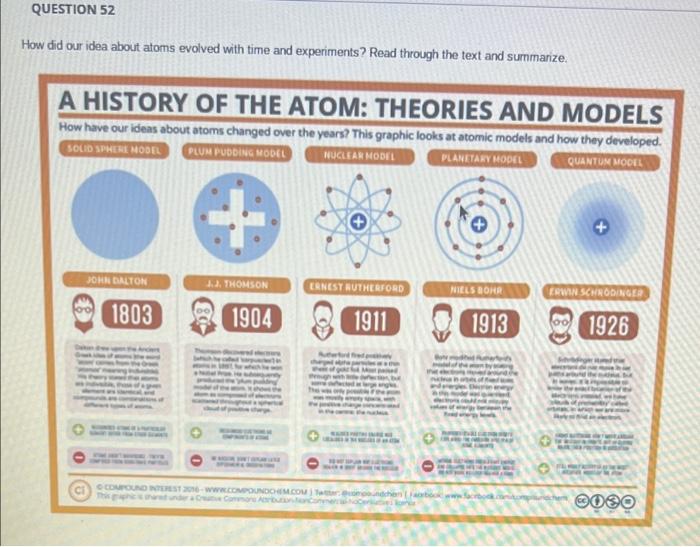
Is it possible that atoms themselves evolved?

Understanding Atomic Evolution While evolution is commonly linked to living organisms, the idea that atoms-the fundamental units of matter-might undergo a form of evolution is a fascinating concept. Atoms, composed of protons, neutrons, and electrons, are the essential building blocks of everything in the universe. Exploring their origins, transformations, and interactions offers insight into whether […]

Read More →

How do I convert grams to molecules?

Definition of Grams to Molecules Conversion The conversion from grams to molecules is a fundamental concept in chemistry that connects the tangible, measurable mass of a substance to the invisible, microscopic count of its constituent particles. This process translates the weight of a sample, expressed in grams, into the number of molecules it contains, revealing […]

Read More →

What are specific topics in particle physics?

Definition of Particle Physics Particle physics is a branch of science dedicated to exploring the most elementary components of matter and the fundamental forces that dictate their behavior. This field seeks to decode the universe’s underlying structure by studying particles that constitute all known matter and the interactions that govern their dynamics. It encompasses a […]

Read More →

What are some military applications of optics?

Definition of Military Optics Military optics encompass a range of advanced optical technologies designed to enhance the capabilities of armed forces in various operational contexts. These technologies include telescopic lenses, night vision devices, thermal imaging, laser designators, and augmented reality systems, all aimed at improving battlefield awareness, targeting precision, reconnaissance, and communication. By integrating optical […]

Read More →

What causes errors on fiber optic links?

Definition of Fiber Optic Link Errors Fiber optic link errors refer to disruptions or degradations in the transmission of data through fiber optic cables, which can compromise the speed, accuracy, and reliability of communication systems. These errors arise from various internal and external factors that affect the integrity of the optical signal as it travels […]

Read More →