
Short Answer
Definition of Gravity
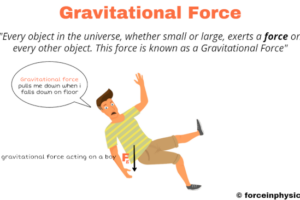
Gravity is a fundamental force of attraction that acts between any two masses. It is the phenomenon responsible for objects falling toward the Earth and governs the motion of celestial bodies throughout the universe. This force is intrinsic to the fabric of the cosmos, influencing everything from the smallest particles to the largest galaxies.
- Force of Attraction:
Gravity causes masses to pull toward each other, creating a mutual attraction. - Universality:
It operates everywhere in the universe, affecting all matter regardless of size or location.
Historical Development of Gravitational Understanding
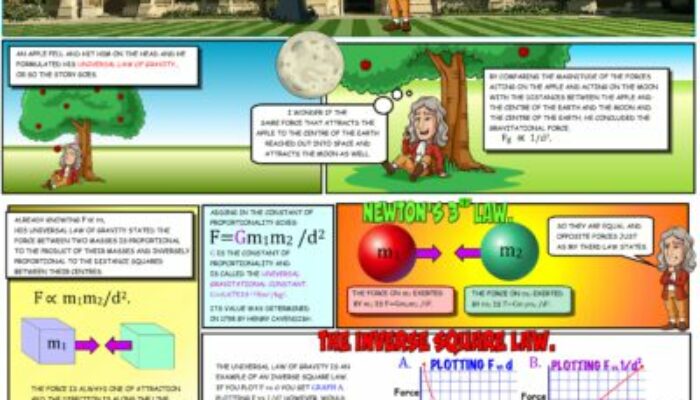
The concept of gravity has evolved significantly over centuries. Early observations by ancient civilizations noted the tendency of objects to fall toward the ground, but a formal scientific explanation emerged only in the 17th century. Sir Isaac Newton introduced the Law of Universal Gravitation, which mathematically described gravity as a force proportional to the product of two masses and inversely proportional to the square of the distance between them. This law provided a predictable and consistent framework for understanding gravitational interactions.
Later, in the early 20th century, Albert Einstein transformed the understanding of gravity with his General Theory of Relativity. Instead of viewing gravity as a force, Einstein described it as the warping of spacetime caused by mass and energy. This paradigm shift expanded the scope of gravitational theory, especially in extreme conditions such as near black holes or at cosmological scales.
Scientific Laws vs. Theories: Clarifying the Terminology
In scientific discourse, the terms “law” and “theory” have distinct meanings that are often misunderstood. A scientific law is a concise statement that describes a consistent natural phenomenon, typically expressed mathematically and validated through repeated experimentation. Newton’s Law of Universal Gravitation exemplifies such a law, offering a reliable formula for calculating gravitational forces in many practical situations.
Conversely, a scientific theory is a comprehensive explanation that integrates and predicts a wide range of phenomena. Theories are rigorously tested and supported by extensive evidence but remain open to refinement or replacement as new data emerges. Einstein’s General Relativity is a prime example, providing a deeper understanding of gravity’s nature beyond Newtonian mechanics.
How Gravity Operates: From Newton to Einstein
Newton’s formulation describes gravity as a force acting instantaneously at a distance, pulling masses toward each other along the line connecting their centers. The strength of this force depends on the masses involved and the distance separating them, following an inverse-square relationship.
Einstein’s perspective reinterprets gravity not as a force but as the effect of mass curving the four-dimensional fabric of spacetime. Objects move along the curved paths dictated by this geometry, which manifests as gravitational attraction. This approach explains phenomena that Newtonian gravity cannot, such as the bending of light around massive objects and the precise orbit of Mercury.
Mathematical Formulation of Gravity
Newton’s Law of Universal Gravitation is expressed by the formula:
F = G × (m₁ × m₂) / r²
- F: Gravitational force between two masses
- G: Gravitational constant (6.67430 × 10⁻¹¹ N·m²/kg²)
- m₁, m₂: Masses of the two objects
- r: Distance between the centers of the two masses
Einstein’s General Relativity is mathematically more complex, involving the Einstein field equations that relate the curvature of spacetime to the energy and momentum of matter and radiation.
Practical Applications and Examples
Gravity’s principles are evident in numerous real-world contexts:
- Planetary Orbits:
The motion of planets around the Sun is governed by gravitational attraction, enabling predictions of their paths and eclipses. - Tides:
The gravitational pull of the Moon and the Sun on Earth’s oceans causes tidal movements. - Engineering:
Calculations of gravitational forces are essential in designing structures, vehicles, and satellites to ensure stability and functionality. - Astrophysics:
Understanding gravity is crucial for studying black holes, neutron stars, and the expansion of the universe.
Common Misunderstandings About Gravity
- Misconception: The term “theory” implies uncertainty or guesswork.
Correction: In science, a theory represents a well-substantiated explanation supported by extensive evidence and experimentation. - Misconception: Newton’s Law of Universal Gravitation is obsolete due to Einstein’s theory.
Correction: Newton’s law remains highly accurate for most everyday applications, while Einstein’s theory applies in extreme gravitational environments.
Significance of Gravity in Science and Daily Life
Gravity is indispensable in both scientific exploration and everyday experiences. It shapes the structure and behavior of the universe, from the formation of galaxies to the dynamics of planetary systems. On Earth, gravity influences everything from the flow of water to human movement. Its study has propelled advancements in physics, astronomy, and engineering, enabling technologies such as satellite communication, space travel, and geophysical surveying.
Educational Resources and Methods for Understanding Gravity
Various educational tools help demystify gravity’s complexities:
- Visual Infographics:
Graphical representations simplify the understanding of gravitational forces and their relationships with mass and distance. - Expository Articles:
In-depth writings trace the historical and scientific development of gravitational concepts. - Interactive Simulations:
Virtual labs allow users to manipulate variables like mass and distance to observe gravitational effects firsthand. - Documentaries and Videos:
Multimedia presentations combine storytelling with scientific explanation to engage diverse audiences. - Academic Publications:
Peer-reviewed journals provide the latest research and theoretical advancements in gravitational physics.
Conclusion: The Dual Nature of Gravity as Law and Theory
Gravity exemplifies the interplay between scientific laws and theories. The law encapsulates its consistent, measurable effects, while the theory offers a profound explanation of its underlying mechanisms. Together, they illustrate the evolving nature of scientific knowledge, where established principles coexist with innovative frameworks to deepen our understanding of the universe. This dual perspective enriches both education and research, fostering continuous inquiry into one of nature’s most fundamental forces.
FAQ
What is the significance of gravity?
Gravity is essential for the structure of the universe and affects daily life, influencing everything from water flow to human movement.
Is Newton's Law of Universal Gravitation still valid?
Yes, Newton's law is still highly accurate for most everyday applications despite Einstein's theories.
Leave a Reply