What are possible advantages of using quantum computing?

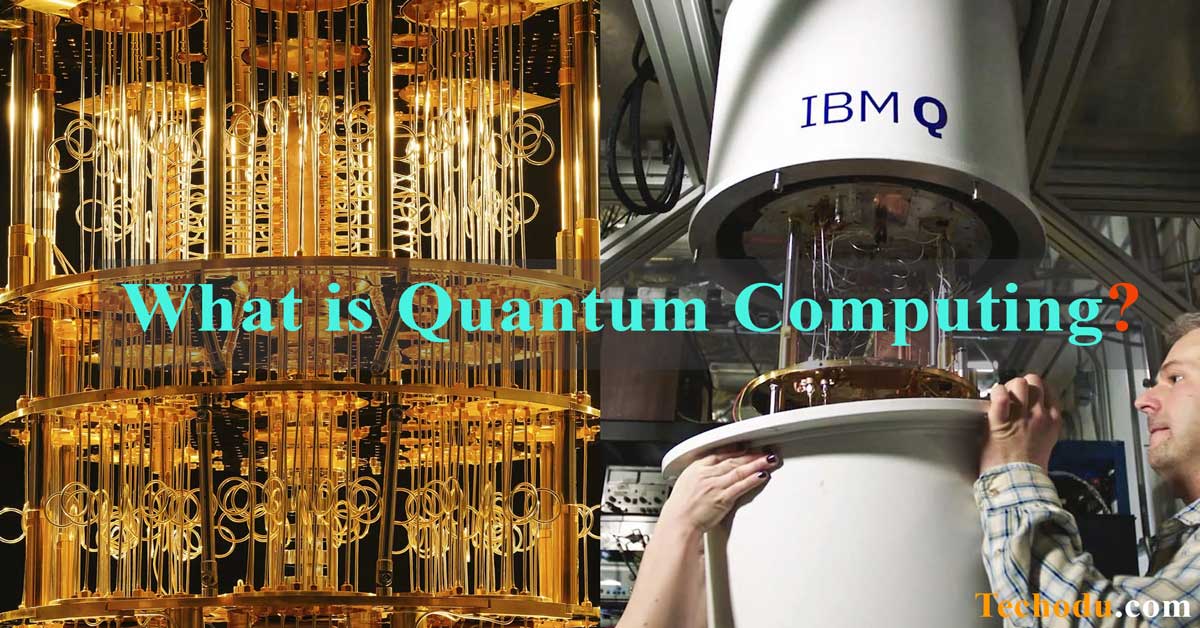
Definition of Quantum Computing Quantum computing represents a groundbreaking shift in computational technology, poised to transform how we process information. Unlike classical computing, which relies on bits as the smallest unit of data, quantum computing utilizes quantum bits or qubits. These qubits exploit the principles of quantum mechanics to perform calculations far beyond the reach […]

Read More →

Can we use fermions for quantum computing?

Definition of Fermions in Quantum Computing Fermions are a class of subatomic particles that adhere to Fermi-Dirac statistics and play a pivotal role in the development of quantum computing. These particles, which include electrons, protons, and neutrons, are characterized by their compliance with the Pauli exclusion principle, which prohibits any two fermions from occupying the […]

Read More →

How does Shor’s algorithm work in layman’s terms?

Definition of Shor’s Algorithm Shor’s algorithm is a groundbreaking quantum algorithm developed by mathematician Peter Shor in 1994. It revolutionizes the approach to integer factorization by leveraging quantum computing principles, offering a method to efficiently decompose large numbers into their prime factors. This capability poses significant implications for cryptography, particularly in the context of data […]

Read More →

Are qubits (quantum bits) analog or digital in nature?

Understanding Qubits in Quantum Computing Within the field of quantum computing, the qubit, or quantum bit, occupies a unique position that bridges the gap between analog and digital realms. Serving as the fundamental unit of quantum information, the nature of qubits-whether analog or digital-raises profound questions about the core principles of computation, measurement, and the […]

Read More →

Can a quantum computer find all the digits of Pi?

Understanding Pi: Definition and Mathematical Significance Pi (π) is a fundamental mathematical constant representing the ratio between a circle’s circumference and its diameter. This transcendental number is characterized by an infinite, non-repeating decimal expansion, making it a subject of fascination and challenge for mathematicians throughout history. Its unending nature means that no finite sequence of […]

Read More →

Buckyball Memory: Can Molecules Remember?

Understanding Molecular Memory Molecular memory refers to the intriguing concept that molecules might possess the ability to retain and respond to information over time, akin to a form of memory. Traditionally, memory is linked to biological systems, where neural networks store and retrieve data through biochemical processes. However, expanding this definition to include non-biological entities […]

Read More →

What is quantum technology?

Definition of Quantum Technology Quantum technology represents a cutting-edge field at the intersection of physics and engineering, rooted in the principles of quantum mechanics-the fundamental framework describing the behavior of matter and energy at atomic and subatomic scales. This technology aims to exploit the unique and often counterintuitive properties of quantum systems to develop innovative […]

Read More →

Cold Antiatoms Now in Bulk: Antimatter Ramps Up

Definition of Antimatter and Cold Antiatoms Antimatter is the mirror counterpart to ordinary matter, consisting of particles that have the same mass but opposite charge and quantum properties compared to their matter equivalents. For example, electrons correspond to positrons, and protons have antiprotons as their antiparticles. When matter and antimatter meet, they annihilate each other, […]

Read More →

Spintronics from the Cold: Atoms Could Power Future Transistors

Definition of Spintronics Spintronics, derived from the term “spin transport electronics,” is an innovative branch of semiconductor technology that exploits the intrinsic spin of electrons alongside their electric charge. This quantum mechanical property of electrons offers a new dimension for data processing and storage, promising significant improvements in the speed, efficiency, and functionality of electronic […]

Read More →

Why do we need quantum computers? – The Science Space?

Understanding Quantum Computing Quantum computing marks a revolutionary shift in computational science, moving beyond the limitations of classical mechanics into the complex domain of quantum physics. This evolution signifies not only a dramatic enhancement in processing power but also the ability to tackle problems that classical computers find impossible or impractical to solve. To appreciate […]

Read More →