
Short Answer
Understanding Gravity: A Fundamental Force
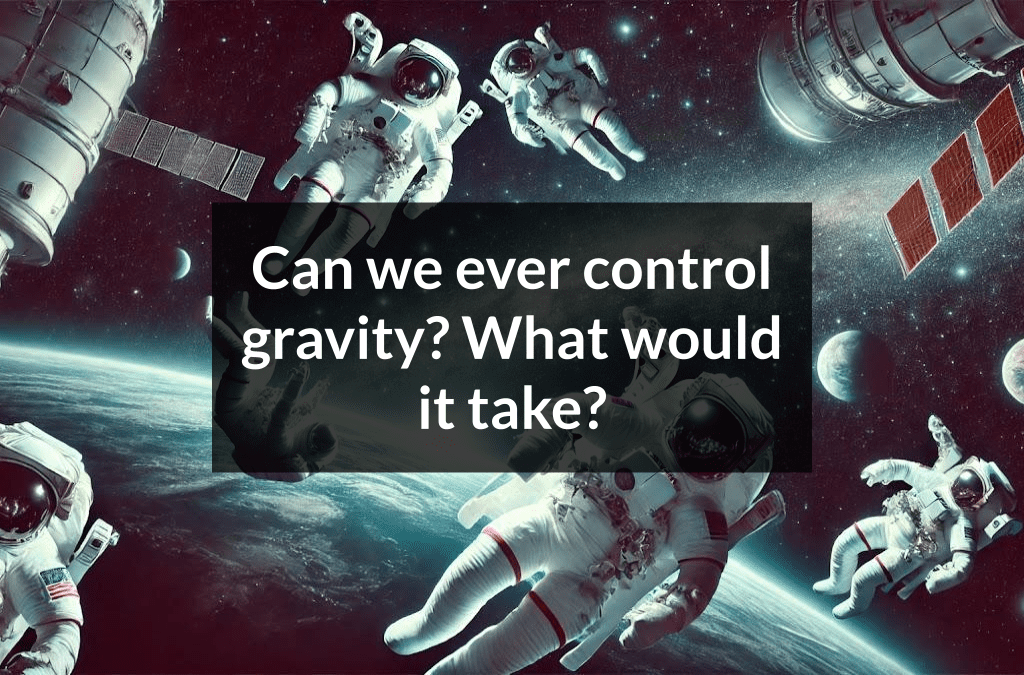
Gravity is the invisible yet omnipresent force that governs the structure and behavior of the universe. It is responsible for holding planets in orbit around stars, guiding the movement of galaxies, and keeping all objects anchored to the surface of the Earth. The concept of manipulating or even disabling gravity has fascinated scientists, futurists, and science fiction writers for decades. But is it truly possible to control a force so deeply embedded in the fabric of reality? This article explores the nature of gravity, the scientific theories that explain it, and the potential avenues-both theoretical and experimental-for influencing this fundamental interaction.
Definition and Theoretical Foundations
Gravity can be described from multiple scientific perspectives:
- Newtonian Gravity:
Traditionally, gravity is viewed as an attractive force acting between two masses, proportional to their masses and inversely proportional to the square of the distance between them. - Einstein’s General Relativity:
This modern framework reinterprets gravity not as a force but as the curvature of spacetime caused by the presence of mass and energy. Objects follow paths along this curved geometry, which manifests as gravitational attraction.
According to general relativity, gravity extends infinitely wherever mass or energy exists, making it a fundamental aspect of the universe’s structure rather than a force that can be simply switched on or off.
Challenges in Controlling Gravity
To “turn off” gravity would require altering or negating the curvature of spacetime itself-a task that current scientific understanding deems extraordinarily difficult. Gravity is not a force that can be toggled like an electrical switch; it is woven into the very fabric of the cosmos. However, the question remains whether it is possible to modulate the intensity or effects of gravity through advanced technologies or exotic materials.
Experimental Approaches and Research
Scientists have explored various experimental methods aimed at influencing gravitational forces, though none have conclusively demonstrated the ability to control gravity:
- Gravitational Shielding:
Hypothetical attempts to reduce gravitational pull by placing certain materials or fields between masses have been investigated, often involving superconductors or rotating masses. These experiments have not produced reproducible or definitive results. - Antigravity Concepts:
The idea of antigravity involves generating a force that opposes gravity, potentially enabling levitation or propulsion without conventional fuel. Theoretical models suggest that exotic matter with negative mass could create repulsive gravitational effects, but such matter remains purely speculative and undetected.
Quantum Gravity and Theoretical Physics
Efforts to unify gravity with quantum mechanics introduce additional complexity:
- Gravitons:
Hypothetical quantum particles called gravitons are proposed as carriers of the gravitational force. If detected and understood, manipulating gravitons could open new possibilities for controlling gravity at the quantum scale. - Advanced Theories:
Frameworks such as string theory and loop quantum gravity attempt to reconcile gravity with quantum physics, offering speculative insights into gravity’s nature and potential manipulation, though these remain in early stages of development.
Practical Engineering: Simulating Gravity
While direct control of gravity remains elusive, engineering solutions have been developed to simulate its effects, particularly in space exploration:
- Artificial Gravity:
Space habitats use rotation to create centripetal force, mimicking the sensation of gravity to counteract the health issues caused by prolonged weightlessness. This approach does not alter gravity itself but provides a practical workaround. - Gravitational Wave Research:
The detection of gravitational waves-ripples in spacetime from massive cosmic events-has expanded our understanding of gravitational dynamics. Although harnessing these waves for control purposes is currently impractical, their study is crucial for future advancements.
Speculative Technologies and Future Prospects
Visionary concepts in propulsion and spacetime manipulation often explore gravity control:
- Warp Drives and Gravity Engines:
Theoretical propulsion systems propose bending or compressing spacetime to reduce travel distances across the cosmos. While these ideas remain speculative and largely within the realm of science fiction, they inspire ongoing research into the fundamental physics of gravity.
Ethical and Societal Considerations
The potential ability to manipulate gravity carries profound implications:
- Technological Impact:
Mastery over gravity could revolutionize transportation, construction, and energy systems, enabling innovations such as levitating vehicles or novel architectural designs. - Geopolitical and Ethical Issues:
The power to control gravity might shift global power dynamics and raise questions about responsible use, safety, and equitable access to such transformative technology.
Summary and Outlook
Gravity remains a cornerstone of physical reality, intricately linked to the universe’s structure and behavior. Although the concept of fully controlling or disabling gravity is beyond current scientific capability, ongoing research in quantum physics, materials science, and cosmology continues to push the boundaries of our understanding. The pursuit of gravity manipulation not only challenges our scientific knowledge but also expands the horizons of human potential, promising new insights into the cosmos and our place within it.
FAQ
Can gravity be turned off?
No, current scientific understanding indicates that gravity cannot be turned off as it is a fundamental aspect of spacetime.
What is gravitational shielding?
Gravitational shielding refers to hypothetical methods to reduce gravitational pull using specific materials, but no conclusive experiments have proven its effectiveness.
What are gravitons?
Gravitons are hypothetical particles that are thought to carry the force of gravity in quantum mechanics.

Leave a Reply