
Short Answer
Definition of Quark Stars
Quark stars are theoretical celestial objects composed predominantly of quark matter, representing an exotic state of matter beyond the familiar neutron stars. These stars are hypothesized to exist under conditions of extreme density and pressure, where the neutrons within a star’s core break down into their fundamental constituents-quarks. This concept challenges traditional models of stellar remnants and offers a glimpse into the behavior of matter under some of the universe’s most extreme environments.
Stellar Evolution Leading to Quark Stars
Understanding quark stars requires a foundation in the life cycle of stars. Ordinary stars, like our Sun, generate energy through nuclear fusion, balancing gravitational collapse with outward pressure. When massive stars deplete their nuclear fuel, they undergo gravitational collapse, often resulting in neutron stars-dense remnants supported by neutron degeneracy pressure. However, if the collapsing core’s mass surpasses a critical limit, the matter inside may transition into a more exotic phase, where quarks become deconfined, giving rise to quark matter and potentially forming a quark star.
Formation and Composition
At densities exceeding those found in neutron stars, the pressure forces neutrons to dissolve into their constituent quarks, creating a quark-gluon plasma or quark matter. This state is theorized to be both highly dense and stable under certain conditions. Quark stars, therefore, represent a phase where matter exists not as individual neutrons but as a fluid of free quarks, primarily up, down, and possibly strange quarks, leading to the term “strange stars” in some models.
Physical Characteristics and Properties
- Size and Mass:
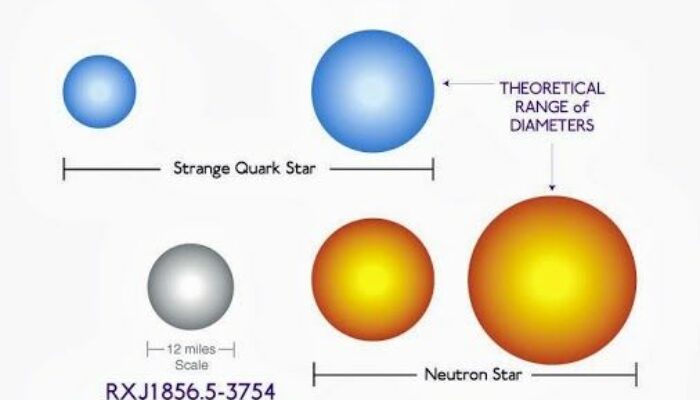
Quark stars are predicted to be smaller in radius than neutron stars, typically around 10 kilometers, yet can possess masses up to approximately three times that of the Sun. - Density:
Their density surpasses that of neutron stars, compressing immense mass into an incredibly compact volume, akin to a diamond-like sphere of extraordinary weight. - Thermal and Radiative Behavior:
Quark stars may emit unique thermal radiation and gravitational waves, differing significantly from neutron stars, potentially offering distinctive observational signatures.
Hybrid Stars: A Transitional State
Between neutron stars and quark stars lies the concept of hybrid stars, which contain both neutron matter and quark matter in their interiors. This intermediate state suggests a continuum of matter phases rather than a strict binary classification, reflecting the complex nature of matter under extreme conditions. Hybrid stars provide a valuable framework for studying the gradual transition from neutron to quark matter and deepen our understanding of quantum chromodynamics-the theory describing quark interactions.
Observational Challenges and Candidate Identification
Despite their theoretical appeal, quark stars have yet to be conclusively observed. Astrophysicists employ various techniques, including gravitational wave detection and electromagnetic spectrum analysis, to identify potential quark star candidates. Some ultracompact binary systems and unusual pulsars have been proposed as possible quark stars, but distinguishing them from other exotic stellar objects remains a significant challenge. The subtle differences in emissions and gravitational signatures require advanced instrumentation and careful interpretation.
Cosmological Significance and Early Universe Implications
The existence of quark stars may have profound implications for cosmology. It is hypothesized that such stars could have formed in the early universe when energy densities were extraordinarily high, potentially surviving as primordial relics. Studying these objects could provide insights into the conditions prevailing shortly after the Big Bang and inform theories about the evolution of matter and the universe’s ultimate fate.
Why Quark Stars Matter
Quark stars represent a frontier in astrophysics and particle physics, pushing the limits of our understanding of matter under extreme conditions. Their study bridges the gap between nuclear physics, quantum chromodynamics, and cosmology, offering potential breakthroughs in comprehending the fundamental forces and particles that constitute the universe. Moreover, exploring quark stars enhances our grasp of stellar evolution, the behavior of dense matter, and the mechanisms driving some of the most energetic phenomena in the cosmos.
Common Misconceptions About Quark Stars
Quark stars are just larger neutron stars.
Quark stars are fundamentally different, composed of deconfined quark matter rather than neutrons, and typically smaller but denser than neutron stars.
Quark stars have been definitively observed.
While candidates exist, no quark star has been conclusively identified; their existence remains theoretical pending observational confirmation.
Quark stars are unstable and short-lived.
Theoretical models suggest quark stars could be stable under certain conditions, potentially persisting for long cosmic timescales.
FAQ
What are quark stars?
Quark stars are theoretical celestial objects composed of quark matter, which exists under extreme density and pressure conditions, differing fundamentally from neutron stars.
How do quark stars form?
Quark stars form when the core of a massive star collapses under its own gravity, leading to the deconfinement of quarks from neutrons, creating a new state of matter.
Why are quark stars important in astrophysics?
Quark stars help bridge the understanding of nuclear physics and cosmology, offering insights into matter under extreme conditions and the evolution of the universe.


Leave a Reply